API Explained Without the Technical Jargon

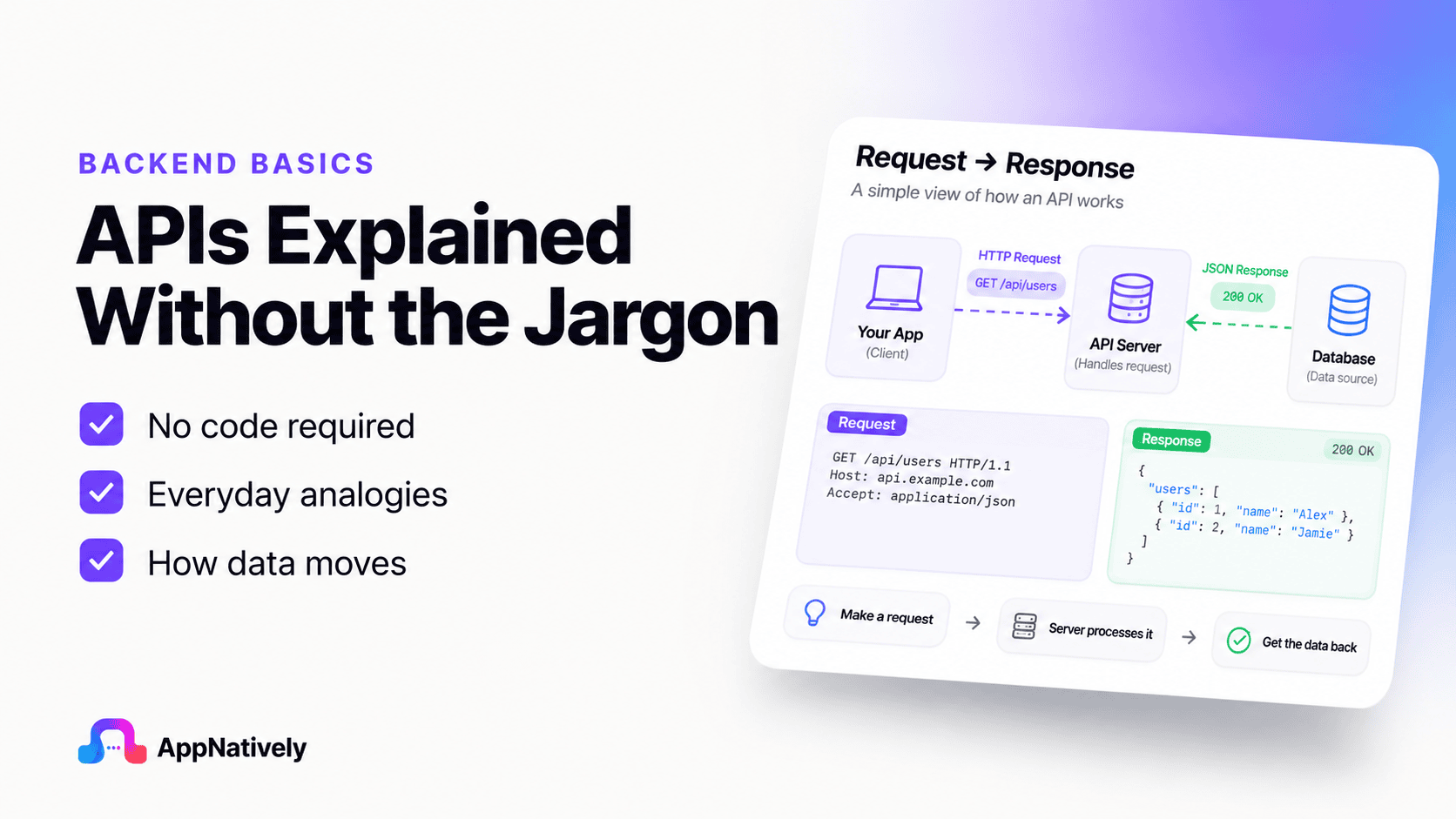
APIs power almost every app and website we use, yet they’re often explained with confusing technical terms that make them seem far more complicated than they really are.
This leaves many beginners, business owners, and non-technical professionals feeling like APIs are only for programmers.
The reality is much simpler. An API is simply a messenger that allows different applications to communicate and share information.
In this blog post, you’ll discover what an API is, how it works, and why it matters, all through simple, real-world examples without the technical jargon.
What Is an API?
An API, short for Application Programming Interface, is a tool that allows two or more software applications to communicate with each other. While the name may sound complicated, the idea behind it is surprisingly simple.
Think about how people communicate. If you want to ask someone a question, you don’t need to understand how their brain processes information.
You simply ask the question, and they respond with an answer. An API works in a similar way. It helps one application ask another application for information or request that it performs a specific task.
For example, imagine you open a weather app on your phone to check today’s forecast. The weather app doesn’t measure the temperature itself. Instead, it asks a weather service for the latest weather information.
The API acts as the messenger that delivers the request and brings back the answer. Within seconds, the app displays the temperature, humidity, wind speed, and forecast on your screen.
The same thing happens when you:
- Sign in to a website using your Google or Facebook account.
- Pay for an online purchase using a payment service.
- Book a ride through a ride-sharing app.
- View a location on a digital map.
- Track a package from an online store.
In each of these situations, different applications need to exchange information. Rather than building everything from scratch, they rely on APIs to communicate quickly, securely, and accurately.
One of the biggest misconceptions about APIs is that they’re only useful for software developers. In reality, APIs affect almost everyone who uses the internet.
Whether you’re shopping online, streaming music, ordering food, or checking sports scores, APIs are working behind the scenes to make those experiences smooth and convenient.
The best part is that you don’t need to know how the underlying systems work to understand the purpose of an API. Just remember this simple definition:
An API is a messenger that allows different applications to communicate and share information without exposing their internal workings.
A Real-Life Analogy
One of the easiest ways to understand an API is to compare it to a waiter in a restaurant.
Let’s assume, you visit your favorite restaurant. You sit down, look at the menu, and decide what you’d like to eat. Instead of walking into the kitchen and telling the chef directly, you place your order with the waiter.
The waiter takes your order to the kitchen, where the chefs prepare your meal. Once it’s ready, the waiter brings the food back to your table.
Notice what happened here:
- You never entered the kitchen.
- You didn’t need to know how the food was cooked.
- The chefs didn’t need to speak directly with you.
- The waiter handled all the communication between both sides.
An API performs exactly the same role in software.
- Instead of a customer, you have an application making a request.
- Instead of a waiter, you have an API carrying that request.
- Instead of a kitchen, you have another application or service that processes the request.
Finally, the API returns the result to the original application.
This process happens in seconds, often so quickly that you never notice it. Every time you search for a location, check your bank balance, stream a video, or log in with another account, an API is quietly handling the communication in the background.
Thinking of an API as a waiter is one of the simplest and most accurate ways to understand its purpose. It doesn’t create the information itself. Instead, it connects the right people, or in this case, the right applications, so they can exchange information efficiently.
How an API Works (Without the Technical Terms)
Now that you understand what an API is, let’s see how it works in everyday situations.
At its core, an API follows a simple four-step process. You don’t need to memorize any technical terms to understand it.
Step 1: You make a request
Everything starts with an action.
You might tap a button in an app, search for a product, check today’s weather, or log in to a website. From your perspective, you’re simply asking the app to do something.
Step 2: The API delivers the request
The app doesn’t always have the information you need. Instead, it sends your request through an API.
Think of the API as a trusted messenger. Its job is to carry your request to the right service and ask for the information or action you requested.
Step 3: The service does the work
The receiving service processes the request.
For example:
- A weather service looks up the latest forecast.
- A payment service checks whether your payment is approved.
- A map service finds the fastest route to your destination.
- A shopping service checks whether a product is in stock.
This is where the actual work happens. The API simply connects both sides.
Step 4: The API returns the response
Once the service has finished processing your request, it sends the result back through the API.
The app then displays the information in a way that’s easy for you to understand.
For example, instead of showing complicated data, your weather app simply displays:
- Temperature: 28°C
- Condition: Sunny
- Chance of Rain: 10%
All of this happens within a few seconds.
A Simple Example
Let’s consider, you’re using a food delivery app.
- You search for “pizza.”
- The app sends your search through an API.
- The restaurant service finds nearby pizza restaurants.
- The API brings the results back.
- The app displays a list of restaurants, menus, prices, and delivery times.
You never see the communication happening in the background. It feels like the app already knows the answer, but in reality, the API is working behind the scenes to retrieve the latest information.
Why this process matters
Without APIs, every application would have to build every feature on its own.
A shopping app would have to create its own payment system, map service, email service, weather service, and much more. That would take an enormous amount of time, money, and effort.
Instead, developers can connect existing services through APIs. This saves time, reduces costs, and allows businesses to focus on creating better products instead of reinventing tools that already exist.
For users, the benefit is simple: everything works together more smoothly. You can log in with one account, pay securely, track deliveries, view maps, and receive real-time updates, all without thinking about the technology making it possible.
Everyday Examples of APIs
You may not realize it, but APIs are part of your daily routine. Almost every modern app relies on them to deliver fast, accurate, and connected experiences.
Here are some common examples.
i. Logging In with Google or Facebook
Instead of creating a new username and password for every website, many people choose “Continue with Google” or “Continue with Facebook.”
When you click one of these buttons, the website uses an API to verify your identity. Once you’re confirmed, you’re signed in within seconds.
ii. Online payments
When you buy something online, the store usually doesn’t process your payment itself.
Instead, it sends your payment information securely to a trusted payment provider through an API. The payment provider checks the transaction and returns the result almost instantly.
That’s why you receive a confirmation message just moments after completing your purchase.
iii. Weather apps
Most weather apps don’t collect weather data themselves.
They request the latest forecast from professional weather services through APIs. This allows the app to display current temperatures, forecasts, and weather alerts in real time.
iv. Maps and navigation
When you search for a location or request directions, your map app communicates with mapping services through APIs.
These services calculate routes, estimate travel times, and provide live traffic updates before sending the information back to your phone.
v. Food delivery apps
Food delivery platforms use APIs to connect with restaurants, payment providers, delivery drivers, and location services.
Because of these connections, you can browse menus, place an order, pay online, and track your delivery, all from a single app.
vi. Social media sharing
Many websites let you share articles or videos directly to social media.
When you click the Share button, APIs help transfer the content to your chosen platform without requiring you to copy and paste links manually.
vii. Travel Booking Websites
Travel websites combine information from airlines, hotels, and car rental companies.
Instead of maintaining all that information themselves, they use APIs to collect real-time prices, availability, and booking details from multiple providers, making it easy to compare your options in one place.
These examples show that APIs aren’t just a tool for developers. They’re a core part of the digital experiences millions of people rely on every day, often without even realizing it.
Why APIs Are Important
By now, you’ve seen that APIs are everywhere. But why are they so important?
The answer is simple: APIs make modern software possible. Instead of every application trying to do everything on its own, APIs allow different services to work together. This saves time, reduces costs, and creates a better experience for users.
Here are some of the biggest reasons APIs matter.
1. They connect different applications
Most apps don’t work alone. They rely on other services to provide features like payments, maps, notifications, and user authentication.
APIs act as the bridge that allows these services to communicate. Without them, many of the digital experiences we enjoy today wouldn’t be possible.
2. They save time
Imagine a company building a new shopping app.
Instead of creating its own payment system, mapping service, and email platform from scratch, the company can use APIs from trusted providers.
This allows developers to focus on improving the shopping experience rather than rebuilding tools that already exist.
3. They improve user experience
Users expect apps to be fast, convenient, and connected.
Thanks to APIs, you can sign in with one account, receive instant notifications, track deliveries in real time, and make secure online payments without switching between multiple apps.
Everything feels seamless because APIs handle the communication behind the scenes.
4. They keep information up to date
Many applications depend on live information.
A weather app needs the latest forecast. A stock market app needs current prices. A navigation app needs real-time traffic updates.
APIs make it possible to fetch the latest information whenever it’s needed, ensuring users always see the most current data.
Common API Myths
Because APIs are often discussed in technical circles, several misconceptions have developed around them. Let’s clear up a few of the most common ones.
Myth 1: APIs are only for developers
While developers build and use APIs, their impact goes far beyond programming.
Business owners use API-powered tools to automate workflows. Marketers connect different platforms to streamline campaigns. Customer support teams integrate help desk software with communication tools.
Even if you’ve never written a line of code, you’ve almost certainly benefited from APIs.
Myth 2: APIs are difficult to understand
The terminology can make APIs seem intimidating, but the core idea is simple.
Remember the restaurant example. One side makes a request, the API carries it to the right place, and the response comes back. That’s the basic concept behind almost every API.
Myth 3: APIs replace applications
An API isn’t an application by itself.
Instead, it helps applications communicate with one another. Think of it as a bridge rather than a destination. The apps still perform the work, while the API helps them exchange information.
Myth 4: APIs are only used by large companies
It’s true that companies like Google, Amazon, and Microsoft rely heavily on APIs, but they’re just as valuable for small businesses and startups.
Many small companies use APIs to add payment processing, email notifications, customer support, analytics, and many other features without building them from scratch.
Simple Benefits of APIs
Whether you’re a developer, business owner, student, or everyday internet user, APIs offer several practical benefits.
Faster development
Developers don’t have to reinvent the wheel every time they build an application. They can use existing services through APIs, allowing them to launch products more quickly.
Better integration
Businesses often use multiple software tools for accounting, marketing, customer support, and sales.
APIs help these tools work together, reducing manual work and improving productivity.
Increased reliability
Many API providers specialize in a single service, such as payments, maps, or messaging.
Because these providers continuously improve and maintain their systems, applications that use their APIs can offer reliable features without managing the underlying infrastructure.
More innovation
APIs encourage creativity.
Developers can combine different services in new ways to build unique applications.
A fitness app might connect with a map service to track running routes, a weather service to recommend the best time to exercise, and a music platform to create workout playlists.
Without APIs, creating these connected experiences would be much more difficult.
Ready to Build Your Own App?
Now that you understand how APIs help apps communicate and unlock powerful features, imagine building your own app without writing complex code.
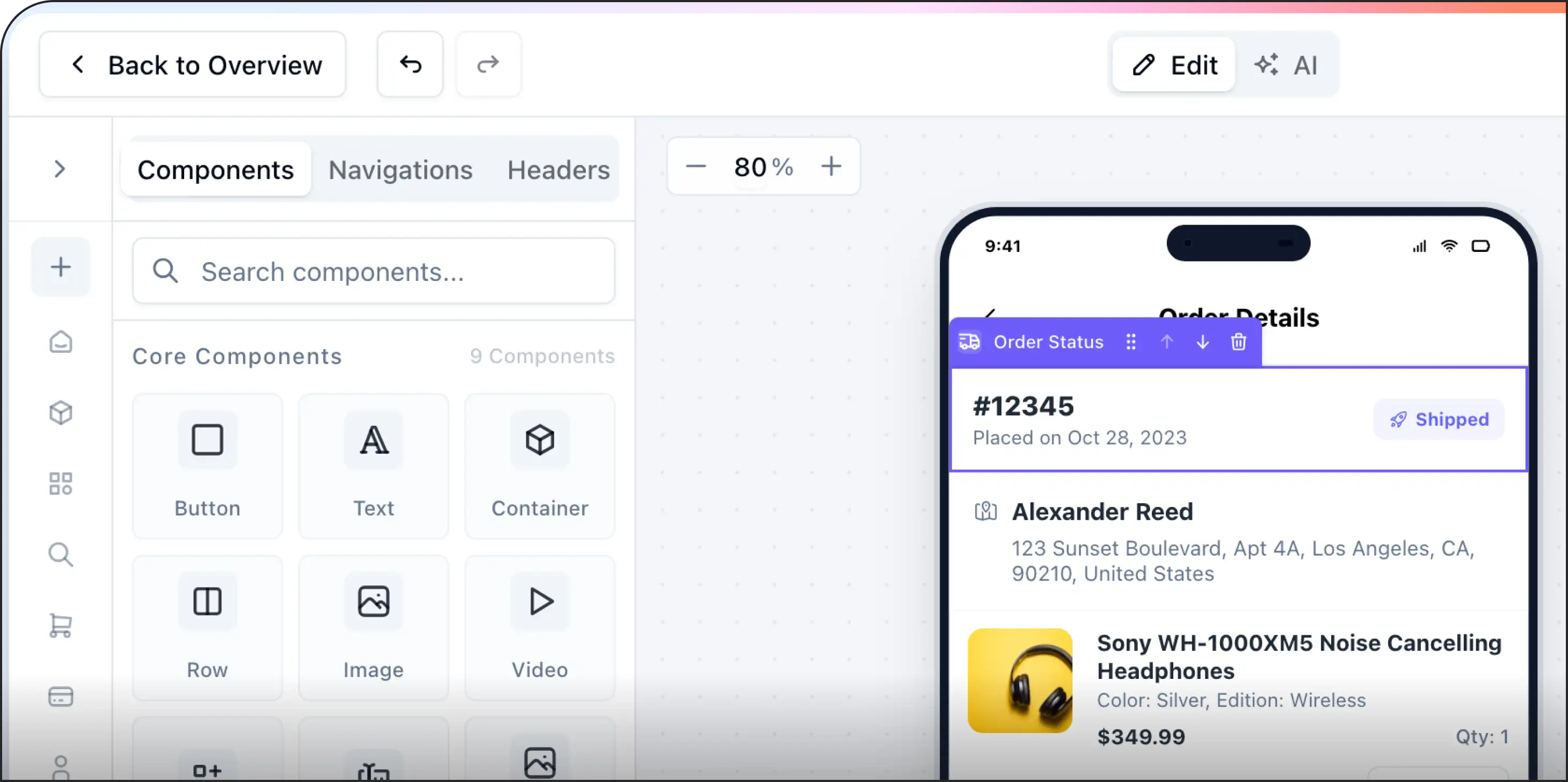
With AppNatively, you can create high-performance native mobile apps using an intuitive drag-and-drop builder. Easily connect your app with APIs, customize features, and launch faster without the traditional development headaches.
Whether you’re an entrepreneur, small business owner, or creator, AppNatively makes app development simple, flexible, and accessible.
Start building your native app with AppNatively today and turn your ideas into reality, no coding expertise required.
Final Thoughts: API Explained Without the Technical Jargon
Although the term API may sound technical, the concept is surprisingly straightforward.
An API is simply a messenger that allows different applications to communicate and share information. It helps software exchange data, perform tasks, and deliver the seamless digital experiences we’ve come to expect.
Every time you log in with Google, check the weather, pay online, use a map, stream music, or order food, APIs are quietly working behind the scenes to make everything happen.
You don’t need to be a programmer to understand or appreciate APIs. Knowing the basic idea can help you better understand how modern technology works and why so many apps feel connected.