Why DTC Brands Need a Native Shopify App in 2026 (Complete Growth Guide)

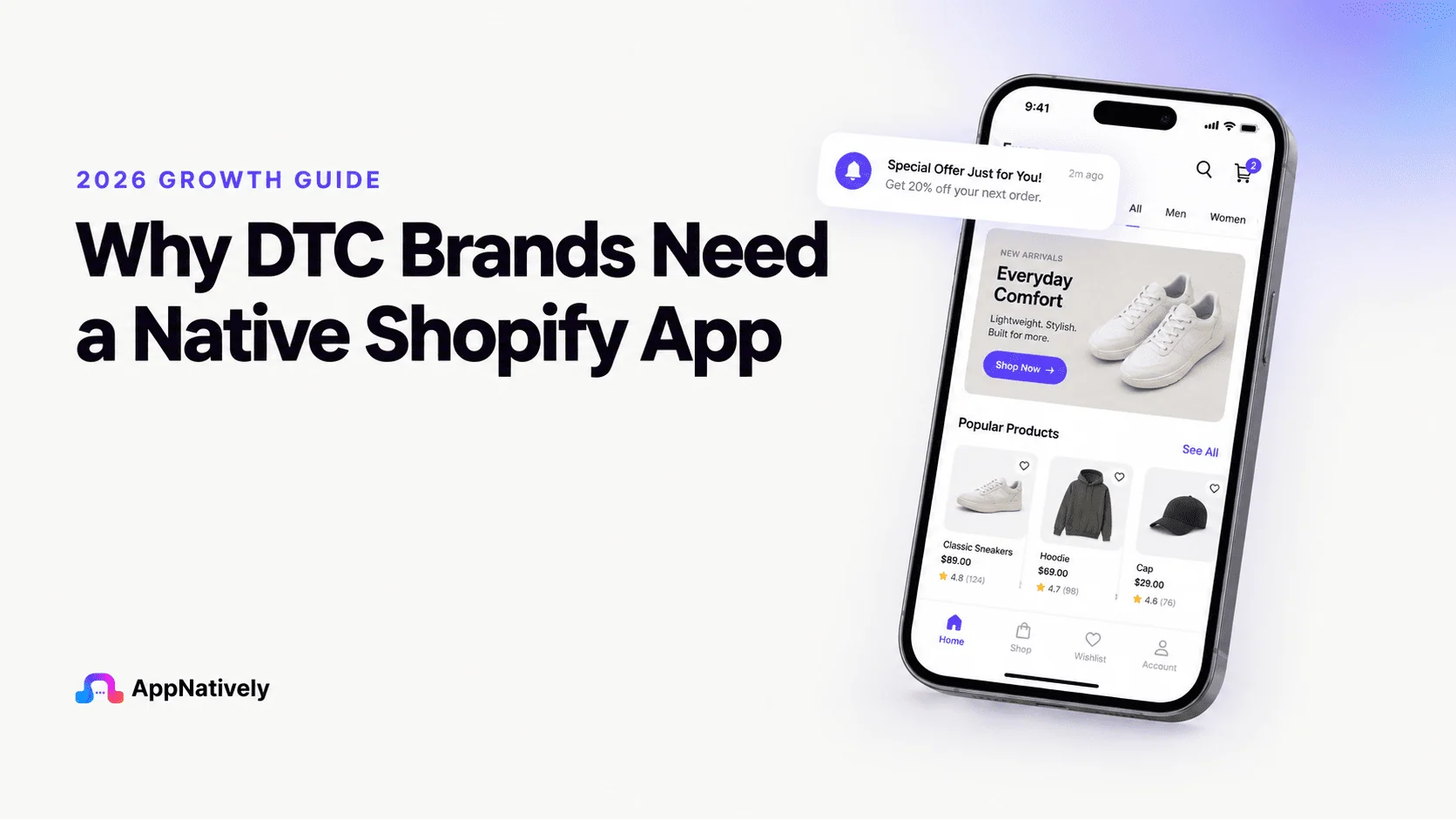
The direct-to-consumer (DTC) landscape is more competitive in 2026 than ever before. Rising acquisition costs, shorter attention spans, stricter privacy rules, and platform dependency risks are forcing brands to rethink how they build customer relationships.
For years, brands relied heavily on social media ads, email campaigns, and mobile-responsive storefronts. But customer expectations have evolved. Shoppers now expect faster experiences, personalized engagement, loyalty rewards, seamless checkout, and direct communication channels.
That is why many successful DTC brands are investing in native Shopify apps.
In this blog post, we’ll explain why native Shopify apps matter in 2026, how they impact growth, what benefits brands gain, and how to decide whether your business should invest in one.
What Is a Native Shopify App?
A native Shopify app is a mobile application built specifically for iOS and Android devices that integrates directly with a Shopify store.
Unlike a mobile website or progressive web app (PWA), native apps are developed using platform-specific technologies or frameworks optimized for mobile performance.
These apps connect directly to Shopify through APIs and provide customers with:
- Faster browsing experiences
- Personalized shopping journeys
- Push notifications
- One-tap checkout
- Loyalty integrations
- In-app customer accounts
- Real-time order tracking
- Subscription management
- Exclusive app-only experiences
In 2026, consumers increasingly prefer app-based shopping because apps feel more personalized, responsive, and convenient than mobile websites.
The State of DTC Commerce in 2026
1. Customer Acquisition Costs Continue to Rise
Advertising costs across Meta, TikTok, Google, and YouTube continue to increase as competition grows.
For many DTC brands, acquiring a new customer is significantly more expensive than retaining an existing one.
This changes the economics of growth.
Brands can no longer rely purely on paid traffic. Sustainable growth now depends on:
- Customer retention
- Repeat purchases
- Community building
- First-party data ownership
- Personalized engagement
A native app directly supports all five.
2. Privacy Restrictions Reduced Ad Efficiency
Changes to mobile tracking and consumer privacy regulations reduced the precision of traditional advertising.
As attribution becomes harder, brands are shifting focus toward owned marketing channels:
- SMS
- Loyalty programs
- Communities
- Mobile apps
A native Shopify app gives brands direct access to customer engagement without depending entirely on third-party platforms.
3. Mobile Commerce Dominates Online Shopping
Most DTC traffic now comes from mobile devices.
But there is an important distinction:
- Mobile websites generate traffic
- Mobile apps generate retention
Users spend more time inside apps, convert more frequently, and return more often compared to mobile browser shoppers.
That difference becomes extremely important in crowded markets.
Why Native Shopify Apps Matter More Than Ever
1. Push Notifications Drive Repeat Revenue
Push notifications are one of the most powerful retention tools available to DTC brands.
Unlike email or social posts, push notifications:
- Reach customers instantly
- Have high visibility
- Create urgency
- Encourage repeat visits
- Cost almost nothing to send
Brands can use notifications for:
- Flash sales
- Back-in-stock alerts
- Cart recovery
- Loyalty rewards
- Product launches
- Subscription reminders
- Personalized recommendations
In many cases, push notifications outperform email campaigns in engagement and conversion.
For DTC brands struggling with rising ad costs, this creates a major advantage.
2. Apps Increase Customer Lifetime Value (LTV)
One of the biggest reasons DTC brands build apps is to increase lifetime value.
App users typically:
- Purchase more frequently
- Browse more often
- Stay connected longer
- Respond better to promotions
- Join loyalty programs more actively
The convenience of an app reduces friction throughout the buying journey.
Customers do not need to:
- Search for the website again
- Re-enter login details repeatedly
- Navigate slow mobile pages
- Deal with browser interruptions
That convenience compounds over time into stronger retention and higher revenue per customer.
3. Native Apps Create Stronger Brand Ownership
On social media, brands compete with endless distractions.
Inside a native app, the brand controls the entire environment.
This allows DTC companies to create:
- Branded experiences
- Exclusive product drops
- VIP communities
- Gamified loyalty systems
- Personalized content
- Interactive shopping journeys
An app becomes a direct extension of the brand identity.
For lifestyle, fashion, beauty, wellness, and subscription brands, this emotional connection can significantly strengthen customer loyalty.
4. Faster Performance Improves Conversion Rates
Speed matters.
Even small delays in page loading can reduce conversions.
Native apps are generally faster than mobile websites because they:
- Store data locally
- Use optimized device resources
- Reduce browser overhead
- Deliver smoother navigation
The result is:
- Faster product browsing
- Better checkout experiences
- Lower bounce rates
- Higher conversion rates
In highly competitive DTC categories, speed can directly affect profitability.
5. Apps Improve Personalization
Modern consumers expect personalized experiences.
Native Shopify apps can use customer behavior, browsing patterns, order history, and engagement signals to create tailored shopping journeys.
Examples include:
- Personalized home feeds
- Smart recommendations
- AI-driven product suggestions
- Dynamic promotions
- Loyalty-based rewards
- Customized notifications
This level of personalization is harder to achieve consistently through standard mobile websites.
Native App vs Mobile Website: What’s the Difference? (Quick Chart)
| Feature | Native App | Mobile Website |
|---|---|---|
| Installation | Must be downloaded from an app store | No installation required |
| Access | Appears on device home screen | Accessed through a browser |
| Performance | Generally faster and smoother | Depends on browser and internet connection |
| Offline Use | Often supports offline functionality | Usually requires internet access |
| Device Features | Full access to camera, GPS, biometrics, notifications, etc. | Limited access to device features |
| Development Cost | Higher | Lower |
| Updates | Users may need to update the app | Updates are immediate on the server |
| Discoverability | Found in app stores | Found through search engines |
Key Industries Benefiting from Shopify Apps
1. Fashion Brands
Fashion shoppers browse frequently and respond well to:
- Push notifications
- New arrivals
- Restock alerts
- Personalized recommendations
- Loyalty rewards
Apps also support visual discovery and smoother repeat purchases.
2. Beauty and Skincare Brands
Beauty brands benefit from:
- Subscription management
- Reorder reminders
- Tutorials and content
- Loyalty programs
- Personalized routines
Apps help create long-term relationships instead of one-time transactions.
3. Health and Wellness Brands
Supplements and wellness products rely heavily on repeat purchases.
Native apps help automate:
- Subscription renewals
- Reminder notifications
- Educational content
- Habit tracking
- Community engagement
This strengthens retention significantly.
4. Food and Beverage Brands
For recurring orders, convenience matters.
Apps simplify:
- Reordering
- Subscription management
- Rewards tracking
- Delivery notifications
This creates a smoother customer experience.
Features DTC Brands Should Prioritize in 2026
Direct-to-consumer (DTC) brands in 2026 are competing in a market shaped by AI, social commerce, rising customer expectations, and tighter acquisition economics.
The brands winning now are building smarter customer experiences, stronger first-party data systems, and faster fulfillment operations.
Here are the highest-impact features DTC brands should prioritize:
1. AI-Powered Personalization
Customers increasingly expect stores to adapt to their preferences in real time. AI-driven personalization now goes beyond product recommendations into dynamic landing pages, predictive offers, conversational shopping, and personalized search.
Key features:
- Personalized homepages
- AI product recommendations
- Predictive replenishment reminders
- Dynamic pricing/offers
- AI shopping assistants
Brands that personalize effectively are seeing measurable lifts in conversion and retention.
2. Conversational & Agentic Commerce
Shopping journeys are becoming chat-based. Consumers are increasingly using AI assistants and conversational search tools to discover and buy products.
Prioritize:
- AI customer support agents
- Natural-language product search
- Chat-based checkout
- Voice commerce compatibility
- Structured product data for AI discovery
DTC brands need product catalogs that AI systems can easily understand and recommend.
3. Social Commerce Integration
Social platforms are no longer just acquisition channels — they are becoming full shopping ecosystems. TikTok, Instagram, and YouTube are driving discovery and direct purchases.
Important capabilities:
- Native social checkout
- Creator affiliate programs
- Shoppable short-form video
- Livestream commerce
- User-generated content integration
Younger shoppers especially expect seamless social buying experiences.
4. First-Party Data Infrastructure
As privacy regulations tighten and third-party cookies continue fading, first-party data becomes a major competitive advantage.
Critical investments:
- Loyalty programs
- Zero-party preference collection
- Unified customer profiles
- Consent management
- CRM + CDP integration
Brands that own customer relationships will be less dependent on paid ad platforms.
5. Unified Omnichannel Experiences
Pure-play online DTC is evolving into blended online/offline commerce. Customers expect consistency across websites, apps, pop-ups, marketplaces, and physical retail.
Features to prioritize:
- Unified inventory visibility
- Cross-channel order tracking
- Buy-online-pickup-in-store (BOPIS)
- Seamless returns
- Consistent customer accounts
Physical experiences are becoming growth channels again for many digital-native brands.
6. Faster Fulfillment & Flexible Delivery
Consumer expectations around speed continue rising due to quick-commerce models.
High-priority capabilities:
- Real-time inventory sync
- Same-day or next-day shipping
- Smart order routing
- Transparent tracking
- Flexible delivery windows
Operational speed is increasingly tied directly to customer retention.
7. Mobile-First UX
Mobile dominates DTC traffic and increasingly drives the majority of purchases.
Must-have mobile features:
- One-tap checkout
- Fast-loading pages
- Mobile wallets
- Thumb-friendly navigation
- Vertical video commerce
Slow or cluttered mobile experiences now directly hurt conversion rates.
8. Community & Loyalty Systems
Acquisition costs remain high, making retention more valuable than ever. Strong communities create repeat customers and organic growth.
Important features:
- Tiered loyalty programs
- Referral systems
- Exclusive memberships
- Community content/forums
- Personalized rewards
The strongest DTC brands are building audiences, not just customer lists.
9. Sustainability & Circular Commerce
Sustainability is shifting from a marketing bonus to a customer expectation.
Features worth implementing:
- Carbon transparency
- Recommerce/resale programs
- Refill subscriptions
- Eco-friendly packaging tracking
- Product lifecycle visibility
Consumers increasingly reward brands that show measurable sustainability efforts.
10. Flexible Commerce Architecture
Composable and headless commerce stacks are becoming more important as brands expand across channels and AI systems.
Technical priorities:
- API-first infrastructure
- Modular commerce tools
- Headless storefronts
- Real-time analytics
- Scalable integrations
Flexible architecture helps brands adapt faster to emerging platforms and AI-driven shopping environments.
Conclusion: Why DTC Brands Need a Native Shopify App
Native Shopify apps are becoming essential for modern DTC brands that want to increase retention, improve customer experience, and scale revenue in 2026 & beyond. With mobile commerce dominating ecommerce growth, brands can no longer rely solely on traditional storefronts.
A well-built Shopify mobile app creates stronger customer relationships, increases repeat purchases, improves engagement, and delivers a faster shopping experience that modern consumers expect.