
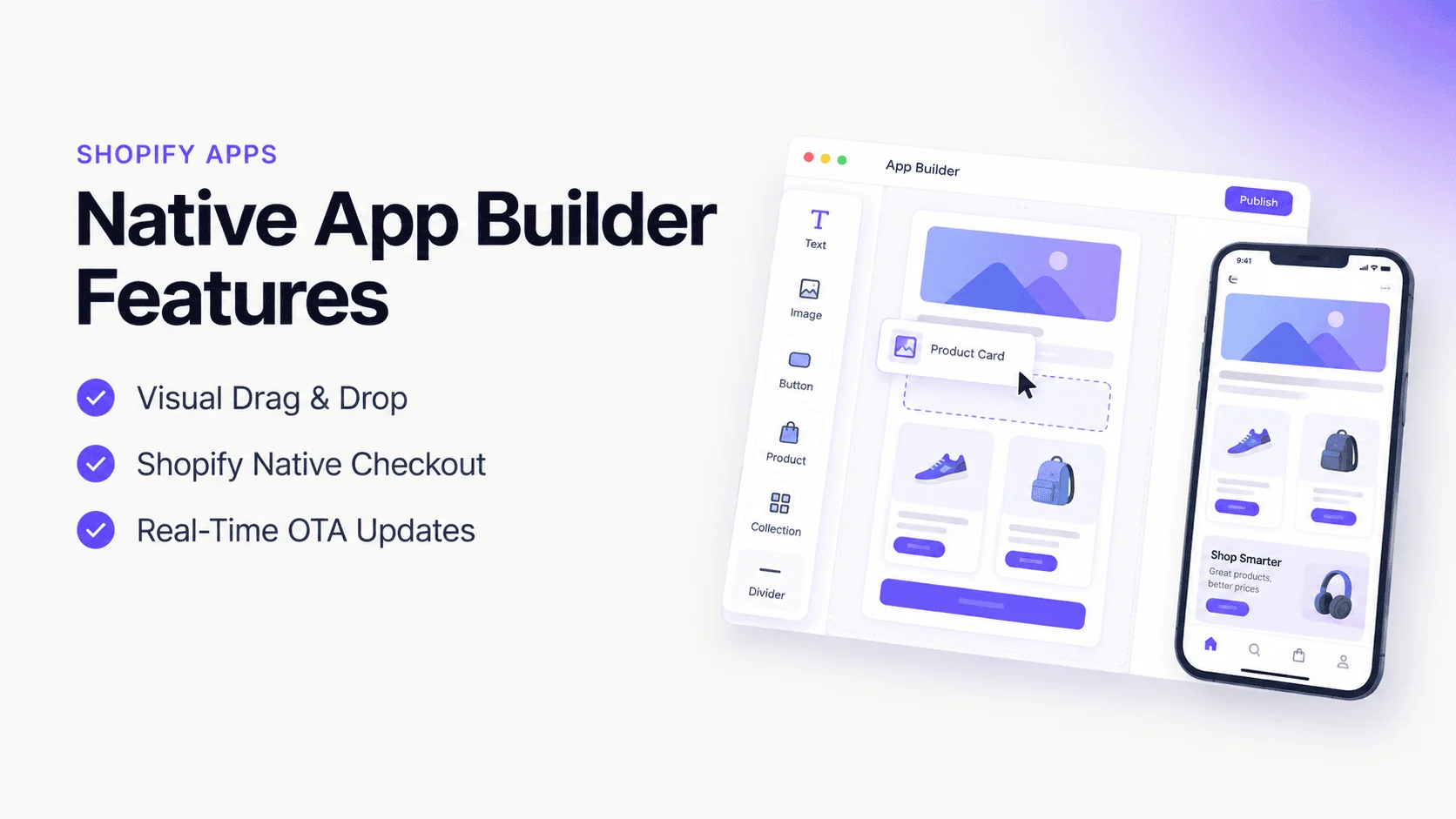
A Shopify native app builder is essential for creating powerful, scalable, and merchant-friendly eCommerce solutions inside the Shopify ecosystem.
As online stores continue to demand better automation, seamless integrations, faster performance, and personalized customer experiences, developers must focus on building feature-rich native apps that solve real business challenges.
The best Shopify native app builders are designed to integrate deeply with Shopify APIs, improve operational efficiency, simplify store management, and enhance customer engagement.
From advanced analytics and mobile responsiveness to automation tools and secure payment systems, modern Shopify apps must provide a seamless experience for both merchants and customers.
In this article, you’ll discover the top features every Shopify native app builder should include to stay competitive, improve app performance, increase merchant adoption, and drive long-term success in the Shopify App Store.
Build your Shopify app instantly with drag & drop
Why Shopify Native Apps Matter
Native Shopify apps are specifically built to work within the Shopify ecosystem. Unlike third-party standalone tools, native apps provide better performance, smoother integration, and enhanced user experience.
Benefits of Shopify native apps include:
- Faster loading speeds
- Better compatibility with Shopify themes
- Improved store management
- Real-time data synchronization
- Enhanced customer experience
- Easier scalability for growing businesses
Top Features Every Shopify Native App Builder Should Include
As Shopify continues expanding globally, merchants increasingly prefer native applications that operate reliably without complicated configurations.
1. Seamless Shopify API integration
A powerful Shopify native app builder must include deep integration with Shopify APIs. APIs allow apps to communicate directly with Shopify stores for inventory updates, customer management, orders, shipping, and analytics.
Key API integrations include:
- Admin API
- Storefront API
- Checkout API
- Webhooks
- GraphQL API
Strong API connectivity ensures real-time synchronization and smooth store operations.
2. User-friendly dashboard
Merchants prefer apps that are simple to navigate. A clean and intuitive dashboard improves usability and reduces the learning curve.
Important dashboard elements include:
- Easy navigation
- Real-time reporting
- Drag-and-drop functionality
- Mobile-friendly design
- Custom settings panel
A well-designed interface increases user retention and improves customer satisfaction.
3. Mobile responsiveness
Modern Shopify merchants manage stores from smartphones and tablets. Every Shopify native app builder should prioritize mobile optimization.
Benefits of mobile responsiveness include:
- Better accessibility
- Improved merchant productivity
- Faster store management
- Enhanced user experience across devices
Responsive apps also perform better in search rankings due to mobile-first indexing.
4. Advanced analytics and reporting
Data-driven decision-making is essential for eCommerce growth. Shopify app builders should include built-in analytics and reporting features.
Important analytics features:
- Sales tracking
- Customer behavior analysis
- Revenue insights
- Conversion rate monitoring
- Product performance reports
Advanced analytics help merchants optimize marketing campaigns and improve store profitability.
5. Automation features
Automation saves merchants time and reduces manual work. A modern Shopify native app builder should support workflow automation.
Popular automation capabilities include:
- Automated inventory updates
- Email notifications
- Order management automation
- Customer segmentation
- Marketing automation
Automation improves operational efficiency and reduces human error.
6. Secure payment and data protection
Security is one of the most critical aspects of Shopify app development. Merchants need apps that protect customer data and comply with security standards.
Essential security features include:
- SSL encryption
- Secure API authentication
- GDPR compliance
- Two-factor authentication
- Role-based access control
Strong security builds trust and prevents data breaches.
7. Fast performance optimization
Store speed directly affects conversion rates and SEO rankings. A Shopify native app builder must focus on lightweight coding and performance optimization.
Performance optimization techniques include:
- Lazy loading
- Efficient API requests
- Optimized database queries
- Image compression
- CDN integration
Fast apps improve both merchant experience and customer satisfaction.
8. Third-party integration support
Merchants often use multiple tools for email marketing, CRM, shipping, and accounting. Shopify native apps should support integrations with external platforms.
Popular integrations include:
- Mailchimp
- Klaviyo
- Google Analytics
- QuickBooks
- HubSpot
- Stripe
Flexible integrations increase app functionality and market demand.
9. Customization options
Every Shopify store has unique business requirements. Native app builders should provide customization flexibility.
Customization features may include:
- Custom workflows
- Personalized dashboards
- Theme compatibility
- Configurable settings
- White-label capabilities
Customization helps merchants adapt apps to their specific operational needs.
10. Multi-language and multi-currency support
Global eCommerce growth requires apps that support international markets.
Important localization features:
- Multi-language interface
- Currency conversion
- Regional tax support
- Local payment gateways
- International shipping integration
These features help Shopify merchants scale globally.
11. AI-powered features
Artificial intelligence is transforming Shopify app development. Modern native app builders increasingly include AI-driven capabilities.
Examples include:
- Product recommendations
- AI chatbots
- Predictive analytics
- Smart inventory forecasting
- Automated customer support
AI enhances personalization and improves sales performance.
12. Easy App Store Compliance
To publish successfully on Shopify App Store, developers must follow Shopify guidelines. A quality Shopify native app builder should simplify compliance requirements.
Compliance support should include:
- Shopify Polaris design standards
- API usage best practices
- Performance benchmarks
- Security requirements
- Accessibility standards
Compliance improves approval chances and app credibility.
Conclusion
A successful Shopify native app builder must combine performance, scalability, security, automation, and user-friendly design to meet the growing demands of modern eCommerce businesses.
From seamless Shopify API integration and mobile responsiveness to AI-powered features and advanced analytics, these essential capabilities help developers create high-performing apps that merchants truly value.
As competition within the Shopify ecosystem continues to grow, focusing on merchant experience, speed optimization, and flexible customization will become even more important.
By implementing the top features discussed in this guide, developers can build powerful Shopify native apps that improve store operations, increase customer engagement, and achieve long-term success in the Shopify App Store.
Frequently Asked Questions (FAQs)
What is a Shopify native app builder?
A Shopify native app builder is a development framework or platform used to create apps that integrate directly with Shopify stores using Shopify APIs and native functionalities.
Why are native Shopify apps better than third-party apps?
Native Shopify apps offer better performance, smoother integration, enhanced security, and improved compatibility with Shopify themes and features.
Which APIs are essential for Shopify app development?
Important Shopify APIs include the Admin API, Storefront API, Checkout API, GraphQL API, and Webhooks.
How can Shopify apps improve store performance?
Shopify apps improve store performance through automation, analytics, inventory management, customer engagement tools, and personalized shopping experiences.
What security features should Shopify apps include?
Essential security features include SSL encryption, secure authentication, GDPR compliance, role-based permissions, and two-factor authentication.
Are AI features important in Shopify native apps?
Yes. AI-powered features like predictive analytics, smart recommendations, and automated support improve customer experience and increase conversions.