
Most startups don’t fail because their app idea is bad. They fail because they launch too late. Founders get stuck in months of traditional mobile app development, polishing features and chasing perfection while competitors ship faster, capture users, and take the market. By the time the app goes live, the opportunity has already passed.
That slow path drains time, budget, and momentum. Without real user feedback or early MVP validation, teams end up guessing what customers want, and guessing is expensive in today’s fast moving startup ecosystem where speed to market and agile development decide who wins.
The smarter move is simple. Launch lean, launch fast, and iterate. In this article, we’ll compare 6 days vs 6 months for an app launch and show how rapid MVP development, no code tools, and continuous improvement help startups validate faster, reduce costs, and grow sooner.
Why Most App Launches Take Six Months
For years, the default way to build an app looked something like this: months of planning, months of development, and then a big “perfect” launch. On paper, it sounds responsible. In reality, it’s slow, expensive, and risky.
Traditional mobile app development usually follows a long cycle:
- Strategy and research: Weeks spent on business plans, market analysis, and requirement documents.
- Design mockups: Multiple iterations of UI/UX design, often with no real user input.
- Backend development: Building databases, servers, and APIs.
- Frontend coding: Connecting the design to the backend system.
- Testing and QA: Multiple rounds of debugging, bug fixing, and performance testing.
- Revisions and approval cycles: Internal approvals, stakeholders’ inputs, last-minute design changes.
- Final launch: Submitting to Apple App Store and Google Play Store.
By the time your app reaches users, the market has already shifted, competitors have moved, and users may have adopted other solutions.
And most of the decisions made during these months are based on assumptions, not actual feedback from real users.
The Hidden Costs of a Six-Month Build
A six-month development cycle feels “safe,” but it quietly stacks up risks that can sink a startup before it even launches:
- High burn rate: Every extra month adds salaries, contractor fees, and tool subscriptions without any revenue generation.
- Delayed feedback: Teams don’t get real insights from users until the app is live, making most decisions guesswork.
- Missed market opportunities: Trends shift, competitors adapt, and first-mover advantage is lost.
- Feature bloat: Teams overbuild for perfection. Features that seem essential in theory often go unused.
- Low flexibility: Making significant changes after months of development is costly and slow.
Six months of building often turns into six months of guessing, and in today’s fast-moving startup economy, guessing is expensive.
What a 6-Day App Launch Actually Looks Like
Now, let’s flip the script. Imagine launching an app in 6 days. It sounds impossible, but with the right tools and mindset, it’s entirely achievable.
The key is speed over perfection, validation over assumption, and learning from real users from day one.
1. MVP-First Approach
The Minimum Viable Product (MVP) strategy is the foundation. You include only the core features necessary to solve the main problem for your target users. Everything else comes later, guided by real-world feedback.
This approach dramatically reduces development time, allows early testing, and minimizes wasted resources. Rather than building everything and hoping it works, you build just enough to see if people actually want it.
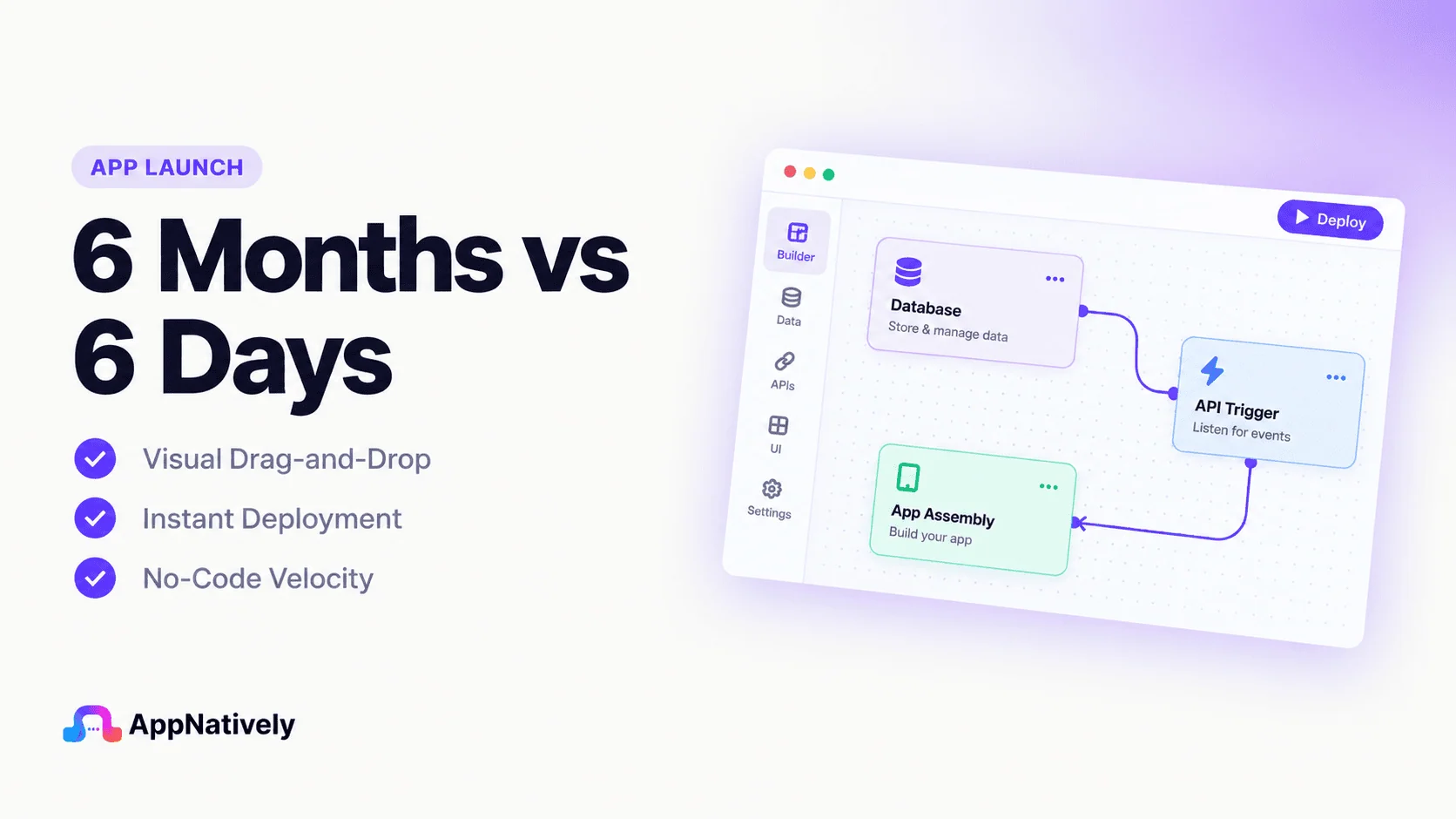
2. AppNatively: Your No-Code Solution
Tools like AppNatively make fast app launches possible for anyone like solo founders, small teams, or early-stage startups:
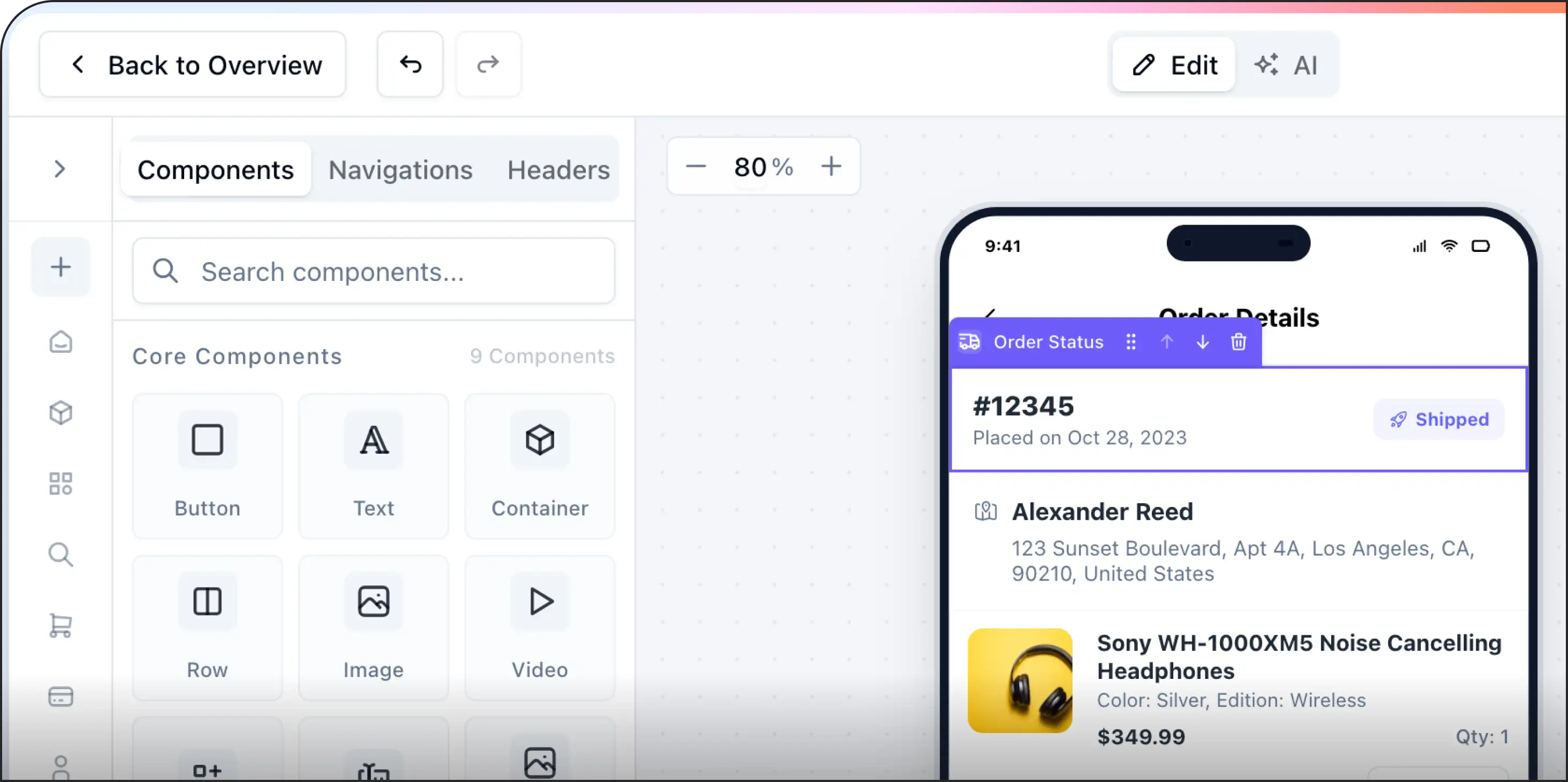
- Build fully functional mobile apps without writing a single line of code.
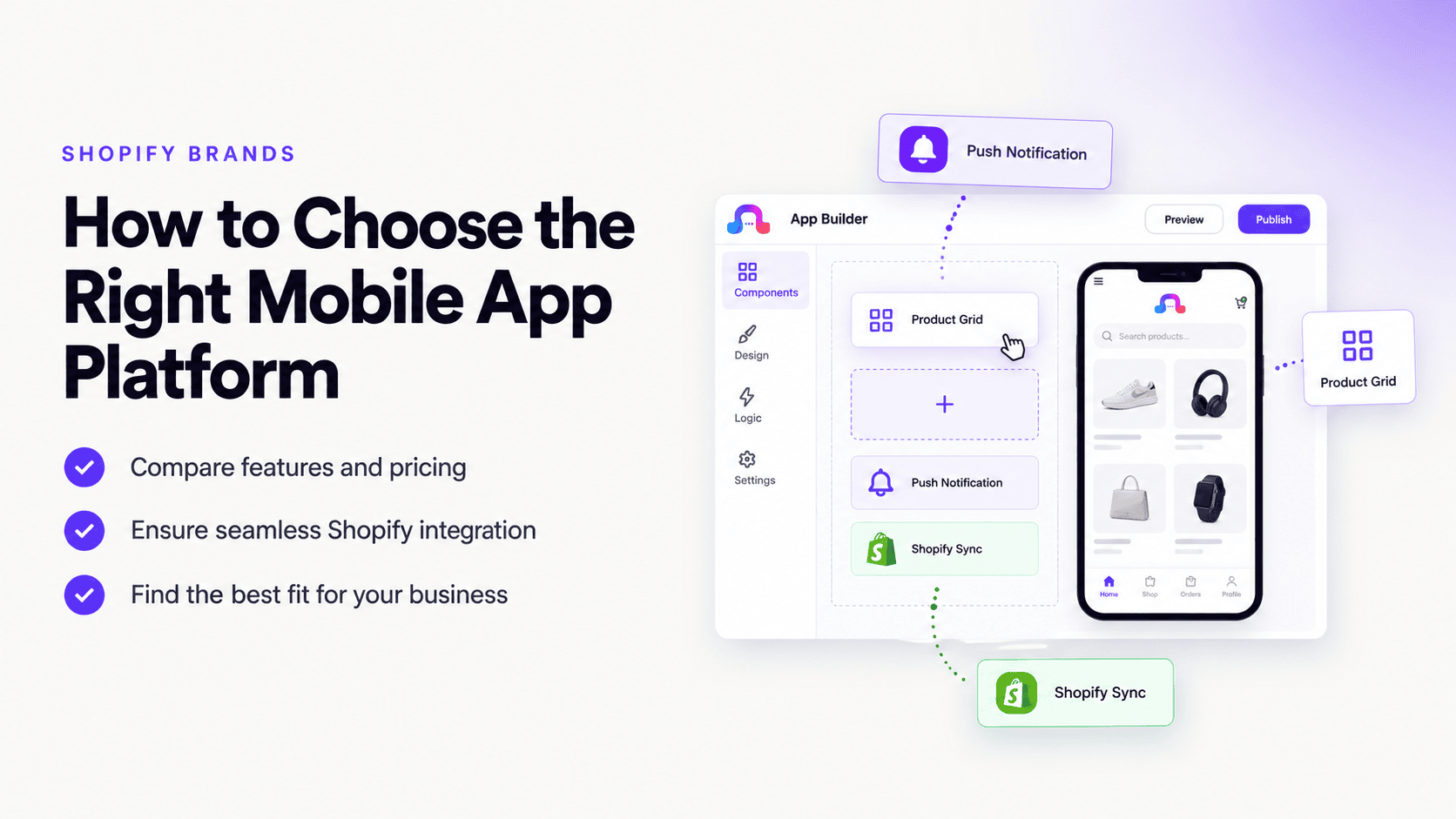
- Use prebuilt templates and drag-and-drop components for quick assembly.
- Integrate analytics, feedback, and notifications immediately.
- Launch on both iOS and Android simultaneously.
- Reduce development costs and time dramatically compared to traditional coding.
With AppNatively, a six-day MVP launch isn’t just possible; rather, it’s practical. You can develop the app free of cost.
3. Agile Workflows in Action
Rapid launches rely on iterative development cycles. Instead of planning for months:
- Ship core functionality fast.
- Collect user feedback immediately.
- Improve and iterate weekly.
This approach creates a feedback-driven growth loop, helping startups adapt quickly and deliver the features users actually want.
6 Days vs 6 Months Side-by-Side Comparison
Here’s a clear side-by-side comparison:
| Factor | 6-Month Launch | 6-Day Launch |
|---|---|---|
| Time to market | Slow | Fast |
| Cost | High | Low |
| Risk | High (assumptions) | Data-driven |
| Feedback | Late | Immediate |
| Flexibility | Low | High |
| Growth | Delayed | Accelerated |
This table highlights why startups that embrace speed often win early adopters, capture market share, and iterate efficiently.
Real-World Example
Consider a startup with an idea for a local fitness app. Following the six-month traditional route, they spend months designing features like social challenges, in-app payments, and advanced analytics before launch.
By the time it hits the App Store and Google Play, competitors offering simpler but functional solutions have already captured the audience.
Another team uses AppNatively. In six days, they launch a simple app with booking, tracking, and notifications.
Early users provide feedback immediately, and within weeks, the app evolves based on actual usage.
The result? Faster adoption, lower costs, and clear product-market fit.
Why Speed to Market Wins Today
In today’s startup ecosystem, momentum often beats perfection:
- First-mover advantage: Early launches capture users before competitors.
- Faster product-market fit: Real user feedback informs development.
- Lower costs: Lean MVPs avoid wasted resources.
- Continuous improvement: Rapid iterations keep your app relevant.
- Data-driven decisions: Users tell you what works, not assumptions.
The faster you validate, the faster you grow and the lower your risk.
When 6 Months Might Still Make Sense
There are situations where a longer launch is justified:
- Apps for enterprise solutions with complex integrations.
- Heavy security or compliance requirements.
- Highly customized infrastructure needs.
Even in these cases, AppNatively can still accelerate prototyping and early testing, reducing overall risk.
How to Launch Your App in 6 Days
Here’s a practical roadmap for a six-day launch:
- Define the core problem: Identify the one problem your app solves.
- Cut features to essentials: Include only the minimum to validate your idea.
- Build with AppNatively: Drag-and-drop your MVP, integrating analytics and feedback tools.
- Launch to users: Deploy on iOS and Android marketplaces quickly.
- Collect feedback: Track user behavior, ratings, and engagement.
- Iterate fast: Improve features and expand functionality based on real data.
Even small teams can achieve this timeline, avoiding the pitfalls of traditional long development cycles.
Final Thoughts
Six months builds software. Six days builds traction. In today’s app economy, the apps that succeed are the ones that launch first, learn faster, and iterate continuously. Using AppNatively, founders can create functional, market-ready apps in days, test ideas immediately, and grow smarter.
Don’t wait to perfect validation, launch, and adaptation. Early users, real feedback, and momentum are far more valuable than months spent polishing code that may never matter.
Frequently Asked Questions (FAQs)
Q: How fast can you realistically launch an app?
With AppNatively, a lean MVP can go live in as little as six days.
Q: What is an MVP in app development?
A minimum viable product includes only the core features needed to solve the main user problem.
Q: Are no-code apps scalable?
Yes. AppNatively allows you to expand features and scale as your user base grows.
Q: How much does a fast app launch cost?
No-code MVP launches drastically reduce costs compared to traditional development, saving thousands of dollars in coding and testing.