
In 2026, mobile apps drive how customers shop, book services, and connect with brands.
From ordering food to managing appointments and making payments, most daily interactions now happen inside apps rather than websites.
For businesses, a mobile presence is no longer optional but a key part of staying visible and competitive.
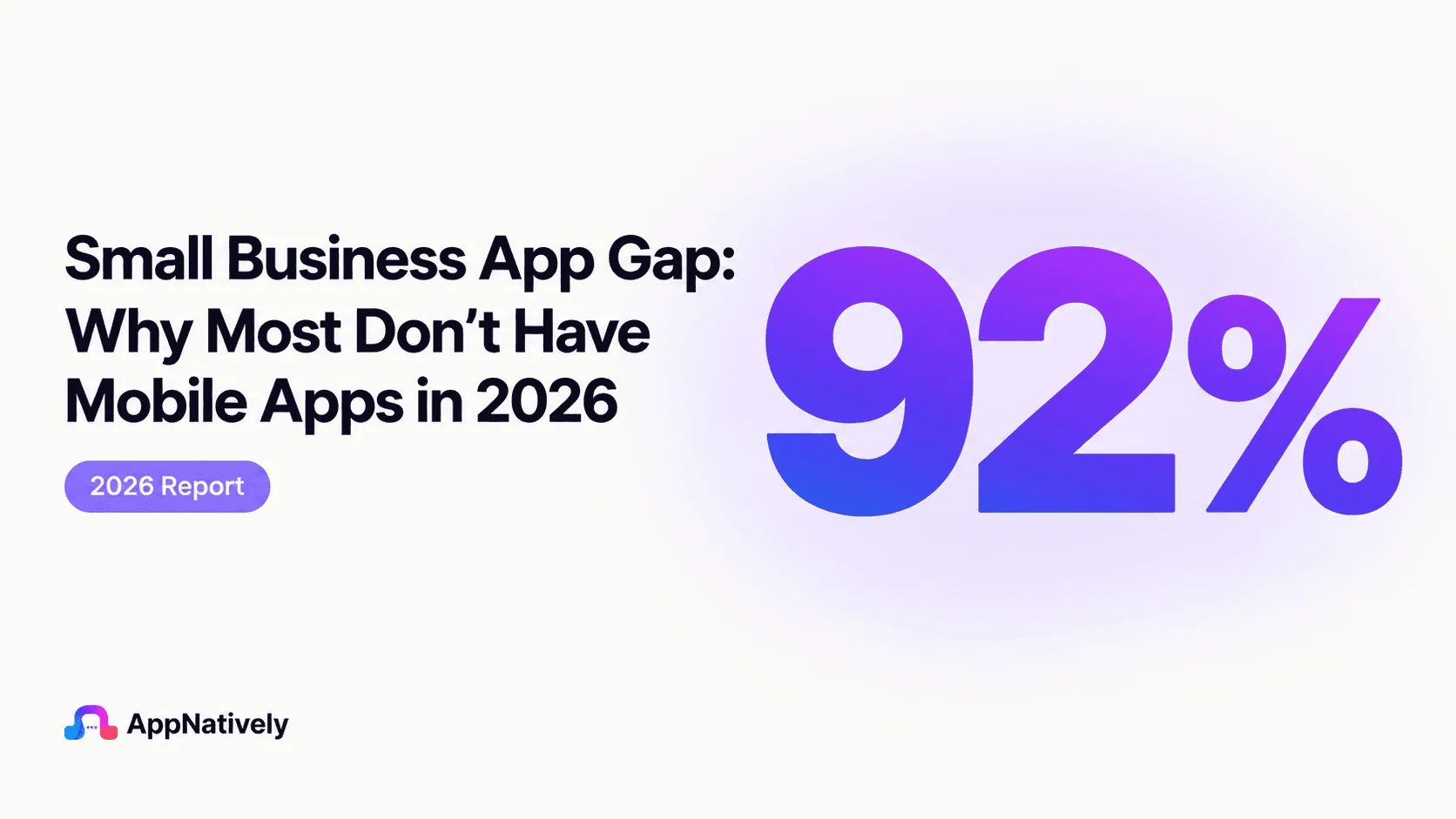
Yet despite this shift, nearly 92 percent of small businesses still do not have a dedicated mobile app.
Many rely only on websites or social media, missing out on tools like push notifications, loyalty features, and personalized experiences that apps make possible.
This disconnect has created what experts call the Small Business App Gap.
High development costs, limited technical skills, and uncertainty about return on investment continue to hold small businesses back.
As customers increasingly expect fast and seamless mobile experiences, closing this gap has become essential for growth, customer retention, and long-term success.
In this blog post, we’ll explore why so many small businesses lack mobile apps, the challenges they face, and the opportunities they can grab by embracing mobile-first strategies.
The Rise of the Mobile-First Economy
Smartphones now connect most of the world’s population to the internet, with over 5.78 billion people using a smartphone in 2026, representing more than 70% global penetration of all people on Earth. This growth builds on rapid expansion of 5G and mobile infrastructure, making mobile devices central to everyday digital life.
People spend a large amount of their digital time inside apps rather than on mobile browsers. Recent industry data shows that users spend around 4.5 to 5 hours per day inside mobile apps, and roughly 88% of mobile time is spent in apps not web browsers, illustrating how dominant apps are for consuming content, shopping, messaging, entertainment, and services.
Mobile commerce and app usage have also grown strongly. For example, e-commerce apps are used by 75% of consumers globally each month, and mobile commerce is projected to account for a majority of online retail sales.
This data shows that apps are not just tools for socializing or entertainment rather they are where users increasingly make purchases, find services, and interact with businesses.
Because of these shifts in behavior and technology, mobile apps have become the preferred way for people to access digital services, and companies that prioritize strong mobile experiences tend to engage users more effectively.
For small businesses especially, ignoring this mobile first trend risks missing out on how customers now search, shop, buy, and stay loyal.
What Is the Small Business App Gap
The small business app gap refers to the large disparity between consumer expectations for mobile engagement and the actual mobile presence of small businesses.
Despite the rise of mobile commerce, surveys show that about 92% of small businesses globally still do not have a dedicated mobile app in 2026.
This means that the vast majority of small enterprises rely solely on websites or social media platforms to reach customers, missing out on app-driven features like push notifications, loyalty programs, and faster, personalized user experiences.
The gap is particularly striking when compared with larger companies. While enterprises invest heavily in mobile apps, customer analytics, and app marketing, most small businesses have limited resources, technical expertise, or confidence in the return on investment from a mobile app.
This creates a competitive disadvantage, as apps increasingly become the primary channel for discovery, transactions, and customer engagement.
Research also shows that small businesses without apps tend to have lower customer retention rates and miss opportunities to leverage mobile commerce trends.
With mobile e-commerce projected to account for over 60% of online sales by 2026, the small business app gap highlights not just a technological lag but a critical strategic challenge for small enterprises in today’s mobile-first economy.
Why Most Small Businesses Do Not Have Mobile Apps
Small businesses face growing pressure to adopt mobile technology as consumers increasingly prefer app-based interactions.
Yet despite the clear benefits, most small businesses struggle to launch or maintain a dedicated mobile app.
1. High development and maintenance costs
Developing a mobile app requires significant investment, including design, coding, testing, and ongoing updates. For small businesses with limited budgets, these costs can feel overwhelming.
Many small business owners prioritize immediate operational expenses over long-term technology projects. As a result, app development is often postponed or abandoned entirely.
Even after an app is launched, maintenance, bug fixes, and platform updates add recurring costs. These ongoing financial demands can discourage small businesses from pursuing a mobile presence.
2. Limited technical skills
Building and managing a mobile app requires technical expertise that many small businesses do not have. Without IT staff or developer support, app development can seem intimidating or unmanageable.
Owners may also struggle to choose the right platform, features, or integration options for their business, leading to uncertainty about the app’s functionality and value.
This lack of technical confidence often causes businesses to rely solely on websites or social media instead of creating a dedicated mobile experience.
3. Time constraints and operational priorities
Running a small business involves juggling multiple responsibilities, from managing staff and inventory to handling marketing and customer service.
Adding app development to an already full schedule can feel impossible, even if the potential benefits are clear.
As a result, many owners delay or avoid mobile app projects, focusing instead on day-to-day operations and immediate revenue-generating activities.
4. Uncertain return on investment
Small businesses may hesitate to invest in a mobile app because the financial payoff is unclear.
Without experience or data on customer behavior, the benefits of an app, such as higher engagement or repeat sales, can seem speculative.
This uncertainty makes it difficult for owners to justify the time, effort, and money required to launch and maintain a mobile app.
5. Belief that websites or social media are enough
Many small businesses assume that a website or social media presence is sufficient to reach their customers.
They often underestimate how apps offer faster, personalized, and more convenient interactions that drive engagement and loyalty.
Relying solely on traditional digital channels can leave businesses behind competitors that provide app-based experiences.
What Small Businesses Are Missing Without an App
Even without an app, small businesses continue to operate, but they miss significant opportunities to engage and retain customers. A dedicated mobile app can offer features and convenience that websites or social media alone cannot provide.
Enhanced customer engagement
Mobile apps allow businesses to communicate directly with customers through push notifications, personalized offers, and reminders.
Without an app, businesses rely on email or social media, which may not reach users instantly or get the same level of attention.
This limited engagement can reduce brand loyalty and make it harder to keep customers returning for repeat purchases.
Faster and smoother user experience
Apps provide streamlined interfaces and faster performance compared to mobile websites.
Customers can browse products, book services, or make payments with fewer steps, improving satisfaction and reducing friction.
Without an app, businesses risk losing customers to competitors who provide a more convenient and efficient mobile experience.
Improved customer retention and loyalty
Apps often include loyalty programs, rewards, and personalized recommendations that encourage repeat purchases.
Without these tools, small businesses miss opportunities to strengthen relationships with existing customers.
This can result in lower repeat sales, reduced lifetime customer value, and weaker competitive positioning.
Access to mobile commerce
Mobile apps are increasingly the primary channel for shopping, ordering, and transactions.
Businesses without apps may struggle to capture sales from customers who prefer in-app purchasing or mobile payments.
By not having a presence on mobile devices, small businesses risk missing a growing share of revenue in a mobile-first economy.
Competitive disadvantage
Competitors with apps can offer faster, personalized, and more engaging experiences.
Customers are more likely to favor businesses that make interactions easy and convenient through mobile apps.
Without an app, small businesses risk falling behind in visibility, loyalty, and long-term growth.
New Solution Lowering the Barrier to Entry
Traditional app development can be expensive, time-consuming, and technically complex.
No-code native app builders are changing the landscape, making mobile apps accessible to small businesses without coding expertise.
1. No-code native app builders simplify development
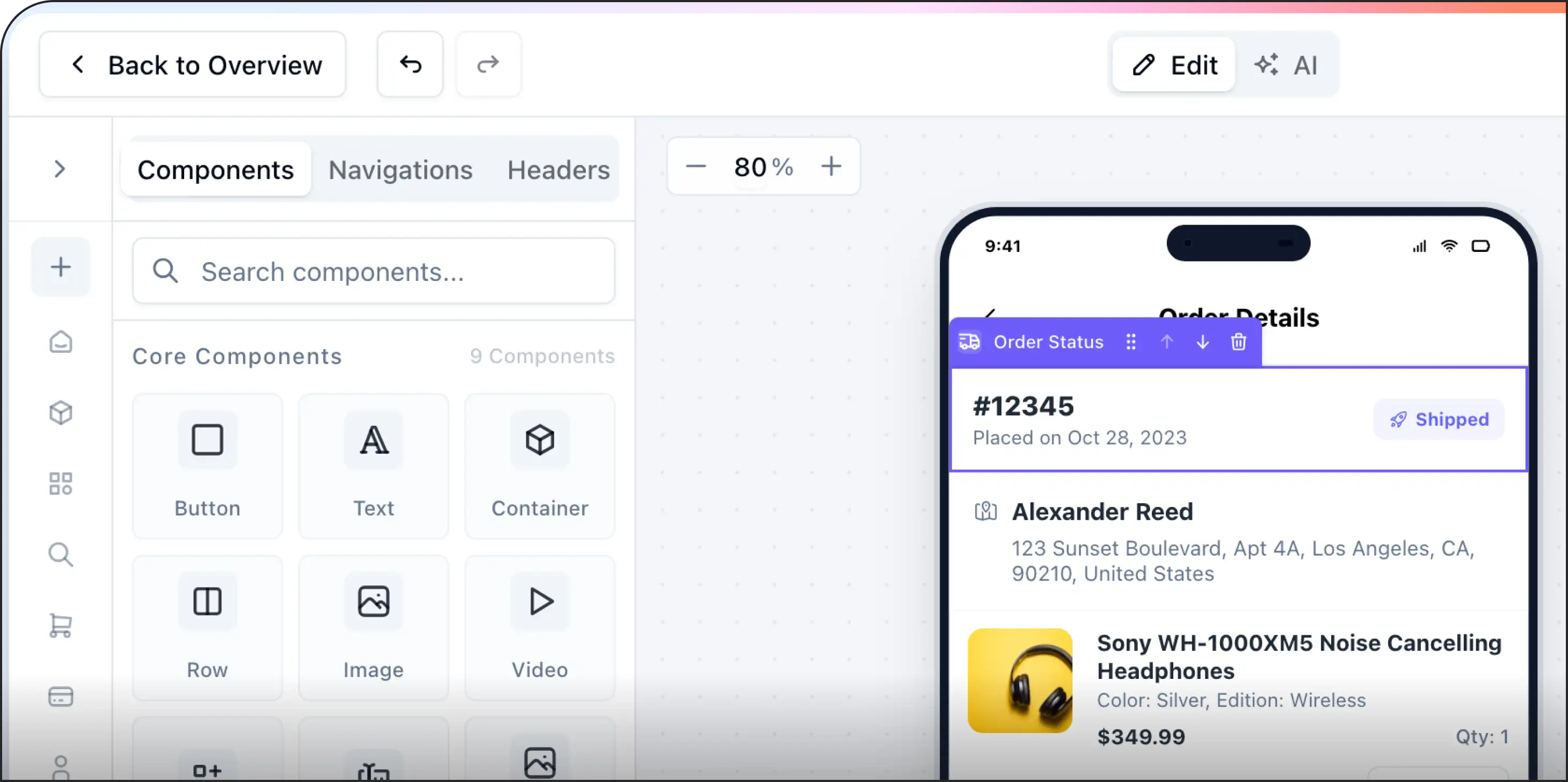
No-code app platforms allow small business owners to create fully functional mobile apps using visual editors and drag-and-drop tools.
Users can design interfaces, add features, and configure workflows without writing a single line of code.
This makes app development faster, more affordable, and accessible to anyone, even without technical experience.
2. Affordable and scalable solutions
No-code native app builders often use subscription-based pricing, which eliminates the need for large upfront investments.
Small businesses can start with basic features and scale their apps as their needs grow, adding new functionality over time.
This flexibility allows owners to experiment with mobile apps without risking excessive costs or long-term commitments.
3. Quick deployment and easy maintenance
Apps built on no-code platforms can be launched quickly to both iOS and Android stores, reducing the time it takes to reach customers.
Ongoing updates and maintenance are simplified through platform dashboards, which often automate updates and bug fixes.
This reduces the technical burden on small business owners and ensures apps remain functional and up to date with minimal effort.
How Small Businesses Can Get Started
Launching a mobile app may seem intimidating for small businesses, but breaking the process into clear steps can make it manageable. With the rise of no-code app builders, even businesses without technical expertise can create and deploy apps efficiently.
Assess business needs and goals
Before creating an app, owners should identify the main objectives, such as increasing sales, improving customer engagement, or offering loyalty programs.
Understanding what features are most valuable helps prioritize functionality and avoid overcomplicating the app.
A clear plan ensures the app aligns with business goals and maximizes the return on time and investment.
Choose the right platform and tools
Small businesses should select a platform that matches their technical skills and target audience, often using no-code native app builders for simplicity.
These platforms allow apps to be published on both iOS and Android, reaching the largest possible customer base.
Selecting the right tools also ensures scalability, so features can be added or updated as the business grows.
Plan, launch, and optimize
Even with a simple app, businesses should plan for testing, launch, and post-launch improvements.
Gathering customer feedback after launch helps identify usability issues, bugs, or features that could increase engagement.
Ongoing optimization ensures the app remains relevant, functional, and continues to support growth and customer satisfaction.
Conclusion
While mobile apps have become central to customer engagement, loyalty, and commerce, the majority of small enterprises still lack a dedicated app. High costs, limited technical skills, and uncertainty about returns continue to slow adoption.
Yet the gap also presents a clear opportunity. No-code native app builders and simplified development tools make it easier than ever for small businesses to launch mobile apps quickly and affordably.
By embracing mobile first strategies, businesses can improve customer experience, increase retention, and compete more effectively in an app driven market.