
Traditional app development has long been the standard approach for building software, but it often involves heavy coding, complex infrastructure, and lengthy development cycles.
Even simple applications can take significant time and resources to complete, making the process slow and demanding for both developers and businesses.
As user expectations continue to grow, these challenges become more noticeable. Delays in updates, high maintenance costs, and difficulty scaling systems can limit innovation and reduce competitiveness.
Relying solely on traditional methods can make it harder for organizations to adapt to change.
Modern solutions offer a more flexible and efficient way forward. With cloud-based tools, low-code platforms, and automated workflows, teams can build and deploy applications faster while focusing on solving real problems.
This shift helps businesses stay agile, productive, and ready for the future.
Overview of Traditional App Development
Traditional app development is the process of building applications specifically for a particular platform, such as Android, iOS, or Windows, using that platform’s native programming languages and tools.
Each app is created to run directly on the operating system it is designed for, ensuring better compatibility and performance.
In this approach, developers usually create separate codebases for different platforms. For example, one version of the app is built for Android and another for iOS. This allows the app to fully follow platform guidelines and access device features like the camera, GPS, and sensors more efficiently.
Although traditional development provides high speed, reliability, and a smooth user experience, it requires more time, cost, and maintenance because multiple versions must be developed and updated separately.
It is best suited for apps that need strong performance and deep system integration.
Limitations of Traditional App Development
1. Platform fragmentation
Traditional app development often requires separate applications for different ecosystems such as iOS and Android.
Because companies like Apple and Google use different programming languages, development tools, and design standards, code cannot easily be shared across platforms.
This leads to multiple codebases and increases complexity for development teams.
2. Higher development cost
Creating and maintaining separate versions of the same application increases expenses. Teams must invest more in specialized developers, testing processes, and ongoing support.
Even small updates or changes can require repeating the same work, which adds to the overall budget.
3. Slower time to market
Each feature must be designed, built, and tested independently for every platform.
This slows down the release cycle and makes it harder for businesses to respond quickly to market trends or customer feedback.
4. Maintenance overhead
Maintaining multiple versions of an application over time can be challenging.
Bug fixes, security patches, and system updates need to be implemented separately for each platform, increasing workload and the risk of inconsistencies between versions.
Modern App Development Solutions
Modern app development is no longer just about building software but it’s about creating scalable, high-performance digital experiences across devices and platforms.
Businesses today must choose the right development approach to balance speed, cost, user experience, and long-term growth.
i. Native app development
Native app development focuses on building applications specifically for platforms like iOS and Android using platform-specific languages and tools.
For iOS, developers typically use Swift, while Android apps are built with Kotlin or Java, React, or Node.js. Because native apps are designed for a single ecosystem, they offer superior performance, smoother animations, and seamless integration with device features like GPS, camera, and biometric authentication.
This approach is ideal for businesses that prioritize speed, reliability, and high-end user experience. While development and maintenance costs may be higher due to separate codebases, the payoff often comes in performance optimization and deeper platform compatibility.
ii. Cross-platform app development
Cross-platform development allows developers to write one codebase and deploy it across multiple platforms. Frameworks like Flutter and React Native make this possible by bridging native components with shared code.
This significantly reduces development time and cost while maintaining near-native performance.
For startups and growing businesses, cross-platform solutions provide a strategic advantage. You can launch faster, test your market efficiently, and iterate without maintaining two entirely separate teams.
Although there can be slight performance trade-offs compared to fully native apps, modern frameworks have minimized these gaps substantially.
iii. Progressive web apps (PWAs)
Progressive Web Apps combine the reach of the web with the functionality of mobile apps. Built using standard web technologies, PWAs can be installed on a device, work offline, and send push notifications without requiring traditional app store distribution.
PWAs are cost-effective and highly scalable, making them attractive for businesses focused on accessibility and global reach.
While they may not access every advanced hardware feature like native apps, they deliver impressive performance and user experience for content-driven platforms and ecommerce solutions.
iv. Hybrid app development
Hybrid app development combines elements of both native and web applications. These apps are essentially web applications wrapped in a native container, enabling them to be distributed through app stores while using web technologies like HTML, CSS, and JavaScript.
Hybrid solutions are practical for businesses seeking affordability and faster deployment. However, performance can vary depending on the complexity of the application and how intensively it uses device features.
For simpler applications and MVP launches, hybrid development remains a viable and strategic option.
v. Cloud-based and backend-as-a-service (BaaS) solutions
Modern app development increasingly relies on cloud infrastructure and Backend-as-a-Service platforms.
Solutions like Firebase allow developers to integrate authentication, real-time databases, analytics, and push notifications without managing physical servers.
Cloud-based architecture ensures scalability, security, and global performance optimization. It enables businesses to focus on user experience and feature innovation while infrastructure management remains automated and flexible.
This approach is especially beneficial for startups, SaaS platforms, and rapidly scaling applications.
Advantages of Modern Solutions
Modern development solutions are designed to meet the demands of speed, scalability, and evolving user expectations.
Businesses adopting these solutions gain both technical flexibility and long-term competitive advantages.
Faster time to market
Modern frameworks and development methodologies significantly reduce the time required to build and launch applications.
With reusable components, cloud services, and cross-platform tools, teams can streamline workflows and accelerate production cycles.
This speed enables businesses to test ideas quickly, gather user feedback, and iterate efficiently.
In competitive markets, faster time to market often determines whether a product leads or follows.
Scalability and flexibility
Modern solutions are built with scalability in mind, often leveraging cloud platforms and microservices architecture.
Services like Firebase allow applications to handle increasing traffic without performance degradation.
This flexibility ensures that as your user base grows, your system can adapt without requiring a complete rebuild.
Businesses can scale resources dynamically, optimizing both performance and cost efficiency.
Improved user experience
Modern development frameworks focus heavily on performance optimization and UI consistency.
Technologies such as Flutter and React Native help deliver smooth animations, responsive layouts, and native-like interactions.
A better user experience leads to higher engagement, improved retention rates, and stronger brand loyalty.
Performance and design quality directly influence user perception and satisfaction.
Cost efficiency
Cross-platform and cloud-based solutions reduce the need for separate development teams and infrastructure investments.
By maintaining a single codebase for multiple platforms, businesses can significantly lower development and maintenance costs.
Additionally, cloud infrastructure minimizes hardware expenses and operational overhead.
This cost efficiency allows companies to allocate more resources toward innovation and marketing.
Enhanced security and maintenance
Modern solutions integrate advanced security protocols, automatic updates, and managed backend services.
Regular patches and cloud monitoring tools help protect applications against vulnerabilities and data breaches.
Maintenance also becomes more streamlined, as updates can be deployed centrally without disrupting user experience.
This ensures long-term stability, reliability, and trust in your digital product.
A Comparison: Traditional App Development vs Modern Solutions
Digital transformation has reshaped how applications are built, deployed, and maintained.
Understanding the direct differences between traditional and modern development approaches helps businesses choose the right strategy for growth and innovation.
1. Development approach
Traditional development typically follows the Waterfall model, where planning, design, development, testing, and deployment occur in strict sequential phases.
Changes late in the process can be costly and time-consuming, making flexibility limited once the project is underway.
Modern development embraces Agile and DevOps methodologies. Instead of long release cycles, teams work in short sprints with continuous integration and deployment.
This enables faster iteration, real-time feedback, and quicker product improvements.
2. Infrastructure and hosting
Traditional systems often rely on on-premise servers and manual infrastructure management.
Businesses must invest heavily in hardware, maintenance, and IT teams to ensure uptime and security.
Modern solutions leverage cloud-based infrastructure such as Amazon Web Services and Microsoft Azure.
These platforms provide scalable, pay-as-you-go resources that grow with demand, reducing upfront investment and operational complexity.
3. Performance and user experience
Traditional applications often prioritize functionality over design and responsiveness.
User interfaces may feel outdated, and performance can decline as systems age without optimization.
Modern applications are built with user experience at the core. Frameworks like Flutter and React Native help deliver smooth animations, responsive layouts, and consistent cross-device performance, resulting in higher engagement and satisfaction.
4. Scalability and maintenance
Traditional systems can struggle with scalability, often requiring significant restructuring to handle increased traffic or new features.
Maintenance typically involves manual updates, downtime, and higher operational risk.
Modern architectures use microservices, automation, and cloud scaling to handle growth dynamically.
Updates can be rolled out seamlessly, minimizing disruption and ensuring long-term system stability.
5. Cost structure
Traditional development often requires large upfront capital investments in hardware, licenses, and dedicated teams.
Long development cycles also increase labor costs and delay revenue generation.
Modern solutions typically follow a subscription or usage-based model.
Cloud services, cross-platform frameworks, and managed backends reduce infrastructure costs and improve return on investment by accelerating time to market and optimizing ongoing expenses.
Future Trends in App Development
The future of app development is being shaped by rapid technological innovation, evolving user behavior, and the demand for faster, smarter digital experiences.
Businesses that adapt to these emerging trends will gain a significant competitive advantage in performance, scalability, and user engagement.
AI-powered applications
Artificial Intelligence is becoming a core component of modern applications.
From personalized recommendations to smart chatbots and predictive analytics, AI enhances automation and decision-making within apps.
Technologies like TensorFlow enable developers to integrate machine learning capabilities directly into mobile and web applications.
In the future, AI-driven apps will deliver hyper-personalized user experiences, automate workflows, and improve customer engagement at scale.
5G-enabled experiences
With the global rollout of 5G networks, app performance and connectivity will reach new levels.
Faster speeds and lower latency will allow developers to create more immersive applications, including AR, VR, and real-time cloud gaming.
5G will reduce buffering, enhance video quality, and improve real-time communication features.
This advancement will open doors to data-intensive experiences that were previously limited by network constraints.
Super apps and ecosystem integration
Super apps combine multiple services into a single platform, offering users convenience and seamless integration.
A strong example is WeChat, which integrates messaging, payments, social networking, and more within one ecosystem.
This trend encourages businesses to build interconnected platforms rather than standalone apps.
Future development will focus on creating unified digital ecosystems that centralize user needs in one application.
Low-code and no-code development
Low-code and no-code platforms are transforming how applications are built.
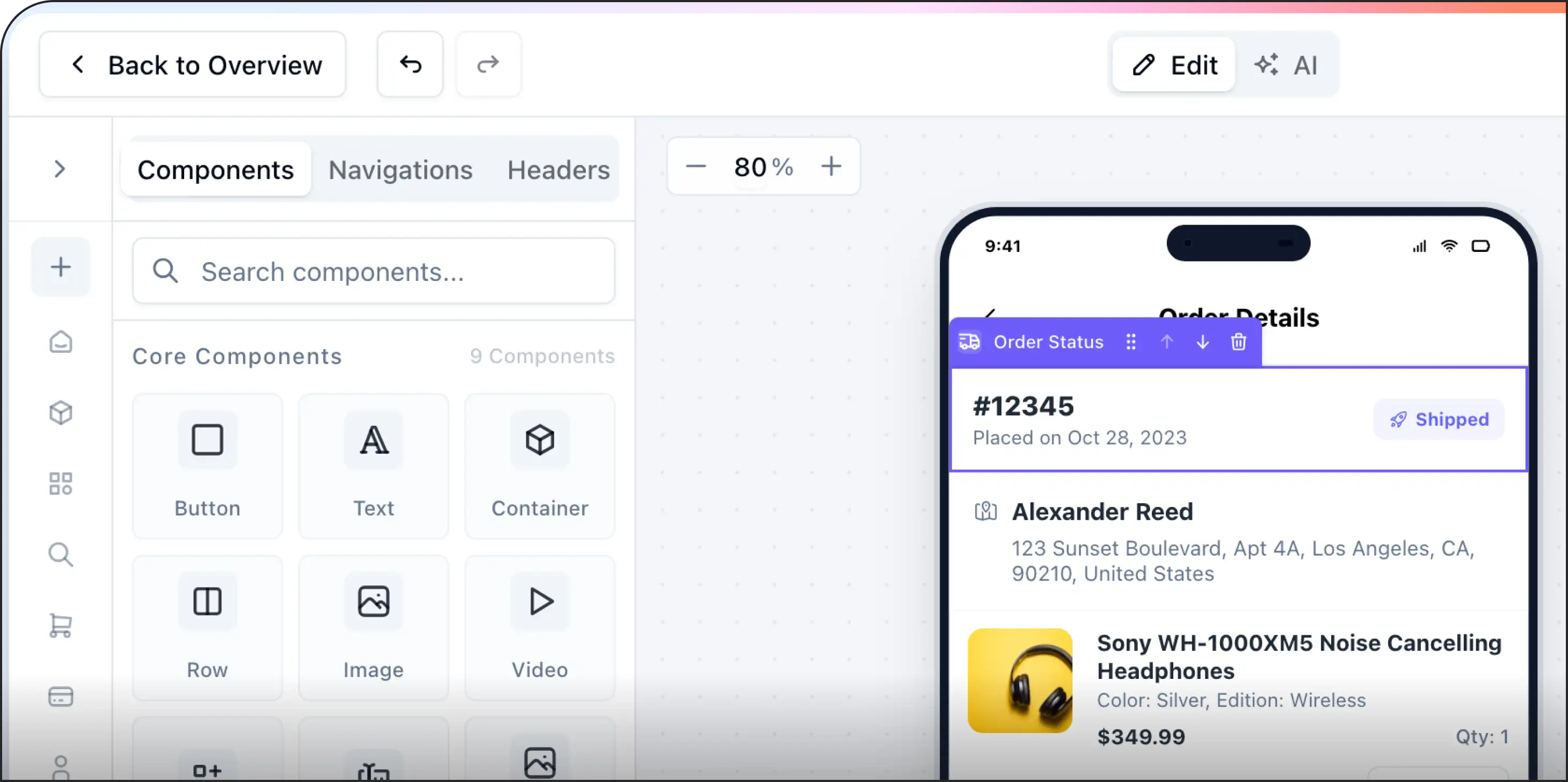
These solutions allow businesses to create functional apps using visual builders with minimal manual coding.
Platforms like OutSystems empower teams to accelerate development cycles and reduce reliance on extensive engineering resources.
This democratization of development will continue to grow, enabling faster innovation and experimentation.
Enhanced app security and privacy
As cyber threats evolve, app security will remain a top priority. Future applications will incorporate stronger encryption, biometric authentication, and zero-trust security frameworks.
Privacy-focused development will also increase, with stricter data regulations shaping how apps collect and store user information.
Businesses that prioritize transparent data practices and robust security measures will build stronger trust with their users and maintain regulatory compliance.
Conclusion
Traditional app development often presents a significant financial barrier due to high upfront costs, longer development cycles, separate platform teams, and ongoing infrastructure maintenance.
These rigid models can slow innovation and tie up valuable capital, making it difficult for startups and growing businesses to compete in fast-moving digital markets.
Modern solutions, on the other hand, reduce this cost pressure through cloud infrastructure, cross-platform frameworks, and scalable backend services.
By lowering initial investment, accelerating time to market, and enabling flexible scaling, modern development approaches transform app creation from a heavy financial burden into a strategic growth opportunity.