
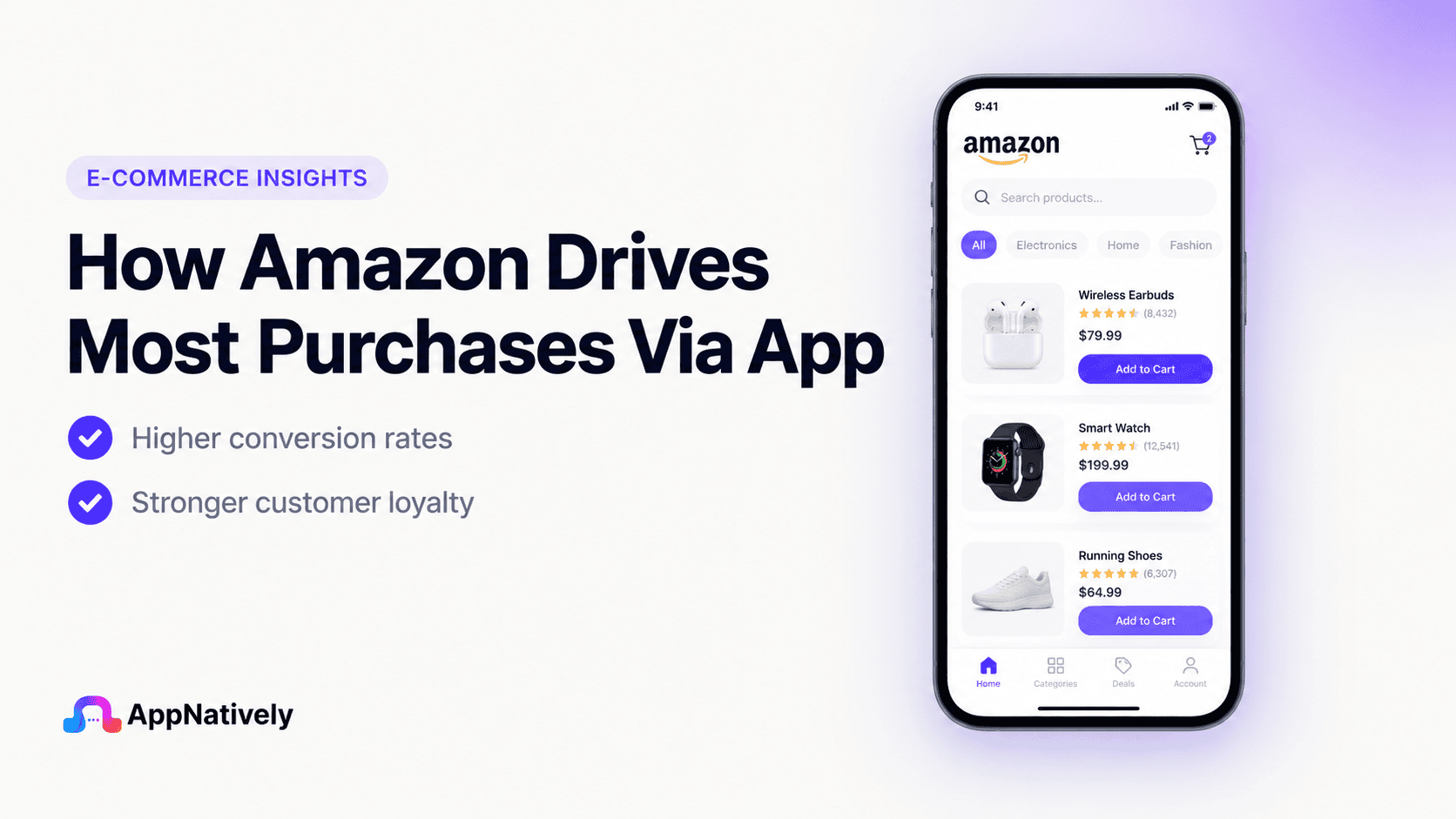
If you watch how people shop today, something subtle has changed.
They aren’t opening laptops anymore. They’re opening their phones.
A quick tap while waiting in line. A reorder during a commute. A late-night scroll that somehow turns into a $47 purchase.
More often than not, that tap leads to one place: Amazon.
And increasingly, it’s not the website doing the selling.
It’s the app.
Amazon’s mobile app isn’t just a smaller version of its website. It’s something far more powerful: a carefully engineered buying environment designed to reduce friction, trigger habits, and quietly increase how often and how much — people purchase.
This isn’t accidental. It’s strategic.
Let’s break down exactly how Amazon uses its app to drive the majority of purchases and why it works so well.
The Shift to Mobile-First Shopping
Mobile commerce didn’t just grow. It won.
Today, most online browsing time happens on smartphones, not desktops.
Phones are always within reach, always logged in, and always connected to payment methods. That makes them perfect for impulse purchases.
Apps amplify this effect even further.
Compared to mobile websites, apps:
- Load faster
- Stay logged in
- Store payment and shipping info
- Send push notifications
- Use device features like biometrics and cameras
In short: apps remove effort.
And in ecommerce, less effort equals more purchases.
Amazon understood this earlier than most retailers. Instead of treating mobile like a companion experience, it made the app the primary storefront.
Frictionless Checkout: Making Buying Effortless
One of the biggest drivers of conversions is how easy it is to finish a purchase.
Every extra step creates drop-off.
Enter Amazon’s famous “Buy Now” experience.
Inside the app:
- Payment methods are saved
- Addresses are prefilled
- Shipping preferences are remembered
- Biometrics approve purchases instantly
What used to take multiple screens on desktop can now happen in seconds.
You see something. You tap once. It’s ordered.
There’s almost no time to reconsider.
This reduction in “thinking time” is crucial. When checkout feels automatic, shoppers behave more impulsively.
Small purchases that might feel unnecessary with more friction suddenly feel trivial.
That convenience compounds across millions of users daily.
Personalization Engine: Making the Store Feel Custom-Built
A modern personalization engine transforms a generic storefront into a tailored shopping experience that feels custom-built for each visitor.
It uses data from shopper interactions to understand preferences and deliver the most relevant content at the right moment.
A. Home feed customization
The first impression matters, and a personalized home feed helps each visitor see products that resonate with them immediately. This is powered by insights from the customer’s:
- Browsing behavior — what pages and products they looked at
- Purchases — past buys signal strong preferences
- Search history — keywords and categories they’ve actively explored
By combining these signals, the engine highlights relevant categories, featured products, and promotional banners that are most likely to engage that specific shopper.
B. Smart recommendation blocks
Across the store, dynamic recommendation blocks guide users toward products they’re likely to want next. Some common blocks include:
- “Buy it again” — suggests items a returning customer has purchased before and might need to reorder
- “Inspired by your history” — based on past browsing and buying patterns, suggesting similar or complementary products
- “Frequently bought together” — pairs products that have high joint purchase rates
- “Customers also bought” — shows items that other shoppers who viewed the same product also ended up purchasing
These blocks enhance discovery while increasing average order value and engagement.
C. Predictive suggestions before intent is explicit
Personalization goes beyond reacting to clicks — it can predict what a shopper might want even before they express clear intent. For example:
- Surfacing related products after partial browsing signals
- Suggesting seasonal essentials before a user searches for them
- Anticipating refill needs for consumable goods
This predictive layer reduces friction by proactively offering relevant choices.
D. Seasonal and contextual personalization
Personalization isn’t static but it adapts to time, trends, and context. The engine can adjust recommendations based on:
- Seasonal demand (e.g., school supplies in August, holiday gifts in December)
- Local events or weather patterns
- Inventory or promotional cycles
By aligning with real-world timing, the store feels more intuitive and responsive to shoppers’ needs.
Technology behind it
These personalization features rely on several advanced technologies working together:
i. Machine learning
Algorithms learn patterns from massive amounts of interaction data. Over time, they refine recommendations, predict preferences, and uncover hidden associations between products and users.
ii. Behavioral modeling
This involves mapping out how different users behave in the store — what they click, ignore, search, and purchase. The personalization engine builds profiles that anticipate likely next moves based on these patterns.
iii. Collaborative filtering
This technique identifies similarities among users or products. For instance:
- If User A and User B have similar past behavior, items bought by one may be recommended to the other
- Products frequently purchased together appear as linked suggestions
Collaborative filtering helps the system expand recommendations beyond a user’s direct history by leveraging the collective behavior of many shoppers.
Push Notifications: Turning Attention Into Revenue
Push notifications extend the store experience beyond the website or app, creating direct, real-time touchpoints that bring shoppers back at the exact moment they’re most likely to convert. When used thoughtfully, they transform passive attention into measurable revenue by delivering timely, relevant, and personalized messages.
1. Real-time engagement
Push notifications create instant visibility on a customer’s device, cutting through inbox clutter and social noise. This makes them ideal for:
- Flash sales and limited-time offers
- Back-in-stock alerts
- Price drops
- Order and delivery updates
Because they’re immediate, they prompt faster action compared to email or traditional ads.
2. Behavioral triggers
Rather than sending generic blasts, modern systems trigger notifications based on customer behavior. Examples include:
- Abandoned cart reminders
- Browsed-but-not-purchased product nudges
- Wishlist item discounts
- Refill or replenishment reminders
These triggers feel helpful instead of intrusive because they match an already demonstrated intent.
3. Personalized messaging
Like the storefront itself, push notifications can be tailored to each shopper. Messages may include:
- Product recommendations based on browsing or purchases
- Location-specific promotions
- Category preferences
- Loyalty status or rewards
For example: “Your favorite running shoes are 20% off today” is far more effective than “Big sale happening now.”
4. Lifecycle communication
Push works best when aligned with the customer journey:
- New users: onboarding tips and welcome offers
- Active shoppers: product discovery and deals
- Dormant users: re-engagement incentives
- Loyal customers: VIP perks and early access
This lifecycle approach keeps communication relevant and prevents notification fatigue.
5. Timing and context optimization
Smart systems determine not just what to send, but when to send it. Notifications can adapt to:
- Time of day usage patterns
- Time zones
- Recent activity
- Seasonal or event-based campaigns
Sending a reminder when a user typically shops dramatically increases open and conversion rates.
The Power of Amazon Prime Inside the App
Within the Amazon app, Amazon Prime isn’t just a membership but a core part of the shopping experience.
It creates a faster, more trusted, and more rewarding journey that consistently increases conversions and long term loyalty.
Prime badges that instantly build trust
Across the app, Prime eligibility appears on search results, listings, and product pages as a clear visual cue.
These badges immediately signal fast, free delivery and easy returns, helping shoppers feel confident about buying without overthinking logistics.
This trust reduces hesitation and speeds up decisions, leading many customers to default to Prime items first.
Faster checkout with less friction
Prime eliminates common barriers like shipping calculations and surprise fees.
With streamlined checkout and guaranteed delivery windows, purchases feel simple and low effort.
Less friction means more impulse buys and higher repeat purchase rates.
App exclusive deals and early access
Members see offers that non members do not, including early access to limited time deals, exclusive discounts, and special promotions. These perks create urgency and give shoppers a reason to open the app frequently.
Over time, this turns browsing into a daily habit.
An ecosystem of built in benefits
Prime extends beyond shopping into a broader digital bundle, including
• Prime Video for entertainment
• Amazon Music for music
• Prime Gaming for extra perks
This added value makes the membership feel indispensable and increases retention.
Personalized prime first discovery
The app prioritizes Prime eligible products in recommendations and curated feeds. Shoppers encounter sections like Prime only deals, faster delivery first sorting, and reorder suggestions for essentials.
By showing what can arrive quickest and cheapest, the app naturally nudges users toward faster purchases.
Behavior reinforcement through speed and reliability
Consistent, dependable delivery builds trust and habit. When customers know they will get items quickly without complications, the app becomes their default starting point for everyday needs.
Convenience compounds over time into loyalty.
Technology behind the experience
Behind the scenes, the experience is powered by machine learning, behavioral modeling, and logistics optimization.
These systems personalize offers, predict demand, and ensure delivery promises are met, making Prime feel seamless, proactive, and uniquely valuable to each shopper.
App UX That Encourages Browsing (and Impulse Buying)
The Amazon app is designed to make browsing feel effortless while subtly nudging users toward unplanned purchases.
Every screen, swipe, and tap is optimized to encourage discovery, turning casual exploration into impulse buying without feeling pushy.
1. Intuitive navigation and search
Amazon’s app organizes categories, brands, and deals in a way that feels natural to the shopper.
Its search bar offers autocomplete suggestions, personalized results, and robust filtering options, making it easy to find exactly what a user wants or stumble upon new products.
This seamless navigation keeps users engaged longer and increases the likelihood of discovering items they weren’t initially looking for.
2. Visually engaging product displays
High-quality images, quick product previews, and clean layouts keep users scrolling. Features like swipeable product cards, carousels for “Trending” or “Deals,” and the prominent Prime badge draw attention to products that are both relevant and appealing.
Strong visuals make browsing feel rewarding and increase the chance of spontaneous purchases.
3. Smart recommendation placement
Amazon’s app places recommendations strategically throughout the shopping journey:
• “Inspired by your history” for personalized suggestions
• “Frequently bought together” to encourage complementary purchases
• “Customers also bought” for discovery beyond the user’s usual preferences
These recommendations are contextually placed, so users encounter them at the right moment often before they even know they want something.
4. Seamless add-to-cart and checkout
With one-tap add-to-cart buttons, persistent mini-carts, and streamlined checkout, the Amazon app makes acting on impulse nearly effortless.
The faster a shopper can purchase, the higher the likelihood of conversion.
5. Gamification and limited-time prompts
Countdown timers for lightning deals, “Only X left in stock” alerts, and seasonal promotions create urgency and excitement. These subtle cues encourage immediate engagement rather than delayed decisions.
6. Personalized and contextual feeds
Amazon’s home feed dynamically updates based on browsing history, past purchases, and seasonal trends.
Curated product collections, trending items, and Prime-focused deals keep the content relevant and make scrolling addictive, driving deeper engagement and unplanned buys.
7. Behavioral insights behind the UX
The app relies on machine learning, behavioral modeling, and collaborative filtering to predict what users want before they search.
By analyzing clicks, dwell time, and purchase patterns, Amazon surfaces the most compelling items at exactly the right time, keeping users engaged and increasing conversion.
Trust Infrastructure That Lowers Buying Anxiety
The Amazon app doesn’t just focus on convenience and discovery — it actively builds trust at every touchpoint to reduce hesitation and make purchasing decisions feel safe and confident.
By lowering buying anxiety, Amazon increases conversion rates, repeat purchases, and customer loyalty.
Clear product information and transparency
Every product page provides detailed descriptions, specifications, and high-quality images, so shoppers know exactly what they’re getting.
Prime eligibility, shipping times, return policies, and stock availability are prominently displayed, leaving little uncertainty about delivery or costs.
This transparency reassures users and reduces friction in the decision-making process.
Customer reviews and ratings
Amazon’s extensive review system allows shoppers to see honest feedback from other buyers.
Star ratings, verified purchase badges, and written reviews help users gauge quality, suitability, and reliability.
By leveraging social proof, the app turns potential doubt into confidence, making it easier for shoppers to commit.
Seller and fulfillment trust signals
The app distinguishes between Amazon-fulfilled items, third-party sellers, and Prime eligibility.
Amazon-fulfilled products carry guarantees for fast shipping and easy returns, while seller ratings provide a clear indicator of reliability.
These signals reduce risk perception and make buying from unknown sellers less intimidating.
Hassle-free returns and refund policies
Explicitly communicated return windows, easy-to-initiate refunds, and clear instructions for replacements give shoppers peace of mind.
Knowing that problems can be resolved quickly encourages users to complete purchases without second-guessing.
Secure payments and account protection
Amazon’s app emphasizes secure payment options, including saved payment methods, one-click checkout, and encrypted transactions.
Features like two-factor authentication and purchase protection further reinforce security.
Confidence in payment safety is critical for impulse purchases and higher-value items.
Behavioral and predictive trust reinforcements
Machine learning and behavioral modeling personalize trust signals. For example:
• Highlighting top-rated items for a shopper’s category of interest
• Prioritizing Prime-eligible products with guaranteed delivery
• Alerting users to stock levels or limited-time offers
These subtle cues reduce cognitive load and make decisions feel safer and faster.
Cross-Selling & Basket Expansion Tactics
The Amazon app uses advanced cross-selling strategies to increase order value by guiding shoppers toward complementary, relevant, and frequently paired products.
By intelligently suggesting items during browsing and at checkout, Amazon turns routine purchases into larger baskets without feeling pushy.
1. Frequently bought together suggestions
When viewing a product, the app highlights other items commonly purchased alongside it. For example, a customer buying a camera might see lenses, memory cards, or carrying cases.
These recommendations leverage historical purchase patterns, encouraging users to add items they might not have considered initially.
2. “Customers also bought” and “inspired by your history”
Amazon surfaces products purchased by similar users or suggested based on a shopper’s past browsing and buying behavior.
This creates a highly personalized shopping experience and exposes users to items aligned with their interests.
Personalized cross-sells feel relevant and increase the likelihood of spontaneous additions to the cart.
3. Bundling and combo deals
The app often presents bundled offers or discounted sets of related products.
By framing complementary items as a value deal, customers perceive additional purchases as savings rather than extra spending.
This tactic works particularly well for consumables, electronics accessories, or seasonal items.
4. Checkout & cart recommendations
Even after an item is added to the cart, Amazon continues to suggest complementary products.
Pop-ups, mini-carts, and recommendation panels highlight items frequently bought together or trending in the same category, prompting last-minute additions before checkout.
5. Smart email and push triggers
Cross-sell strategies extend beyond the app interface. Abandoned cart reminders, post-purchase follow-ups, and push notifications suggest related products, encouraging repeat visits and expanding basket size over time.
6. Data-driven personalization
Machine learning, collaborative filtering, and behavioral modeling analyze customer interactions to ensure cross-sells are relevant.
By understanding purchase history, browsing patterns, and product relationships, Amazon delivers recommendations that feel helpful instead of intrusive.
Ecosystem Lock-In Strategy
The Amazon app leverages its broad ecosystem of products and services to create a seamless, interconnected experience that keeps shoppers coming back.
By embedding multiple touchpoints from shopping to entertainment to digital services, Amazon turns convenience and value into loyalty, making it harder for users to switch to competitors.
Integration of prime across services
Amazon Prime is more than free shipping. Within the app, it provides access to:
• Prime Video for movies and TV shows
• Amazon Music for music
• Prime Gaming for digital rewards
By bundling shopping benefits with entertainment and lifestyle services, Amazon increases the perceived value of staying within its ecosystem.
Seamless account and payment integration
Saved payment methods, one-click checkout, and linked accounts across devices simplify the purchasing process.
Shoppers can move effortlessly between product discovery, checkout, and service subscriptions without friction.
The convenience of a unified account discourages switching to other platforms.
Personalized recommendations across touchpoints
Behavioral modeling and machine learning allow the app to surface relevant products, media, and offers tailored to each user.
Recommendations are consistent across devices and services, reinforcing engagement across Amazon’s ecosystem.
This cross-service personalization encourages users to rely on Amazon for multiple needs, not just shopping.
Loyalty programs and incentives
Rewards, points, and exclusive member deals further incentivize continued use.
Users who frequently engage with Prime or other services accumulate benefits that are difficult to replicate elsewhere, strengthening retention.
Habit formation through daily utility
The app positions itself as a daily utility by combining:
- Shopping essentials with fast delivery
- Entertainment and media consumption
- Gaming perks and digital rewards
This constant presence in users’ daily routines builds behavioral lock-in, making Amazon the default choice for multiple needs.
Data-driven retention
Amazon leverages collaborative filtering and predictive analytics to anticipate user needs, proactively offering products, services, or deals before users even search for them.
This proactive approach reinforces the value of staying within the ecosystem.
A Day in the Life: Example User Journey
To understand how the Amazon app drives engagement, consider a typical day for a Prime member navigating the ecosystem.
Each interaction demonstrates how personalization, convenience, and trust work together to create seamless shopping experiences and encourage additional purchases.
i. Morning: Discovery and inspiration
The user opens the Amazon app on their smartphone while having breakfast. The home feed is personalized with:
- “Prime deals for you” highlighting relevant discounts
- Trending or seasonal collections
- Recommendations based on past browsing
This early exposure sparks inspiration, prompting the user to explore new products and ideas without actively searching.
ii. Midday: Intent and browsing
During a coffee break, the user searches for a specific item, such as a new set of headphones. Smart recommendations appear:
- “Frequently bought together” accessories like cases or cables
- “Customers also bought” similar models
- Items marked with the Prime badge for fast delivery
These suggestions expand the basket and encourage discovery of complementary products.
iii. Afternoon: Consideration and decision
The user reviews product details, reads ratings and verified reviews, and compares options. The app provides:
- Clear product specifications and return policies
- Seller ratings and fulfillment details
- Price alerts or limited-time deal notifications
Trust signals reduce buying anxiety, making it easier for the user to finalize their choice.
iv. Evening: Checkout and cross-sell
After selecting their preferred headphones, the user proceeds to checkout. The app offers:
- Add-ons and bundles relevant to the purchase
- One-tap add-to-cart buttons for complementary items
- Easy, seamless Prime checkout
These cross-sell tactics increase average order value while maintaining a frictionless experience.
v. Night: Post-purchase engagement
Later in the evening, the app sends a push notification:
- “Your order has shipped” with tracking information
- Recommendations for similar or related products
- Personalized content from Prime Video or Prime Music
This keeps the user engaged with the Amazon ecosystem, encouraging repeat visits and strengthening loyalty.
Why Amazon Outperforms Typical Retail Apps
While many retail apps focus only on transactions, the Amazon app is engineered as a complete shopping ecosystem.
It blends personalization, trust, convenience, and subscription benefits into a single seamless experience, allowing it to outperform typical retail apps in both engagement and revenue.
Personalization at scale
Most retail apps show the same homepage to everyone. Amazon dynamically customizes nearly every screen based on browsing history, purchases, searches, and behavioral patterns.
This ensures shoppers consistently see relevant products first, increasing click-through rates, discovery, and conversions.
Frictionless purchase flow
Traditional apps often require multiple steps to check out or calculate shipping.
Amazon simplifies this with saved payments, one-tap checkout, and fast, predictable delivery.
By removing friction, the path from interest to purchase is shorter, which directly increases impulse buying and repeat orders.
Built-in trust infrastructure
Amazon reduces buying anxiety through reviews, ratings, clear return policies, fulfillment guarantees, and Prime delivery promises.
When shoppers feel confident that items will arrive quickly and can be easily returned, they purchase more frequently and with less hesitation.
Smarter recommendations and cross-Selling
Typical retail apps rely on static suggestions. Amazon continuously updates “Frequently bought together,” “Customers also bought,” and personalized recommendations using machine learning and collaborative filtering.
These placements turn single-item purchases into larger baskets and improve average order value.
Ecosystem lock-in
Unlike standalone retailers, Amazon connects shopping with Amazon Prime benefits such as Prime Video and Amazon Music.
This bundling creates daily utility beyond commerce, keeping users engaged even when they are not actively shopping and making the app harder to replace.
Continuous engagement beyond the app
Push notifications, delivery updates, replenishment reminders, and personalized offers keep Amazon top of mind throughout the day.
Instead of waiting for users to return, the app proactively brings them back, increasing frequency and lifetime value.
Data-driven optimization
Amazon treats the app as a constantly evolving system. Machine learning, behavioral modeling, and large-scale experimentation refine layouts, recommendations, and timing in real time.
This relentless optimization allows Amazon to improve faster than typical retail apps that rely on periodic updates.
The success of the Amazon app isn’t just about scale or brand recognition.
It comes from deliberate product, UX, and growth decisions that systematically remove friction, build trust, and increase customer lifetime value.
For founders and marketers, these principles are highly transferable, even without Amazon’s resources.
Design for habits, not just transactions
Most retail apps are built to complete purchases. Amazon is built to create daily usage.
Deals, recommendations, deliveries, and entertainment give users reasons to open the app regularly, even when they are not actively shopping.
Focus on becoming part of a customer’s routine, not just their checkout flow.
Personalize from day one
Generic experiences underperform. Even simple personalization based on browsing history, purchases, or location can dramatically improve relevance.
Show users what matters to them first. Relevance drives both engagement and revenue.
Remove every bit of friction
Every extra step reduces conversions. Simplify search, reduce checkout steps, save payment methods, and make delivery expectations clear.
Small UX improvements compound into meaningful revenue gains.
Build trust before you sell
Customers buy faster when they feel safe. Reviews, ratings, clear policies, and guarantees reduce hesitation and increase basket size.
Trust infrastructure often converts better than aggressive discounts.
Use smart recommendations to grow AOV
Instead of pushing more ads, guide discovery with contextual suggestions like complementary products, bundles, or frequently paired items.
Helpful cross-sells feel like service, not selling, and naturally increase average order value.
Create an ecosystem, not a feature
Amazon Prime shows the power of bundling multiple benefits into one offering.
The more value customers receive across different use cases, the harder it is for them to leave.
Think beyond a single product and explore how services, content, or loyalty perks can reinforce each other.
Invest in data and experimentation
Machine learning, behavioral modeling, and constant testing allow Amazon to continuously refine its experience.
You do not need massive infrastructure to start. Even basic analytics and A B testing can reveal quick wins.
Treat your app as a living system that evolves based on user behavior.
Optimize for lifetime value, not one-time sales
Short-term promotions can spike sales, but sustainable growth comes from retention.
Focus on repeat purchases, subscriptions, and re-engagement flows that keep customers coming back.
Long-term loyalty consistently outperforms one-off acquisition wins.
Future of App-Driven Commerce
Mobile apps are no longer just smaller versions of websites. They are becoming intelligent, always-on commerce environments that anticipate needs, personalize experiences in real time, and blur the line between shopping, content, and services.
The trajectory set by leaders like Amazon shows that the future of commerce belongs to apps that feel less like stores and more like smart assistants embedded in everyday life.
1. Hyper-personalized storefronts
Static homepages will disappear. Every user will see a dynamically generated feed based on behavior, preferences, timing, and context.
Products, offers, and content will adapt continuously, making each app session feel uniquely curated rather than one-size-fits-all.
2. Predictive and proactive shopping
Apps will move from reacting to searches to predicting needs before intent is explicit.
Replenishment reminders, subscription suggestions, and timely product prompts will surface automatically.
Instead of asking “What do you want to buy?”, apps will increasingly say “Here’s what you likely need next.”
3. Seamless one-tap commerce
Checkout will become nearly invisible. Saved payments, instant approvals, and faster delivery promises will compress the gap between discovery and purchase to seconds.
As friction approaches zero, impulse purchases and micro-transactions will rise significantly.
4. Integrated ecosystems over standalone stores
Standalone retail apps will struggle. The winners will bundle multiple services into one ecosystem, similar to how Amazon Prime combines shipping, entertainment, and digital benefits.
When shopping, content, and utilities live in one place, users have fewer reasons to leave the app.
5. Conversational and voice interfaces
Search bars will increasingly be replaced or supplemented by conversational input.
Voice assistants and chat-style interfaces will help users find products, compare options, and complete purchases naturally.
This lowers cognitive effort and speeds up decision-making.
6. Real-time context awareness
Apps will personalize based not just on history but on the present moment.
Location, time of day, weather, and current activity will shape what users see.
For example, an app might highlight umbrellas during local rain or promote dinner deals in the evening.
7. Smarter automation and AI
Machine learning and behavioral modeling will power everything from pricing to recommendations to messaging frequency.
Apps will automatically test, learn, and optimize without manual intervention.
This constant improvement will make experiences feel increasingly intuitive and “just right.”
8. Trust and transparency as differentiators
As personalization deepens, customers will expect clearer privacy controls and transparent data usage.
Apps that balance intelligence with trust will win long-term loyalty.
Confidence in security and fairness will become as important as convenience.
Final Thoughts: How Amazon Drives Most Purchases Via App
The Amazon app succeeds because it does not behave like a traditional retail channel. It is not just a place to complete transactions but a personalized, trusted, and habit forming environment that shoppers return to multiple times a day.
Every layer of the experience is intentionally designed to reduce friction, increase confidence, and surface the right product at the right moment.
Personalized feeds make discovery effortless. Smart recommendations and cross sells expand baskets naturally. Prime benefits remove delivery anxiety.
One tap checkout eliminates hesitation. Push notifications and ecosystem perks keep users coming back even when they are not actively shopping.
Together, these elements create a loop of convenience and habit that continuously drives repeat purchases.
That is the core advantage. Amazon does not wait for buying intent. It shapes it.
By combining data, design, and trust at scale, the app becomes the default starting point for everyday needs, which is why most purchases happen there first and often without customers even considering alternatives.