
Why Your Mobile App Fails to Publish (And How to Fix It Fast in 2026)

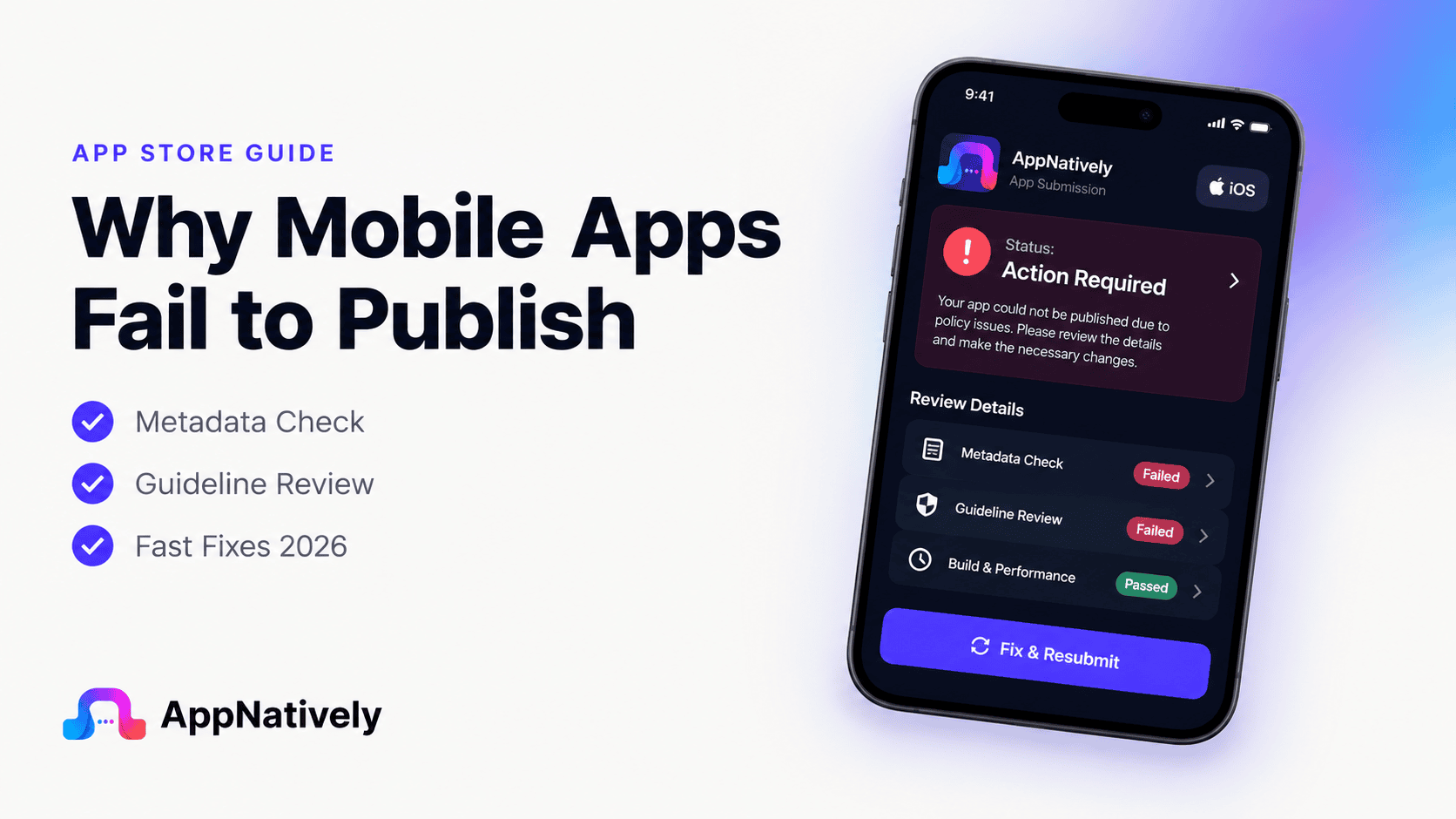
Mobile apps commonly fail to publish because of policy violations, incomplete store listings, privacy issues, crashes, broken functionality, misleading metadata, or security concerns.
Both Google Play and Apple App Store enforce strict review guidelines, and even minor mistakes can result in rejection, delays, or suspension. Fortunately, most publishing issues can be identified and fixed before resubmission.
Publishing an app is often considered the final step in the development process, but for many developers, it becomes an unexpected obstacle.
After investing months in design, coding, testing, and marketing preparation, receiving a rejection notice from the app store can be frustrating and costly.
Whether you’re launching your first application or managing a portfolio of mobile products, understanding why apps fail during the review process is critical.
In this blog post, we’ll explain the most common reasons mobile apps get rejected and provide actionable solutions to help you achieve approval faster.
Publish Native Apps to the App Store & Google Play
Stop dealing with complex submissions and rejections. With AppNatively, you can publish fully native iOS and Android apps directly to the Apple App Store and Google Play—faster and easier.
Launch your app with confidence and reach real users sooner.
👉 Join the Waitlist for AppNatively Today
Mobile App Review Process
Before discussing reasons for rejection, it’s important to understand how app stores evaluate submissions.
Both Google Play and Apple App Store review apps based on:
- User safety
- Privacy compliance
- Security standards
- Performance quality
- Content policies
- Metadata accuracy
- User experience
If your application fails to meet any of these requirements, it may be rejected, suspended, or removed from the review queue.
Why Your Mobile App Fails to Publish: Reasons & Fix Guides
1. Policy Violations
Policy violations are among the most common reasons apps fail to publish.
Examples include:
- Misleading functionality
- Prohibited content
- Unauthorized data collection
- Spam behavior
- Copyright infringement
- Deceptive advertising
How to Fix It
- Carefully review current platform policies.
- Audit all app features.
- Remove prohibited content.
- Ensure compliance with privacy and advertising regulations.
2. Missing Privacy Policy
Privacy compliance has become a major focus for app stores.
If your app collects:
- Email addresses
- Phone numbers
- Location data
- Device information
- Payment information
You generally need a clear privacy policy.
How to Fix It
- Create a comprehensive privacy policy.
- Host it on a secure website.
- Include the policy URL in your app listing.
- Clearly explain how user data is collected and used.
3. App Crashes During Review
Reviewers test your app on real devices.
If your app crashes during launch or while navigating features, approval is unlikely.
Common Causes
- Memory leaks
- API failures
- Device compatibility issues
- Missing configurations
- Backend connection errors
How to Fix It
- Perform extensive QA testing.
- Test on multiple devices.
- Monitor crash logs.
- Use beta testing programs before submission.
4. Incomplete App Store Listing
Many developers focus entirely on development and overlook store optimization requirements.
Common missing elements include:
- Screenshots
- App descriptions
- Privacy disclosures
- Feature graphics
- Promotional content
How to Fix It
Create a complete submission checklist before publishing.
Include:
- App icon
- Screenshots
- Description
- Keywords
- Contact information
- Privacy policy URL
5. Misleading App Metadata
Your store listing must accurately represent your application.
Examples of violations:
- Fake screenshots
- Keyword stuffing
- False feature claims
- Misleading descriptions
How to Fix It
Ensure that every screenshot and description accurately reflects the app’s functionality.
6. Poor User Experience
Even technically functional apps can be rejected if they provide a poor user experience.
Common UX issues:
- Broken navigation
- Non-responsive buttons
- Excessive ads
- Confusing interfaces
- Incomplete onboarding
How to Fix It
Conduct usability testing before submission.
Gather feedback from:
- Beta users
- Internal testers
- QA teams
7. Excessive Permissions
Requesting unnecessary permissions raises red flags during review.
Examples:
- Camera access without camera features
- Location tracking without clear purpose
- Contact access for unrelated functionality
How to Fix It
Only request permissions essential to app functionality.
Explain permission usage clearly to users.
8. Security Vulnerabilities
Apps handling user information must meet modern security standards.
Common problems:
- Unencrypted communications
- Weak authentication
- Exposed APIs
- Insecure data storage
How to Fix It
Implement:
- HTTPS encryption
- Secure authentication
- Token management
- Data encryption
9. Broken Login Systems
Many apps fail review because reviewers cannot access core functionality.
Common issues:
- Invalid demo credentials
- Login loops
- Authentication failures
- Expired test accounts
How to Fix It
Provide:
- Working reviewer accounts
- Test credentials
- Access instructions
Verify everything before submission.
10. Copyright and Trademark Violations
Using copyrighted materials without permission can lead to immediate rejection.
Examples include:
- Unauthorized images
- Brand logos
- Music files
- Trademarked names
How to Fix It
Use:
- Licensed assets
- Original content
- Proper permissions
Keep documentation available if requested.
11. Spam or Duplicate Apps
App stores actively combat low-quality and duplicate content.
Examples:
- Multiple similar apps
- Template-based clones
- Minimal functionality apps
How to Fix It
Focus on creating unique value.
Differentiate your application through:
- Features
- Design
- Content
- User experience
12. Performance Problems
Slow apps create poor user experiences and often fail review.
Symptoms include:
- Long loading times
- Freezing screens
- High battery usage
- Excessive resource consumption
How to Fix It
Optimize:
- API calls
- Images
- Database queries
- Background processes
13. In-App Purchase Violations
Incorrect payment implementations frequently cause rejections.
Common issues:
- Bypassing required payment systems
- Missing purchase disclosures
- Broken subscription flows
How to Fix It
Follow official payment guidelines and thoroughly test all purchase scenarios.
14. Insufficient Testing
Many rejections occur because developers submit apps too early.
Recommended Testing Areas
- Functional testing
- UI testing
- Device testing
- Security testing
- Performance testing
- Accessibility testing
15. Failure to Follow Platform-Specific Guidelines
Google Play and Apple App Store have different review requirements.
A feature acceptable on one platform may violate policies on another.
How to Fix It
Review platform-specific requirements before every submission.
Store policies change frequently, making regular compliance reviews essential.
Mobile App Publishing Checklist
Before submitting your app, verify:
- No crashes
- Privacy policy included
- Accurate screenshots
- Functional login credentials
- No policy violations
- Secure data handling
- Responsive UI
- Optimized performance
- Proper permissions
- Complete metadata
How Long Does App Approval Take?
Approval times vary depending on:
- Platform
- App category
- Reviewer workload
- Compliance status
Apps with complete documentation and strong compliance typically experience faster reviews than apps requiring multiple revisions.
Conclusion
Mobile app publishing failures are rarely caused by a single major issue. More often, they result from overlooked details such as privacy disclosures, metadata inaccuracies, crashes, permission misuse, or policy violations. Understanding the review process and following a structured pre-launch checklist dramatically increases your chances of approval.
The most successful developers treat app publishing as part of the product development cycle rather than a final administrative step.
By prioritizing compliance, security, performance, and user experience from the beginning, you can reduce rejection risks and launch your app successfully on both Google Play and the Apple App Store.
Frequently Asked Questions (FAQs)
Why was my mobile app rejected from Google Play?
Google Play may reject apps due to policy violations, privacy concerns, excessive permissions, crashes, misleading metadata, or security vulnerabilities.
How do I fix a rejected app submission?
Review the rejection notice carefully, identify the specific issue, make the necessary corrections, test thoroughly, and resubmit the application.
What is the most common reason apps fail to publish?
Policy violations, incomplete privacy disclosures, app crashes, and misleading store listings are among the most common reasons.
How long does app review take after resubmission?
Review times vary, but corrected submissions often move faster through the approval process than initial submissions.
Can an app be permanently banned from app stores?
Yes. Severe or repeated policy violations can lead to permanent developer account suspension and app removal.
Do all apps need a privacy policy?
Any app that collects, stores, or processes user data generally requires a privacy policy.
How can I increase my app approval rate?
Follow platform guidelines, test extensively, optimize performance, provide accurate metadata, and ensure compliance with privacy and security requirements.
Related posts