10 App Ideas Every Founder Can Build Without Coding (Start & Scale in 2026)


Want to build an app but don’t know how to code?
You’re not alone. Most founders struggle with technical barriers, high development costs, and long timelines, often giving up before their idea even launches.
The good news? You no longer need coding skills to build and scale an app.
With modern no-code and AI-powered app builders, anyone can turn an idea into a working product in days.
The real challenge now isn’t development. Instead, it’s choosing the right idea that actually works.
In this blog post, you’ll discover 10 high-potential app ideas you can build without coding, each designed to validate quickly, attract users, and generate revenue.
Why No-Code App Ideas Are Booming
No-code development has transformed the startup ecosystem. Founders are no longer dependent on developers to launch MVPs or test ideas.
Today, you can:
- Build faster
- Launch cheaper
- Validate instantly
- Scale without technical bottlenecks
This shift has opened the door for non-technical founders to compete with traditional startups.
10 App Ideas Every Founder Can Build Without Coding
1. Niche job board for a specific audience
A niche job board is one of the simplest and most reliable no-code businesses you can build.
Instead of competing with massive platforms, you focus on a specific audience like remote jobs for students, AI jobs, internships in Bangladesh, or freelance work for beginners.
When you narrow the audience, companies are often willing to pay more because they know they are reaching the right people.
You can build this using Webflow for the front-end design, store job listings in Airtable, and turn everything into a working app using Softr. The entire process can take just a few days.
This idea works well because companies constantly need talent, and job boards naturally generate recurring revenue through paid listings, featured posts, and subscriptions.
Many founders have built profitable job boards without writing a single line of code.
2. AI tool directory for a growing market
AI tool directories are exploding in popularity because new tools are launching every day.
You can create a curated platform that helps people discover useful AI tools for a specific purpose, such as students, designers, marketers, or small businesses.
You could build this using Notion as your database, then convert it into a website using Super or build a mobile-friendly version with Glide.
This setup is extremely beginner-friendly and can be launched within hours.
This idea is powerful because it grows over time. As you add more tools, traffic increases, and monetization options like sponsorships, premium placements, and ads become available.
Some AI directories built this way generate thousands per month.
3. Local services marketplace
A local marketplace connects people who need services with people who provide them.
You could create a platform for tutors, freelancers, repair services, or even student services in your area.
This idea works especially well in growing cities where people need trusted recommendations.
Platforms like Bubble allow you to build full-featured marketplaces with profiles, messaging, and payments.
Alternatively, Sharetribe lets you launch faster with built-in marketplace features.
This type of app becomes more valuable as more users join. You can charge commissions, subscription fees, or listing fees, making it a scalable business with strong long-term potential.
4. Habit tracker for students or professionals
Habit tracking apps are always in demand because people want to improve productivity, fitness, and consistency.
A simple habit tracker designed for a specific audience like students, gym beginners, or entrepreneurs can attract a loyal user base.
You can build this using Glide or Adalo, both of which allow you to create mobile apps with login systems and progress tracking.
This idea works well because it encourages daily engagement. Apps that people use daily have strong retention and monetization potential through premium features, themes, or coaching add-ons.
5. Newsletter + community platform
A newsletter combined with a community creates a powerful ecosystem. You can focus on topics like startups, tech, student opportunities, or AI tools.
The newsletter brings traffic, while the community builds loyalty.
You can start the newsletter using Substack or Beehiiv, then build a community using Circle.
This idea is powerful because it builds an audience first, which makes launching future products much easier.
Many founders use this model to build profitable media businesses.
6. Micro SaaS for a specific problem
Micro SaaS apps solve small but annoying problems. Examples include invoice generators, meeting note apps, or simple CRM tools for freelancers. These apps are small but valuable.
You can build these using Bubble or Glide. These tools allow you to create login systems, dashboards, and subscription features.
Micro SaaS apps often succeed because they focus on solving one problem very well. Users are willing to pay monthly for tools that save them time.
7. Learning platform for a niche skill
Online learning is growing fast, and you can create a platform focused on a specific skill like design, freelancing, coding basics, or productivity.
You can build this using Gumroad, Podia, or Kajabi.
This idea works because education is evergreen. Once you create content, it can generate revenue repeatedly without much maintenance.
8. Digital product marketplace
You can create a marketplace where creators sell templates, ebooks, prompts, or design assets.
This idea works well because creators are always looking for platforms to sell their work.
You can launch using Gumroad or build a custom marketplace with Bubble.
This idea scales nicely because creators bring their own audiences, which helps grow your platform organically.
9. Startup idea validation platform
Many founders struggle to validate ideas. You can create a platform where users submit startup ideas, get feedback, and see trends.
You can build this using Softr with Airtable as the backend.
This idea becomes more valuable as more users participate. You can monetize through premium submissions or analytics tools.
10. Personal finance tracker for students
A simple personal finance tracker designed for students or beginners can be very useful. Users can track expenses, savings goals, and budgets.
You can build this with Glide or Adalo.
Finance apps work well because they provide continuous value, which encourages users to return regularly.
This increases retention and monetization opportunities.
“Convert your website into a native app in minutes.”
👉 Join the AppNatively waitlist.
10 AI App Ideas You Can Build Right Now
i. AI Study Assistant for Students
An AI study assistant helps students summarize notes, generate quizzes, explain difficult topics, and create study schedules. You can target a specific audience like high school students, exam preparation, or language learners. The value comes from saving time and improving learning efficiency.
You can build this using Bubble combined with OpenAI APIs. This idea works well because students constantly need help, and you can monetize with subscriptions or premium features.
ii. AI Resume Builder
An AI resume builder helps users create professional resumes in minutes. Users enter basic information, and the AI generates polished resumes, cover letters, and LinkedIn summaries.
You can build this using Glide or Softr. This idea is powerful because job seekers are always looking for faster ways to stand out.
iii. AI Content Idea Generator
This app generates content ideas for creators, bloggers, and social media users. It can suggest video ideas, tweet ideas, blog titles, and posting schedules.
Using Webflow and Zapier, you can build this quickly. Content creators are always searching for inspiration, making this idea highly valuable.
iv. AI Business Name Generator
Founders struggle to find good business names. Your app can generate brand names, domain suggestions, and logo ideas instantly.
You can build this using Notion plus automation tools. This idea is simple but surprisingly popular.
v. AI Email Writer
This app helps users write professional emails for work, school, or business. Users describe their situation, and the AI generates polished emails.
You can build this with Adalo. It’s useful for professionals and students alike.
vi. AI social media post generator
This app creates Instagram captions, LinkedIn posts, tweets, and content calendars automatically.
Social media users constantly need content, which creates strong demand.
Using Bubble, you can launch quickly and scale later.
vii. AI homework helper
Students upload questions, and the AI explains answers step-by-step. This idea is especially useful for math, science, and language learning.
This can be built using Glide and AI APIs.
viii. AI website builder for beginners
Users describe their business, and your app generates a simple website layout and content automatically.
You can build this using Webflow and automation tools.
ix. AI personal coach
This app helps users with productivity, goals, and habits. It provides suggestions and tracks progress.
You can build this using Softr.
x. AI meeting notes summarizer
Users upload meeting recordings, and the AI summarizes key points and action items. This is extremely useful for teams and students.
You can build this using Bubble.
10 Startup Ideas You Can Start With $0
1. Digital newsletter business
A newsletter is one of the easiest businesses to start with zero money.
You pick a niche like AI tools, student opportunities, productivity, or tech news, and send valuable content regularly.
Over time, your audience grows, and you can monetize through sponsorships, paid subscriptions, or digital products.
You can launch using Beehiiv or Substack without spending anything.
Many founders start newsletters as side projects and eventually turn them into full-time businesses.
2. No-code website building service
Many small businesses still don’t have websites. You can offer to build simple websites using no-code tools and charge clients.
This requires no upfront investment, only your time.
You can build websites using Carrd or Webflow. Once you get your first client, you can reinvest profits into scaling.
3. Social media management
Small businesses often struggle with posting consistently. You can offer social media management by creating posts, scheduling content, and growing accounts.
Use free tools like Canva to create graphics and grow accounts without spending money. This business works well because demand is very high.
4. Digital product selling
You can create simple digital products like study planners, templates, or guides. Once created, these products can sell repeatedly without extra work.
You can sell through Gumroad or Payhip for free.
5. Online tutoring
If you’re good at a subject, you can offer tutoring online. Students constantly need help with school subjects, languages, or exam preparation.
You can find clients through social media and host sessions using Google Meet.
6. Freelance writing
You can offer writing services such as blog posts, social media captions, or newsletters.
Many companies need content but don’t want to hire full-time writers.
Start by reaching out on social platforms and building your portfolio.
7. Community building
Create a community around a niche like students, startups, AI, or productivity.
Once you grow your community, you can monetize through memberships.
You can build communities using Discord.
8. Affiliate marketing
Promote tools and earn commissions. You create content reviewing products and share affiliate links.
This works well with blogs, newsletters, or social media.
9. Personal branding agency
Help people build their online presence. Many professionals want to grow on social media but don’t know how.
You can help with content ideas, posting, and growth strategies.
10. Micro consulting
If you know something well, offer consulting sessions. This could be productivity, studying, social media, or design.
You only need knowledge and communication skills to get started.
10 App Ideas for Students
Study planner app
A study planner helps students manage homework, exams, and deadlines. You can add reminders, goal tracking, and productivity tools.
Apps like this work well because students use them daily, increasing engagement.
Study group finder
Students often want study partners. This app helps them find people studying the same subjects.
You can add chat features and group creation.
Note sharing platform
Students upload and share notes with others. You can organize notes by subject, grade, and exam.
This app grows naturally as more users upload content.
Homework tracker
Students track assignments and deadlines. This app helps reduce stress and improve organization.
You can add reminders and progress tracking.
Student marketplace
Students buy and sell books, notes, and supplies. This works especially well in schools and universities.
You can add ratings and messaging.
Focus timer app
Students use focus timers to study efficiently. You can add Pomodoro timers and productivity stats.
This idea is simple but highly useful.
Scholarship finder
Students search for scholarships and opportunities. This app helps students discover funding options.
You can add filters and notifications.
Class schedule organizer
Students organize their daily schedules. This app helps manage classes and deadlines.
You can add reminders and calendar integration.
Exam preparation app
Students prepare for exams with quizzes and study materials. You can add practice tests.
This idea has strong demand.
Student social network
A social network designed for students to connect and collaborate.
You can add groups and study communities.
10 Viral App Ideas You Can Try
1. Anonymous confession app
Users share anonymous thoughts and confessions. These apps often go viral in schools and colleges.
Viral factor comes from curiosity and sharing.
2. AI roast generator
Users upload their bio, and AI roasts them humorously. This type of content spreads quickly.
People love sharing funny results.
3. Personality test app
Users take fun personality quizzes and share results. These apps spread easily on social media.
You can add shareable graphics.
4. Challenge app
Users participate in daily challenges and share results. This drives engagement and growth.
Challenges encourage viral sharing.
5. AI avatar generator
Users generate AI avatars of themselves. These apps often go viral quickly.
People love sharing profile pictures.
6. Daily question app
Users answer daily questions and compare responses.
This builds daily engagement.
7. Prediction app
Users predict trends, events, or outcomes and compare them with others.
This creates competition and engagement.
8. Poll app
Users create and share polls with friends.
Polls are highly shareable.
9. Trend discovery app
Users discover trending topics and content.
This encourages sharing and engagement.
10. Social dare app
Users send dares to friends and share results.
This encourages viral growth.
“Your website. Now, an app.”
→ Join The Waitlist.
10 Billion-Dollar Startup Ideas
i. AI personal assistant that runs your life
Imagine an AI that manages your schedule, emails, tasks, reminders, travel planning, and even decision-making.
Instead of switching between apps, users rely on one intelligent assistant that learns their habits over time. As AI improves, this becomes more valuable and deeply integrated into daily life.
This could be built using APIs from OpenAI and automation tools like Zapier.
The reason this could become a billion-dollar startup is that everyone from students to CEOs needs productivity help.
ii. AI learning platform that replaces traditional education
A personalized AI learning platform that adapts to each student’s pace could disrupt education.
Students get custom lessons, quizzes, explanations, and progress tracking tailored to their strengths and weaknesses.
Platforms like this could compete with traditional education by making learning faster and cheaper.
With millions of students worldwide, the potential scale is massive.
iii. Remote work operating system
Remote work is still growing, but tools are fragmented. A platform that combines communication, project management, meetings, and documentation into one system could dominate the remote workspace.
You could build something similar to Slack + Notion combined into one powerful platform.
iv. AI healthcare assistant
An AI that helps users understand symptoms, track health, manage medication, and book doctors could become extremely valuable.
Healthcare is one of the biggest industries in the world, making this idea very high-potential.
As AI improves, this could become a daily health companion used by millions.
v. Creator economy super app
Creators currently use many platforms to manage content, monetization, analytics, and audience.
A single app that does everything for creators could become extremely powerful.
Think of combining YouTube, Instagram, and monetization tools into one ecosystem.
vi. AI business builder
Users describe their business idea, and the platform generates branding, website, marketing, and automation automatically.
This could drastically lower the barrier to starting businesses.
You could integrate tools like Webflow and AI content generation to automate everything.
vii. Future of social networking
A new type of social network built around interests instead of followers could disrupt traditional platforms.
Focus on meaningful connections rather than endless scrolling.
Many billion-dollar companies started with new social networking concepts.
viii. AI shopping assistant
An AI that helps users find the best products, compare prices, and automate purchases could reshape e-commerce.
This would save users time and money.
With global e-commerce growing, the potential is huge.
ix. Digital identity platform
A secure digital identity that works across websites, apps, and services could become essential infrastructure.
Users control their identity, data, and permissions.
This could be used for login, payments, and verification.
x. Micro-entrepreneur platform
A platform that helps anyone start a small business in minutes. Users can launch services, sell products, and manage customers easily.
This taps into the growing trend of independent creators and entrepreneurs.
Build Native Apps Without Writing Code
AppNatively is the fastest way to turn your idea into a real mobile app without developers, complexity, or long timelines.
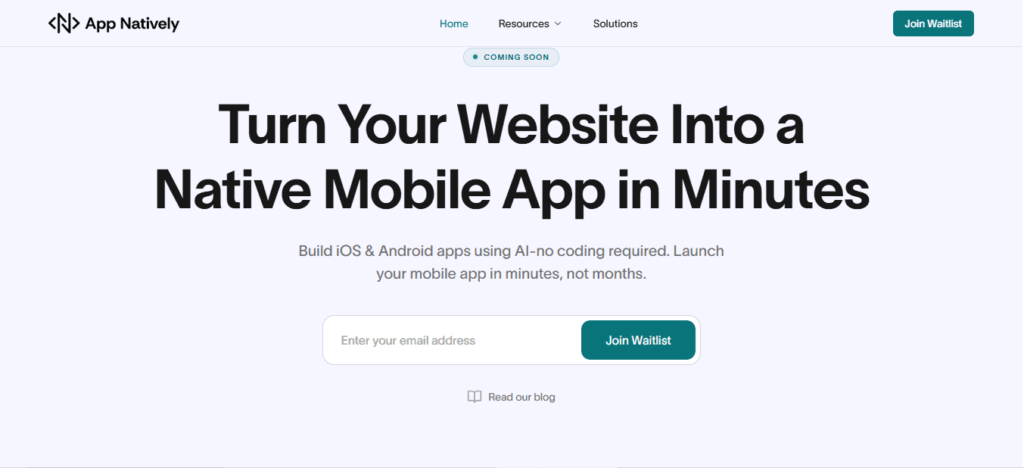
We’re building a platform where founders, creators, and startups can launch fully native apps in days, not months.
Why AppNatively?
Most app builders create slow, limited apps.
AppNatively focuses on real native performance, beautiful UI, and fast launch — all without coding.
What You’ll Be Able To Do
- Turn your idea into a native app
- Launch on iOS and Android
- Customize design without developers
- Integrate powerful features easily
- Update your app anytime
N.B: The price is super affordable compared to other solutions like Bubble, Glide, Adalo, etc.
Built for Founders Who Move Fast
Whether you’re building a startup, MVP, or side project, AppNatively helps you go from idea to launch faster than ever.
Currently Under Development
We’re working hard to make AppNatively powerful, simple, and fast.
Be the first to experience it.
Join the early access list and get priority access when we launch.
Conclusion
These app ideas show that you don’t need coding skills, a big team, or large funding to start building.
With modern no-code tools like AppNatively, founders can turn simple ideas into real products faster than ever before.
The key is to start small, solve a real problem, and launch quickly. You can always improve and scale once you gain users and feedback.
The best founders don’t wait for perfect conditions; rather, they start building. Choose one idea, take action, and bring your app to life without writing a single line of code.
Frequently Asked Questions (FAQs)
What is a no-code app?
A no-code app is a software application built without programming, using visual builders and drag-and-drop tools.
Can I really build an app without coding?
Yes, modern no-code platforms allow you to design, develop, and launch fully functional apps without writing code.
Which app idea is most profitable?
Subscription-based apps, marketplaces, and micro SaaS tools tend to generate consistent and scalable revenue.
How long does it take to build a no-code app?
Most MVPs can be built within a few days to a few weeks, depending on complexity.
Do no-code apps scale?
Yes, many no-code apps scale successfully, especially when built with the right tools and validated ideas.