
Explore expert insights, tutorials, and guides about Apps to build better native apps faster with App Natively.

Shopify brands are increasingly shifting from mobile websites to native apps because the numbers behind retention and conversion are hard to ignore. Across ecommerce, repeat purchase rates from app users are consistently higher than mobile web users, largely because apps remove friction at checkout and keep customers continuously engaged through push notifications and personalized experiences. ...

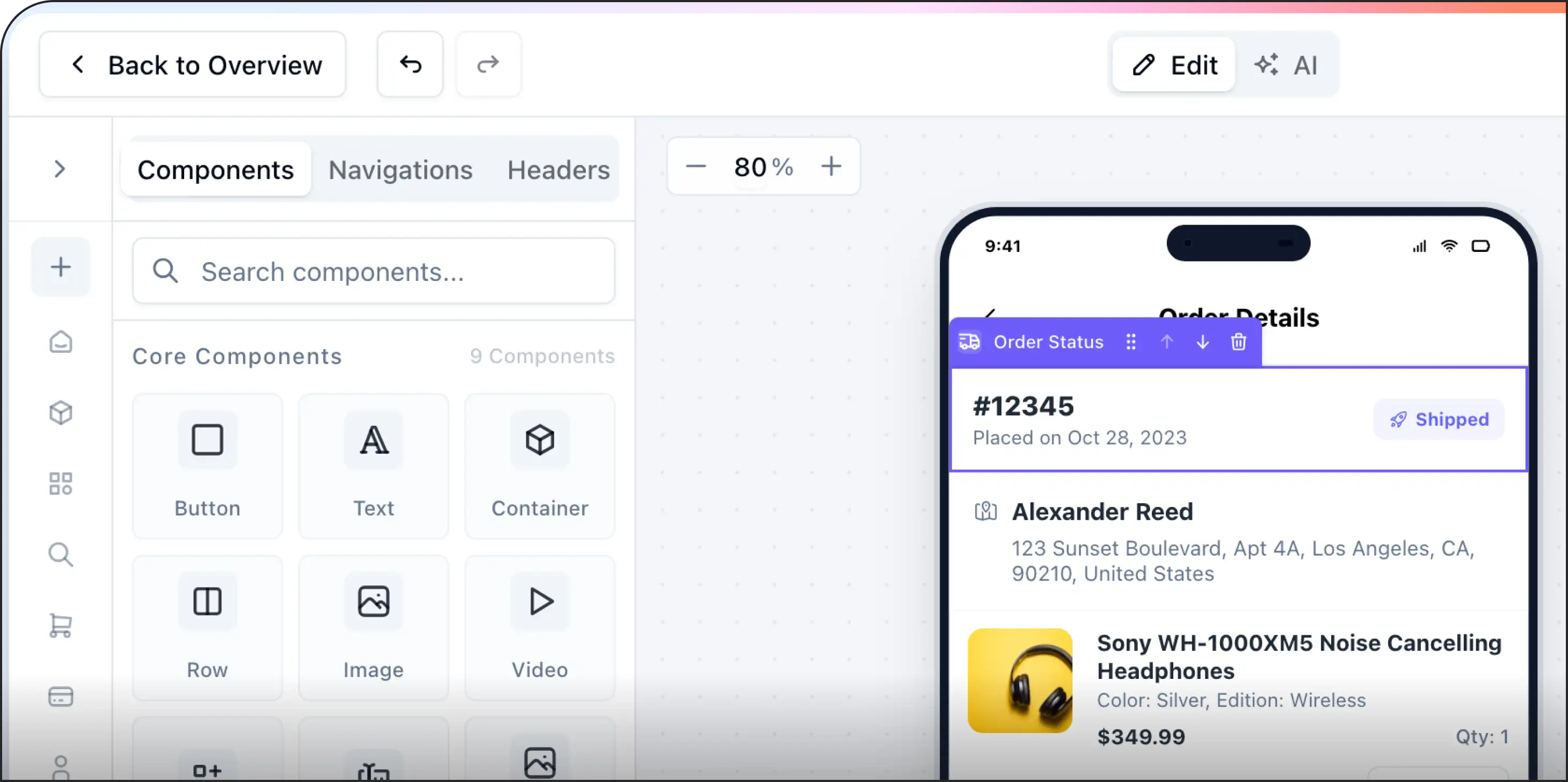
Drag-and-drop app builders are tools that let people create apps and websites visually, without writing traditional code. Instead of typing programming commands, users build applications by dragging elements like buttons, text boxes, images, and menus onto a screen and arranging them like building blocks. Behind the scenes, these platforms automatically convert the visual design into ...

Building a mobile app once meant hiring expensive developers, managing endless development cycles, and investing months—sometimes years before seeing your idea live in the Apple App Store or Google Play. For businesses running on WordPress or Shopify, going mobile often felt like a luxury reserved for brands with deep pockets, in-house tech teams, and enterprise-level ...

Online shoppers today are surrounded by too many choices, yet most of them still struggle to find what truly fits their needs. Generic recommendations and one-size-fits-all experiences often lead to frustration, abandoned carts, and lost sales. As competition in eCommerce continues to rise, this gap between customer expectations and actual shopping experiences is becoming harder ...

The must-have eCommerce app features include user-friendly design, fast loading speed, secure payment options, advanced search, personalized recommendations, and seamless checkout. These features are essential for improving user experience, increasing conversions, and driving long-term customer loyalty in mobile commerce. A successful eCommerce app is built with a strategic combination of performance, usability, and engagement-driven functionalities. ...

Marketing an eCommerce app involves a combination of App Store Optimization (ASO), paid ads, social media marketing, influencer partnerships, and user retention strategies. To successfully market your eCommerce app, you need to attract the right audience, increase app downloads, and convert users into repeat customers through data-driven campaigns and personalized experiences. Launching your app is ...

The latest trends in eCommerce app development focus on AI-driven personalization, mobile-first design, augmented reality (AR), voice commerce, and headless architecture. These innovations help businesses deliver faster, smarter, and more engaging shopping experiences, increasing conversions and customer retention. As online shopping continues to evolve, modern eCommerce apps must go beyond basic functionality. Today’s successful apps ...

An eCommerce app is a mobile or web application that allows businesses to sell products or services online. It works by enabling users to browse products, add items to a cart, make secure payments, and track orders—all from their device. With the rapid growth of mobile shopping, eCommerce apps have become essential for businesses looking ...

Launching an app used to be a long, resource-heavy journey, months of development, endless testing cycles, and constant back-and-forth between teams. Today, that timeline is shrinking fast, thanks to the rapid evolution of Artificial Intelligence (AI). From ideation to deployment, AI is transforming how apps are built, tested, and brought to market, helping businesses move ...

A Tapcart alternative is a platform that allows Shopify store owners to convert their online store into a mobile app without coding, often at a lower cost or with more advanced customization options. While Tapcart is popular, many businesses seek alternatives due to high pricing, limited flexibility, or lack of advanced features. In this blog ...

The best Shopify app builders allow you to convert your Shopify store into a fully functional Android and iOS mobile app without coding. These no-code Shopify app builders help merchants increase conversions, boost customer retention, and improve mobile shopping experiences using push notifications, automation, and native app performance. In 2026, mobile commerce continues to dominate ...

Populating your directory app with listings means adding relevant, high-quality entries that make your platform useful from day one. The fastest way to do this is by combining manual data sourcing, automated imports, and user-generated submissions. An empty directory kills trust and conversions instantly. No matter how powerful your features are, users won’t engage without ...
Be the first to know when your app is ready.
Join 2,000+ creators waiting to get our one-time big discount