

Why Your WordPress/Shopify App Builder Not Working (And How to Fix It)

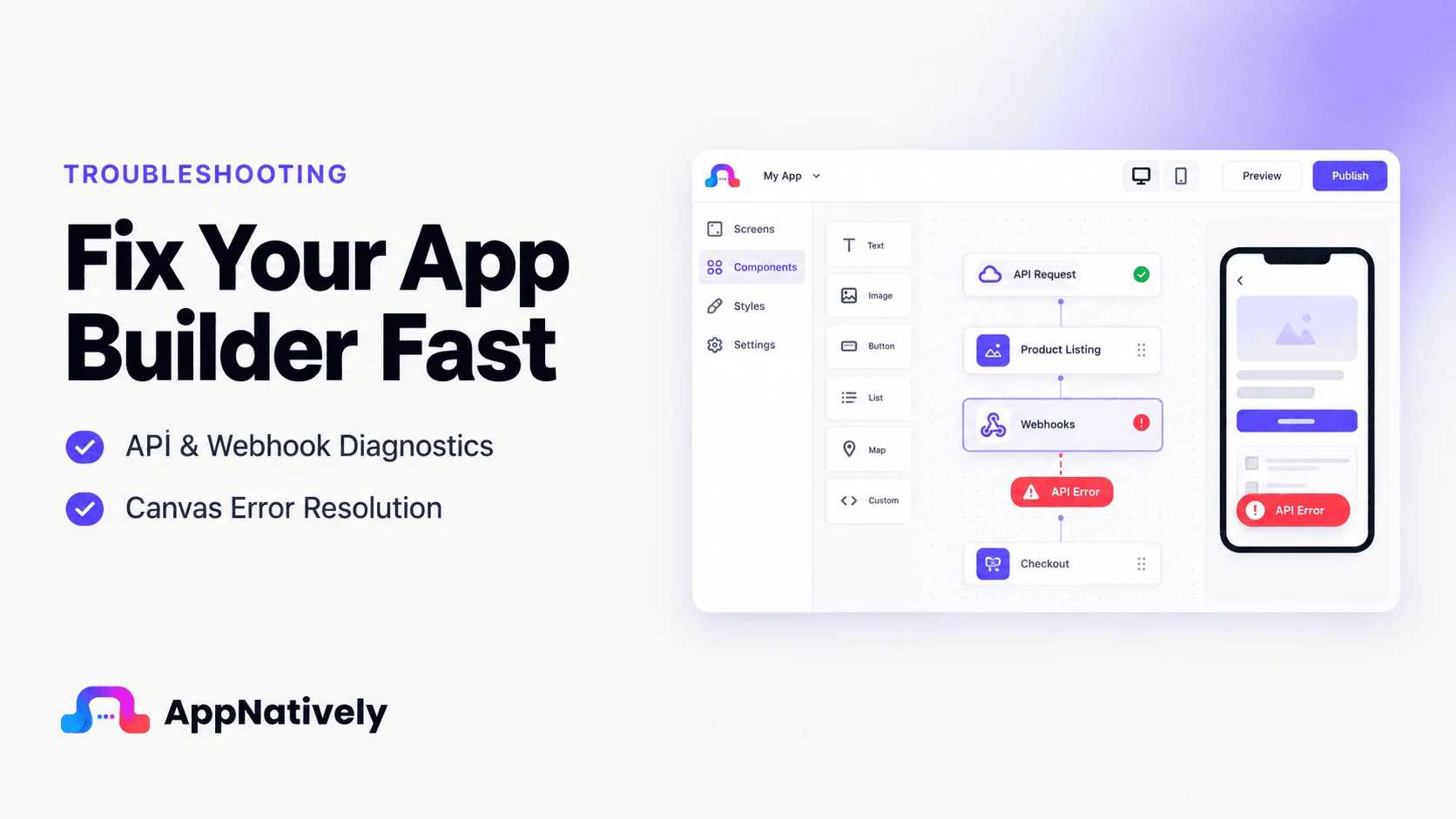
Building custom applications for WordPress and Shopify has become easier than ever. Modern no-code and low-code app builders allow businesses to launch customer portals, inventory systems, booking platforms, automation tools, and eCommerce enhancements without extensive coding knowledge.
However, many businesses quickly discover that their WordPress or Shopify app builder is not delivering the results they expected. Applications become slow, integrations stop working, customer data fails to sync correctly, and scaling becomes increasingly difficult as traffic grows.
The issue is rarely the platform itself. More often, underlying technical limitations, configuration mistakes, or poor development decisions create bottlenecks that prevent applications from performing efficiently.
In this blog post, we’ll explore the most common reasons WordPress and Shopify app builders fail and provide practical solutions to help you build faster, more reliable, and scalable applications.
Stop Fighting Your App Builder. Start Building Without Limits. Join AppNatively Waitlist
1. Plugin and App Conflicts Are Breaking Functionality
One of the biggest causes of app builder issues is conflicting plugins or third-party applications.
In WordPress, dozens of plugins often attempt to modify the same functionality. In Shopify, multiple apps may compete for access to customer data, checkout functions, or inventory systems.
Warning Signs
- Features randomly stop working
- Forms fail to submit
- Data synchronization errors
- Dashboard crashes
- Unexpected layout issues
How to Fix It
- Disable plugins one by one to identify conflicts
- Remove unnecessary applications
- Keep all integrations updated
- Test changes in a staging environment before deployment
2. Your App Builder Has Reached Platform Limitations
Many businesses outgrow no-code solutions faster than expected.
While app builders are excellent for rapid deployment, they often struggle when businesses require:
- Complex workflows
- Advanced customer segmentation
- Large databases
- Custom API connections
- Enterprise-level automation
How to Fix It
Consider a hybrid approach that combines app builders with custom development. This allows you to retain speed while overcoming platform limitations.
3. Poor Database Structure Is Slowing Everything Down
As data grows, poorly structured databases become a major performance bottleneck.
Common Problems
- Duplicate records
- Unoptimized queries
- Excessive API calls
- Large data tables
Impact
Slow databases can affect:
- Customer experience
- Search functionality
- Checkout performance
- Inventory updates
Solution
Regular database optimization and proper data architecture can dramatically improve application speed.
4. API Integration Issues Are Causing Data Failures
Most WordPress and Shopify applications depend heavily on APIs.
When APIs fail, critical business processes can stop immediately.
Common API Problems
- Authentication failures
- Rate limits
- Expired access tokens
- Incorrect endpoint configuration
- Third-party service downtime
Best Practices
- Monitor API health regularly
- Implement automatic retry systems
- Use secure authentication methods
- Log API errors for troubleshooting
5. Your Hosting Environment Isn’t Powerful Enough
Many businesses invest heavily in application development while overlooking hosting performance.
Even the best app builder cannot compensate for poor infrastructure.
Signs of Hosting Problems
- Slow page loads
- Server timeout errors
- Resource limitations
- Traffic spikes causing crashes
Recommended Fixes
- Upgrade hosting resources
- Use CDN services
- Enable caching
- Optimize server-side performance
6. Too Many Integrations Are Creating Complexity
Modern businesses often connect:
- CRM systems
- Marketing platforms
- Accounting software
- Inventory tools
- Customer support systems
Each additional integration increases complexity and introduces new failure points.
Solution
Conduct regular integration audits and eliminate redundant tools.
7. Security Vulnerabilities Are Disrupting Performance
Security problems frequently masquerade as performance issues.
Common Security Risks
- Outdated plugins
- Weak authentication
- Unsecured API endpoints
- Malware infections
Prevention Strategies
- Enable multi-factor authentication
- Update software regularly
- Conduct security audits
- Implement access controls
8. Poor Mobile Optimization Is Hurting User Experience
More than half of online users access websites through mobile devices.
If your application is not optimized for mobile users, engagement and conversions can decline significantly.
Areas to Improve
- Responsive design
- Touch-friendly interfaces
- Faster mobile loading speeds
- Simplified navigation
9. Lack of Scalability Planning Is Creating Long-Term Problems
Many app builders work perfectly during early stages but struggle as businesses grow.
Common Scaling Challenges
- Increased traffic
- More transactions
- Larger databases
- Additional integrations
Solution
Design systems with future growth in mind rather than immediate requirements.
10. You’re Using the Wrong Tool for the Job
Not every application should be built entirely with a no-code platform.
Complex applications often require custom development to achieve desired functionality and performance.
Consider Custom Development When:
- You need advanced workflows
- Security requirements are strict
- High traffic is expected
- Unique functionality is required
- Long-term scalability is critical
Best Practices for Building Reliable WordPress and Shopify Applications
To maximize performance and reliability:
Follow These Guidelines
- Keep plugins and apps updated
- Audit integrations regularly
- Optimize database performance
- Monitor API health
- Prioritize security
- Test before deployment
- Plan for scalability
- Choose hosting that matches growth goals
Conclusion
A failing WordPress or Shopify app builder is usually the result of technical limitations, integration conflicts, infrastructure weaknesses, or scalability challenges—not the platform itself.
By identifying the root cause early and implementing the right fixes, businesses can transform underperforming applications into reliable, scalable systems that support long-term growth.
Whether you’re using a no-code platform, a low-code solution, or a custom development approach, focusing on performance, security, and scalability will ensure your application delivers consistent value as your business expands.
Convert your website into an iOS & Android app in minutes (Join waitlist)
Frequently Asked Questions (FAQs)
Why is my Shopify app builder not working?
Shopify app builders often fail due to API limitations, app conflicts, outdated integrations, or scalability issues. Regular maintenance and optimization can resolve most problems.
What causes WordPress app builder performance issues?
Plugin conflicts, poor hosting, database inefficiencies, and excessive third-party integrations often cause WordPress app builder issues.
Can no-code app builders handle large businesses?
Many no-code app builders work well for small and medium-sized businesses but may struggle with advanced workflows, high traffic, and enterprise-level requirements.
How do I improve Shopify app performance?
Improve Shopify app performance by optimizing API usage, reducing unnecessary integrations, improving database efficiency, and monitoring server resources.
Are custom apps better than app builders?
Custom apps provide greater flexibility, scalability, and performance. However, app builders offer faster development and lower initial costs.
What is the biggest mistake businesses make with app builders?
The most common mistake is choosing a solution based solely on speed and cost without considering future scalability, integration requirements, and performance needs.
Related posts
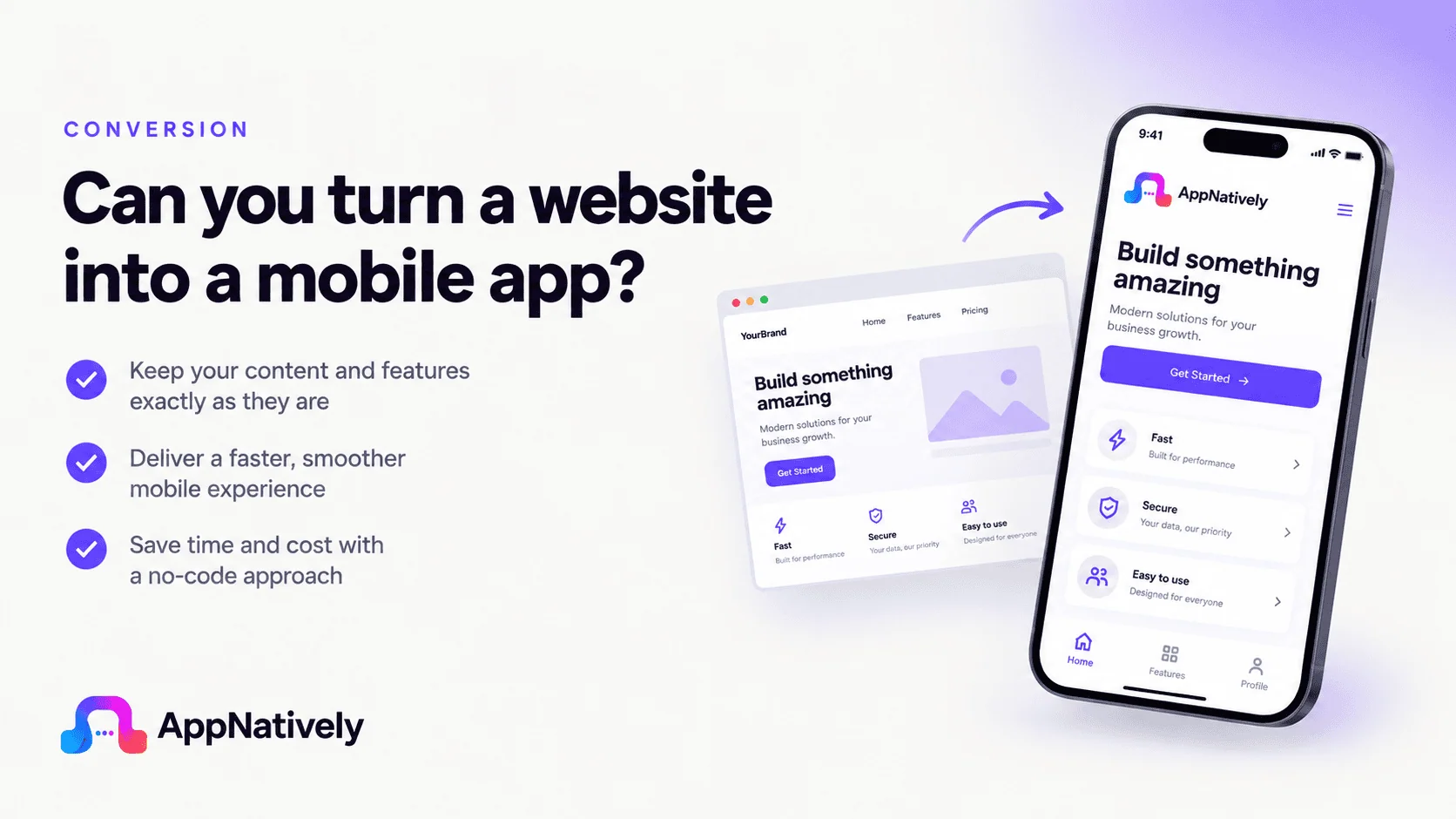
Can You Turn a Website Into a Mobile App? Here’s How It Works

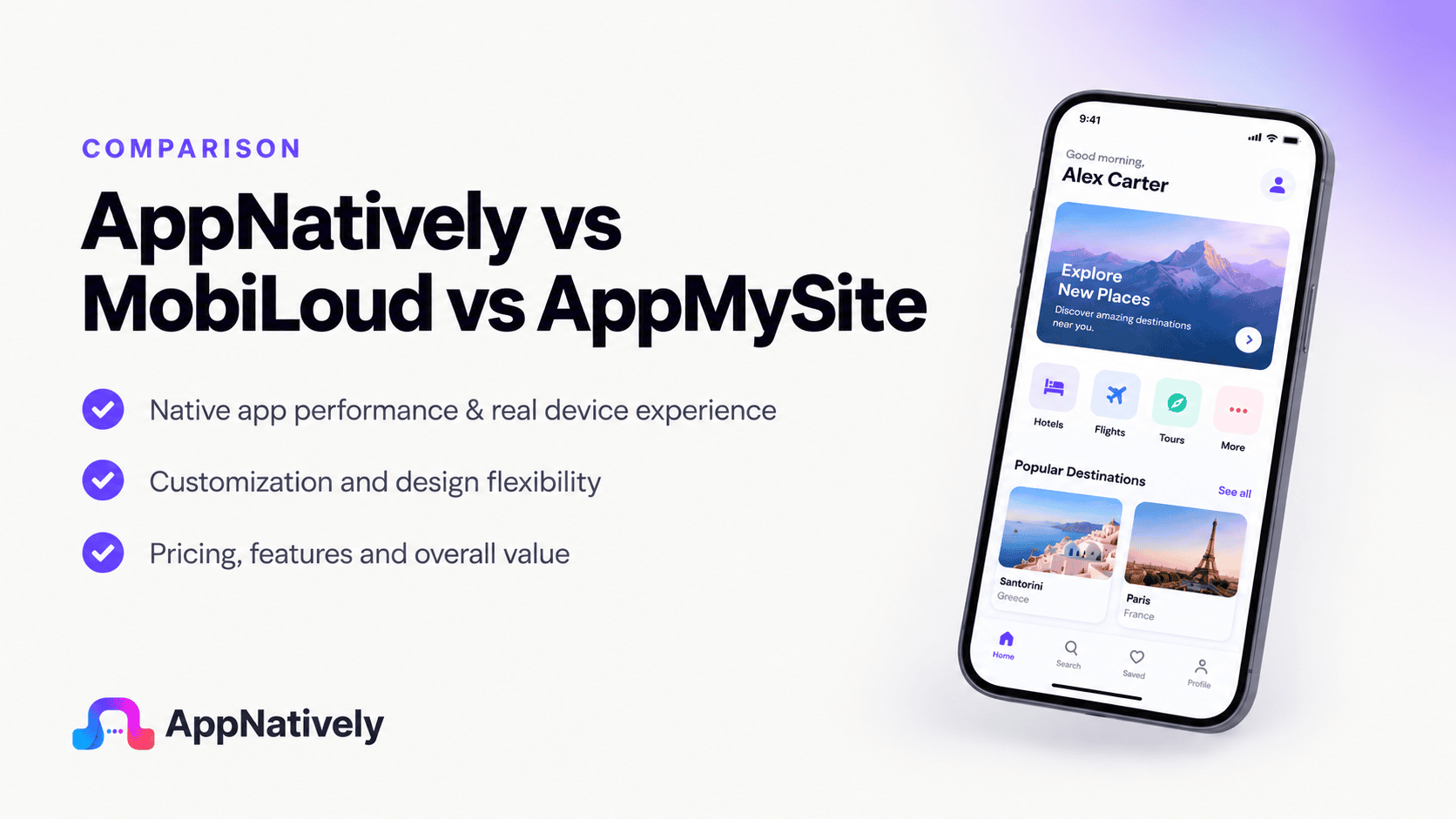
AppNatively vs MobiLoud vs AppMySite: Which Mobile App Builder Is Best in 2026?

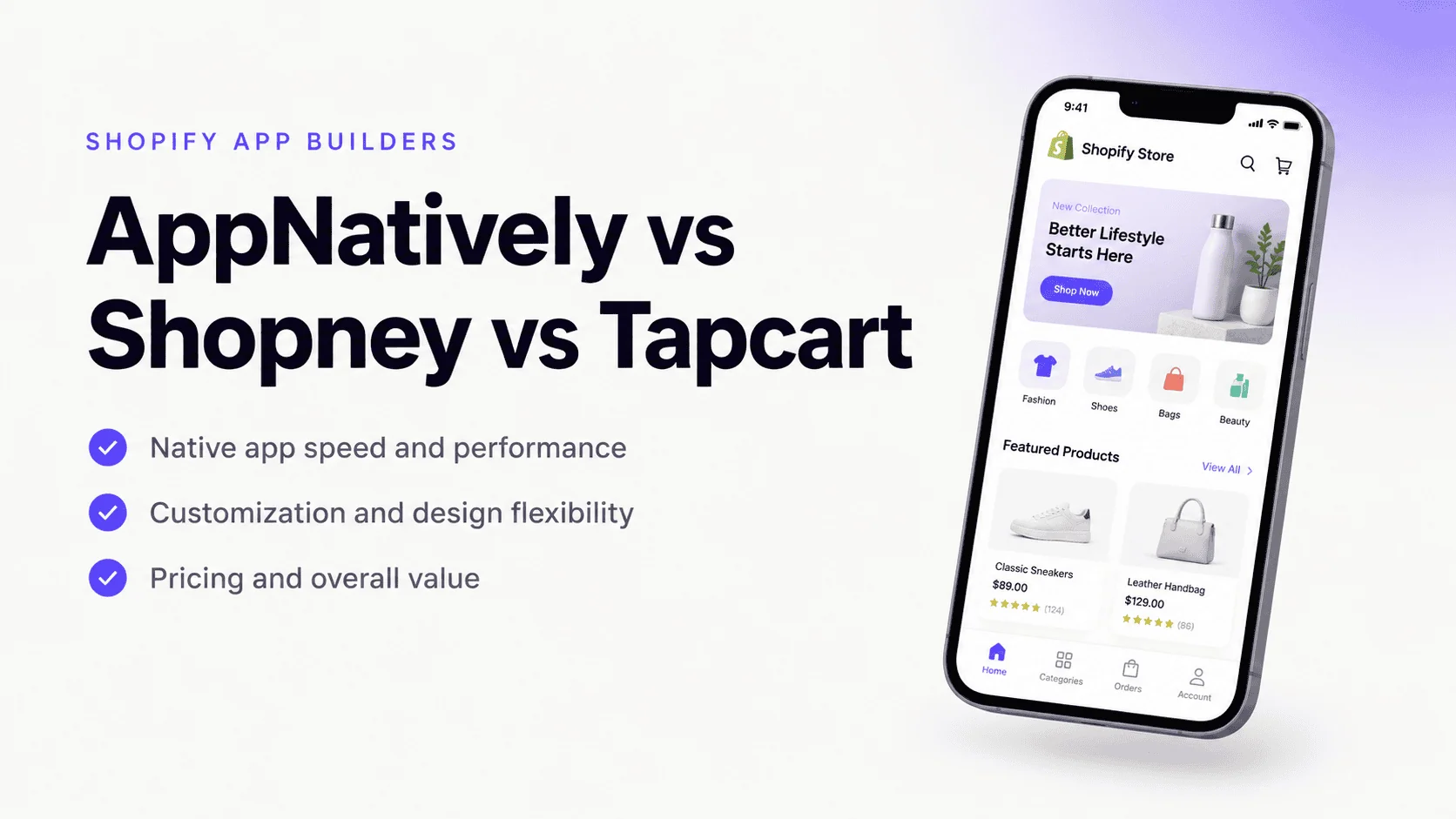
AppNatively vs Shopney vs Tapcart: Which Shopify App Builder Is Best in 2026?



