
How to Market Your eCommerce App in 2026: Proven Strategies to Boost Downloads & Sales Fast

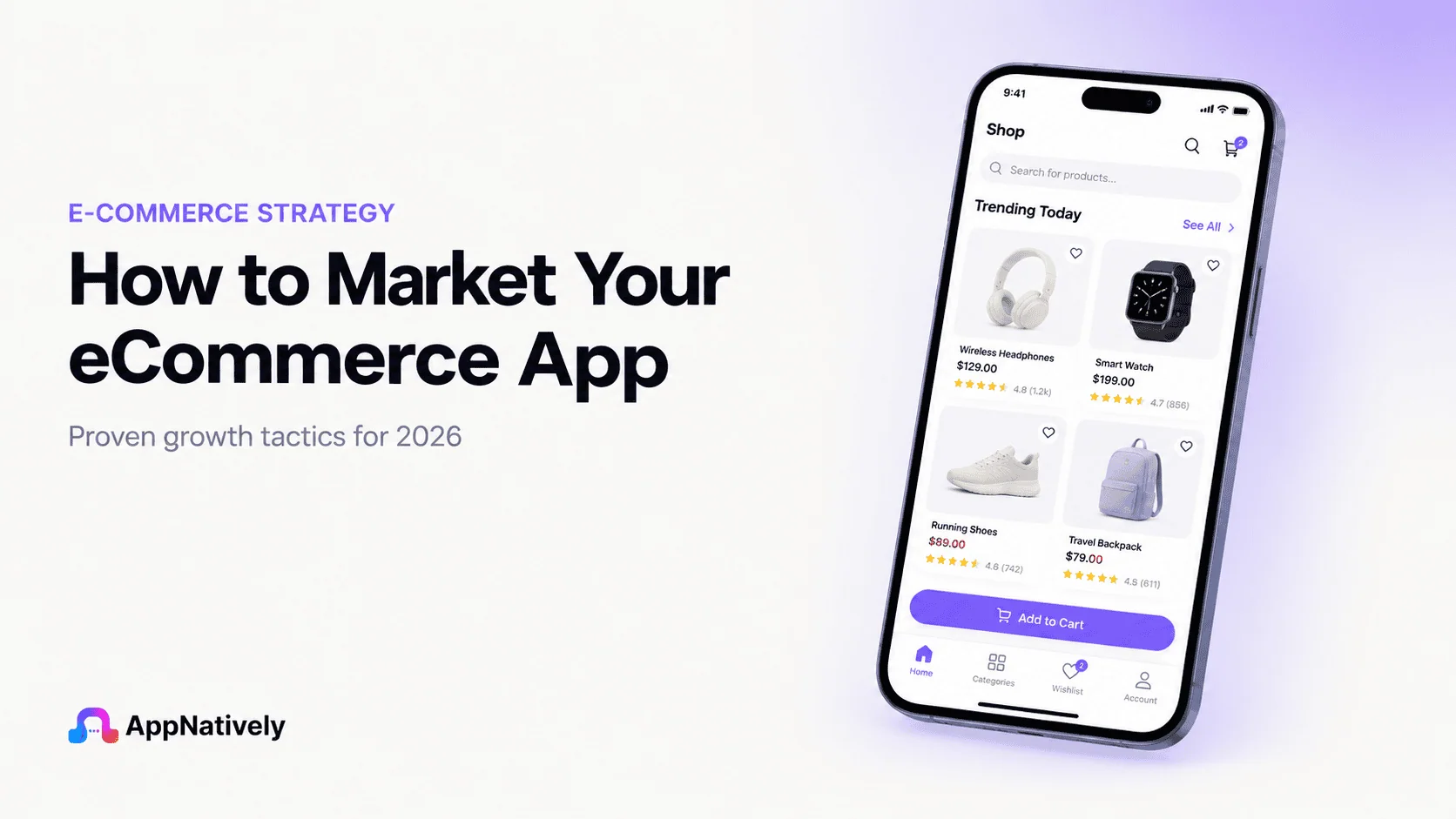
Marketing an eCommerce app involves a combination of App Store Optimization (ASO), paid ads, social media marketing, influencer partnerships, and user retention strategies.
To successfully market your eCommerce app, you need to attract the right audience, increase app downloads, and convert users into repeat customers through data-driven campaigns and personalized experiences.
Launching your app is just the beginning. With millions of apps competing on platforms like Google Play Store and Apple App Store, standing out requires a strategic, multi-channel approach that also aligns with the latest eCommerce trends shaping user behavior and expectations.
In this blog post, we’ll cover everything you need to scale your app from pre-launch buzz to long-term growth.
Convert your website into an iOS & Android app in minutes (Join waitlist)
Why Marketing Your eCommerce App Matters
Even the best-designed app won’t succeed if people don’t know it exists or don’t understand why they should use it.
Here’s why marketing your eCommerce app truly matters.
1. It creates strong market visibility
The app marketplace is highly saturated, and even a well-built eCommerce app can remain invisible without proper promotion.
Marketing ensures your app appears where your target users are already spending time, whether through search engines, social media, or app store optimization.
This visibility is what brings your app into consideration and gives it a chance to compete. Without it, your app is essentially hidden, regardless of its quality or features.
2. It attracts the right audience instead of random users
Marketing allows you to target users based on interests, behavior, and purchase intent. This means you are not just increasing downloads but attracting people who are more likely to buy.
When your audience is aligned with your product offering, conversion rates improve, customer acquisition costs decrease, and long-term retention becomes easier to achieve.
3. It builds trust and brand authority
Users rarely purchase from brands they do not recognize. Through consistent messaging, content marketing, and social proof such as reviews or influencer collaborations, marketing helps establish credibility.
Over time, this builds trust, which is a critical factor in driving purchases and repeat usage. A trusted brand is also more resilient in competitive markets.
4. It improves engagement and customer retention
Marketing is not only about acquiring new users but also about keeping existing ones active.
Strategies like email campaigns, push notifications, and personalized offers encourage users to return to the app.
Regular engagement increases customer lifetime value and reduces churn, which is essential for sustainable growth in eCommerce.
5. It drives revenue and long-term business growth
Effective marketing directly impacts revenue by guiding users through the buying journey from awareness to purchase.
It also provides valuable data insights such as user behavior, preferences, and campaign performance.
These insights allow you to refine your strategy, optimize your app experience, and scale your business more efficiently over time.
How to Market Your eCommerce App
Marketing an eCommerce app requires a structured approach that covers visibility, acquisition, engagement, and retention.
It is not about one tactic but a combination of strategies working together to drive consistent growth.
Here is how to market your eCommerce app effectively.
1. Optimize for app stores and search
Start with strong App Store Optimization. Use high-intent keywords in your app title and description, write a compelling value proposition, and add high-quality screenshots and preview videos.
Encourage positive reviews because ratings directly influence download decisions.
At the same time, build SEO driven landing pages for your app. This helps you capture traffic from search engines and direct users to install your app.
2. Leverage social media marketing
Social platforms are powerful for discovery and engagement. Focus on platforms where your audience is most active.
Create a mix of content such as product highlights, short videos, user-generated content, and behind-the-scenes posts. Consistency matters more than volume.
Paid social ads can further amplify reach and target users based on behavior and interests.
3. Use influencer and creator partnerships
Collaborate with influencers who align with your niche. Micro influencers often deliver better engagement and trust compared to larger accounts.
Authentic reviews, product demos, and lifestyle content can drive high-quality traffic and increase conversions because users trust recommendations from real people.
4. Run paid advertising campaigns
Paid ads help you scale quickly. Use platforms like search ads and social media ads to target users actively looking for products similar to yours.
Retargeting campaigns are especially effective. They bring back users who visited your app or website but did not complete a purchase. This significantly improves conversion rates.
5. Build an email and push notification strategy
Once users install your app, keep them engaged. Send personalized emails and push notifications based on user behavior.
You can promote new arrivals, limited-time offers, and abandoned cart reminders. The goal is to create consistent touchpoints that bring users back to your app.
6. Offer promotions and referral programs
Incentives can accelerate growth. Offer discounts for first-time users, limited-time deals, or exclusive in-app offers.
Referral programs are highly effective as well. Encourage existing users to invite others by rewarding both the referrer and the new user. This creates a cost-effective growth loop.
7. Create content marketing funnels
Content marketing builds long-term traffic and authority. Write blogs, create videos, and publish guides related to your niche.
This content attracts potential customers, educates them, and gradually leads them to install your app. It also supports your SEO strategy and improves brand trust.
8. Track performance and optimize continuously
Marketing is not a one-time effort. Use analytics tools to monitor installs, user behavior, retention rates, and conversion metrics.
Identify what works and scale it. At the same time, improve underperforming campaigns. Continuous optimization is what separates average apps from high-growth ones.
Final Thoughts
Marketing your eCommerce app is about building a system that consistently attracts the right users and converts them into loyal customers.
When you combine organic strategies with paid efforts and focus on long-term engagement, your app can grow sustainably and compete in even the most crowded markets.
Frequently Asked Questions (FAQs)
1. What is the best way to market an eCommerce app?
The best approach combines App Store Optimization, social media marketing, paid ads, and retention strategies like push notifications and email campaigns.
A multi-channel strategy ensures consistent user acquisition and long-term growth.
2. How much does it cost to market an eCommerce app?
The cost varies depending on your strategy. Organic methods like SEO and content marketing require time but a lower budget, while paid advertising can range from a few hundred to thousands of dollars per month. A balanced mix usually delivers the best results.
3. How can I increase downloads for my eCommerce app?
You can increase downloads by optimizing your app store listing, running targeted ads, collaborating with influencers, and offering incentives such as discounts or referral rewards. Positive reviews also play a major role in boosting installs.
4. Is social media important for eCommerce app marketing?
Yes, social media is crucial for building brand awareness, engaging with users, and driving traffic to your app. Platforms like Instagram, Facebook, and TikTok help showcase products and create direct connections with potential customers.
5. How do I retain users after they install my app?
Retention depends on consistent engagement. Use personalized push notifications, email campaigns, loyalty programs, and exclusive in-app offers to keep users active and encourage repeat purchases.
6. What are the most effective paid ads for eCommerce apps?
Search ads and social media ads are among the most effective. Search ads target users with high buying intent, while social ads allow detailed audience targeting.
Retargeting campaigns are especially powerful for converting interested users.
7. How long does it take to see results from marketing?
Paid campaigns can generate results quickly, sometimes within days. However, organic strategies like SEO and content marketing typically take a few months to show a significant impact. Combining both ensures short-term wins and long-term growth.
8. Why is App Store Optimization important?
App Store Optimization improves your app’s visibility in app stores, making it easier for users to discover and download your app. It directly impacts rankings, traffic, and conversion rates.
9. Can small businesses compete with big eCommerce apps?
Yes, by focusing on niche targeting, personalized experiences, and smart marketing strategies, small businesses can compete effectively and build loyal customer bases.
10. What metrics should I track for eCommerce app marketing?
Key metrics include app downloads, cost per install, user retention rate, conversion rate, customer lifetime value, and return on ad spend. These metrics help you measure performance and optimize your strategy.
Related posts