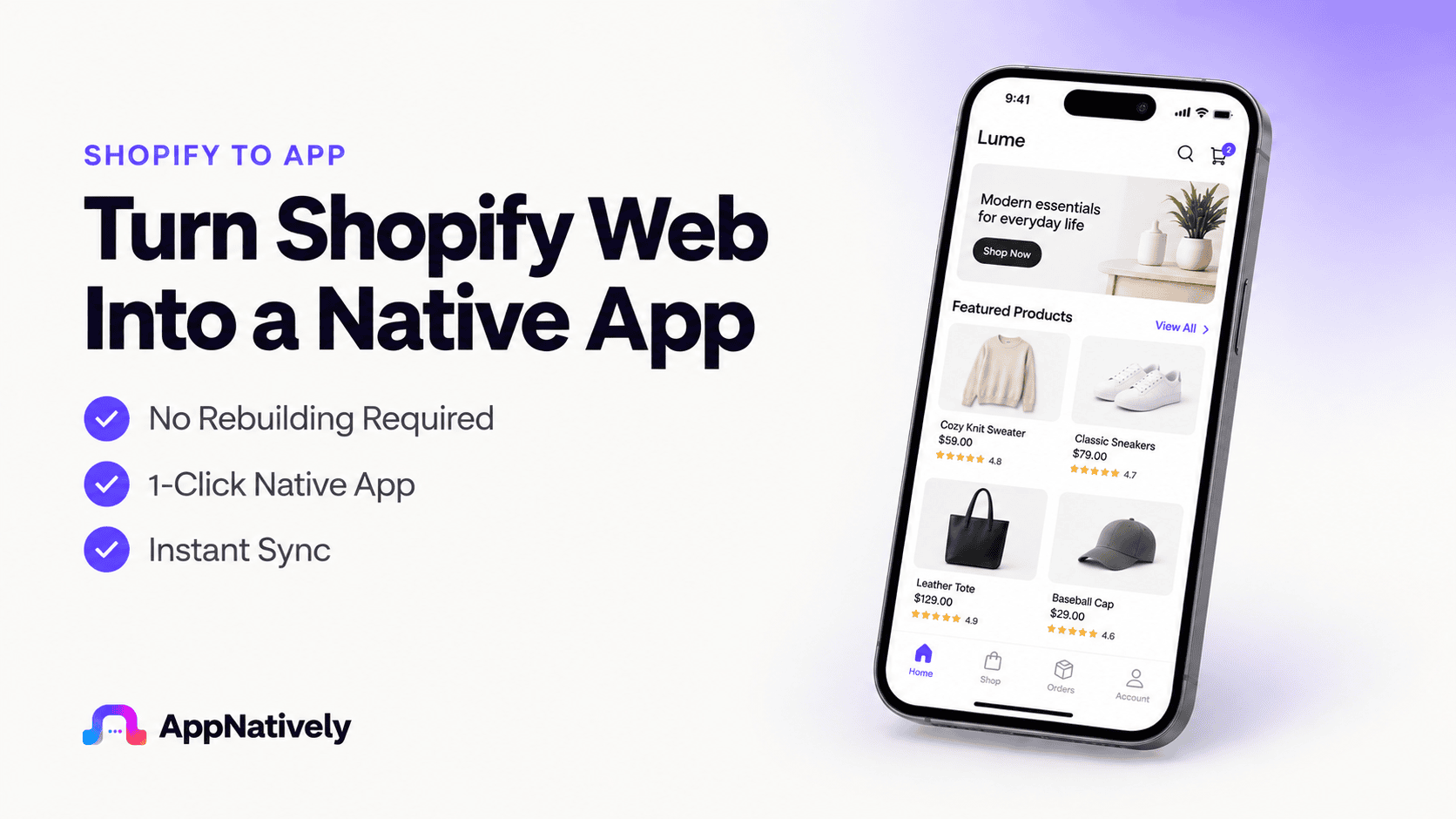

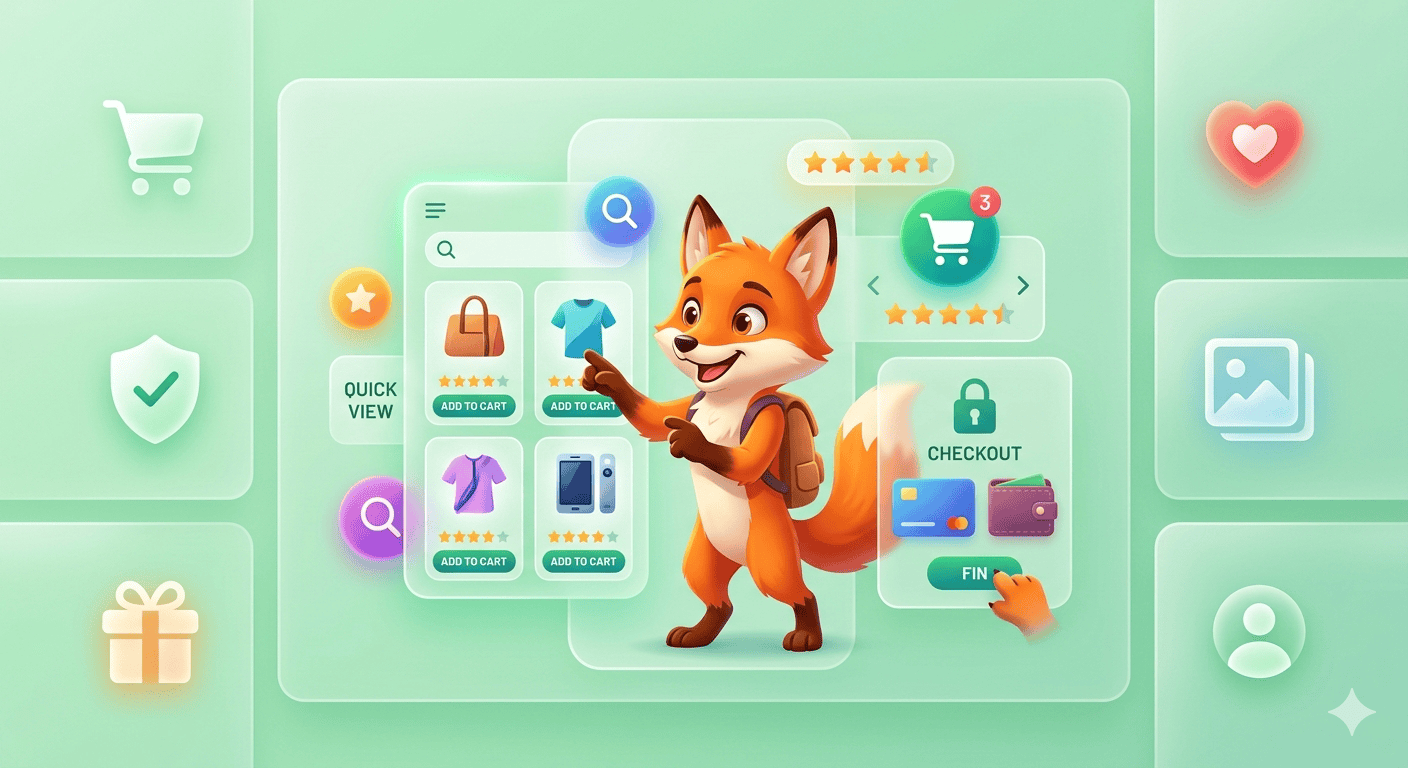
The must-have eCommerce app features include user-friendly design, fast loading speed, secure payment options, advanced search, personalized recommendations, and seamless checkout.
These features are essential for improving user experience, increasing conversions, and driving long-term customer loyalty in mobile commerce.
A successful eCommerce app is built with a strategic combination of performance, usability, and engagement-driven functionalities. From intuitive design to AI-powered recommendations, every feature plays a role in shaping customer satisfaction and purchase decisions.
In this blog post, we’ll explore the essential eCommerce app features you need to maximize growth, conversions, and user retention.
Convert your website into an iOS & Android app in minutes (Join waitlist)
Why eCommerce App Features Matter for Business Growth
E-commerce app features matter for business growth because they directly shape how easily customers can find, trust, and buy from a business—and whether they come back again.
Latest trends in eCommerce app development include AI-driven personalization, AR-based product visualization, voice and conversational shopping, and headless commerce architectures that enable faster, more seamless omnichannel experiences.
In online business, the app is often the entire storefront, salesperson, and checkout counter combined. If it’s smooth and helpful, sales increase; if it’s confusing or slow, customers leave quickly.
Here are the main reasons they’re so important.
1. Better user experience = more sales
Features like fast search, clear product categories, filters, and simple navigation help customers find what they want quickly.
When shopping feels easy, people are more likely to complete a purchase instead of abandoning the app.
2. Higher trust leads to more conversions
Secure payment options, transparent pricing, product reviews, and order tracking all build confidence.
If users feel safe, they’re more willing to enter payment details and buy.
3. Personalization increases repeat purchases
Smart features like personalized recommendations, saved preferences, and targeted offers make the app feel tailored to each user. This encourages repeat visits and long-term customer loyalty.
4. Faster checkout reduces abandoned carts
A complicated checkout process is one of the biggest reasons customers leave without buying.
Features like one-click checkout, multiple payment methods, and autofill reduce friction and increase completed orders.
5. Mobile optimization expands reach
Most users shop on phones. A well-designed mobile app with fast loading, responsive design, and smooth performance helps businesses reach a much larger audience.
6. Marketing and engagement tools drive growth
Push notifications, discounts, wishlist reminders, and abandoned cart alerts bring customers back and increase sales opportunities without extra advertising costs.
7. Data insights improve business decisions
E-commerce apps collect data on customer behavior—what people view, buy, or ignore. Businesses use this to improve products, pricing, and marketing strategies.
10 Must-Have eCommerce App Features
Here are the 10 must-have eCommerce app features explained, showing how smart design and functionality turn casual visitors into loyal customers.
1. User-friendly interface (UI/UX)
A clean and intuitive interface makes shopping feel effortless, guiding users smoothly from browsing to buying. It removes confusion and keeps attention focused on products, not complexity.
When an app feels easy and visually appealing, users naturally trust it more. That trust translates into longer sessions, higher engagement, and more completed purchases.
2. Advanced search & smart filters
A powerful search system acts like a shortcut to exactly what customers want, saving time and reducing frustration. Smart suggestions and auto-correct make discovery feel effortless.
Filters refine the journey further by narrowing endless options into perfect matches. This precision leads users faster to the “buy” moment.
3. Secure multiple payment options
Flexible payment methods make checkout convenient for everyone, whether they prefer cards, wallets, or cash on delivery. This removes barriers that might stop a purchase.
Strong security features quietly build confidence in every transaction. When users feel protected, they spend more freely.
4. Easy checkout process
A smooth checkout turns intention into action without unnecessary steps or delays. Simplicity here directly reduces abandoned carts.
Features like guest checkout and autofill make buying feel instant. The faster the process, the higher the conversion.
5. Product reviews & ratings
Reviews act as real voices of experience that guide new buyers toward confident decisions. They replace doubt with social proof.
Ratings quickly summarize product quality at a glance. Together, they become a silent sales booster for every listing.
6. Push notifications
Push notifications gently bring users back with timely offers, reminders, and updates. They keep the brand alive in the customer’s mind.
When personalized well, they feel helpful rather than intrusive. This balance drives repeat visits and steady sales.
7. Wishlist & save for later
A wishlist lets users hold onto desire without pressure to buy immediately. It keeps products emotionally “bookmarked” for future action.
For businesses, it’s a window into customer intent. Smart reminders can turn saved items into real purchases.
8. Order tracking system
Order tracking gives customers peace of mind by showing exactly where their purchase is in real time. Transparency reduces anxiety after payment.
It also lowers support requests since users can track everything themselves. This builds trust and reliability.
9. Personalization & recommendations
Personalization transforms a generic store into a tailored shopping experience. Users feel understood when products match their interests.
Recommendations subtly guide them toward more purchases they didn’t even know they wanted. This increases both engagement and revenue.
10. Customer support (Chat/Help Center)
Instant support ensures users are never stuck or confused during their shopping journey. Help is always one tap away.
Quick responses build confidence and prevent lost sales. Good support often turns first-time buyers into loyal customers.
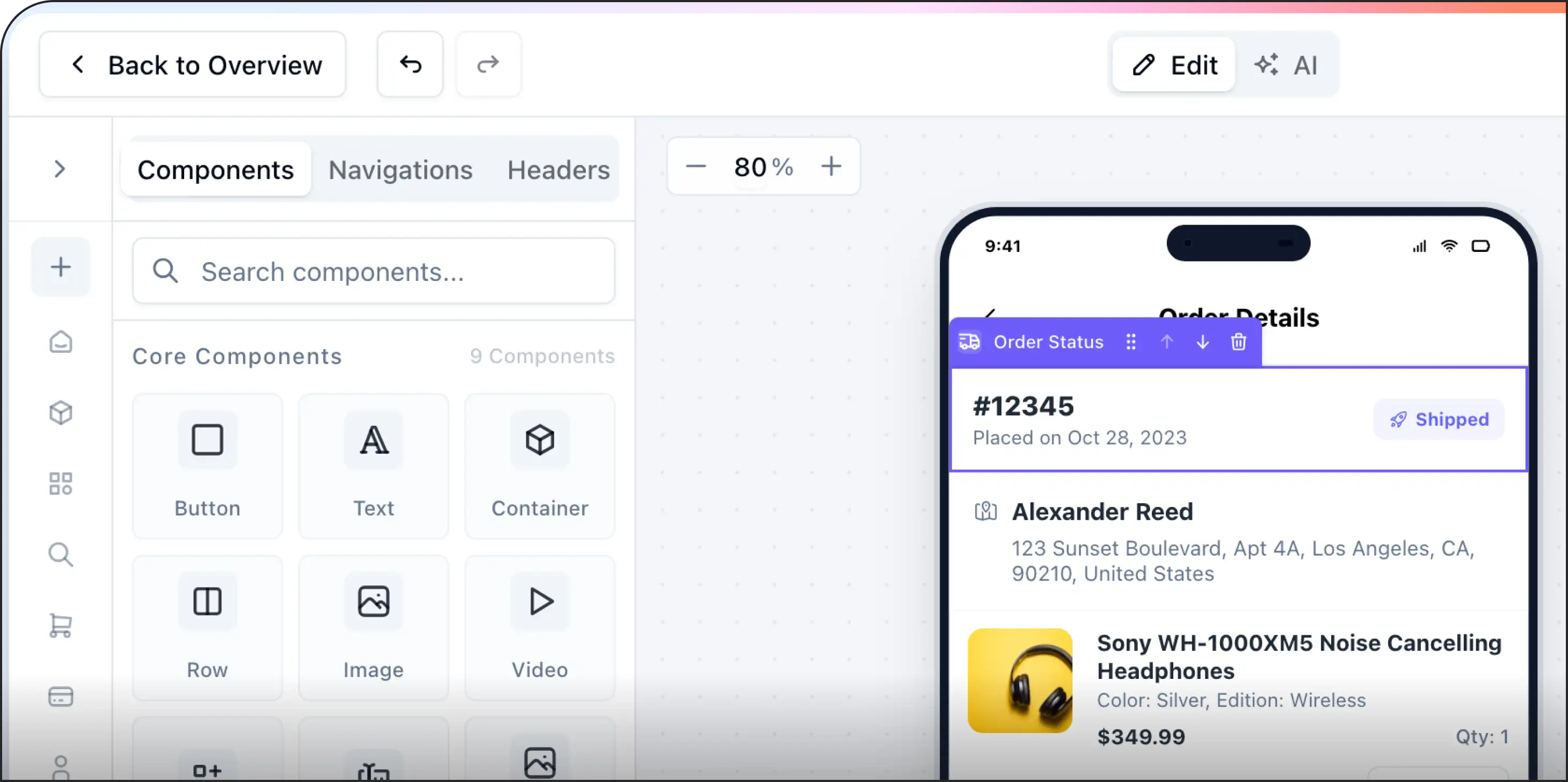
Build your eCommerce app instantly with drag & drop- Join AppNatively Waitlist
How to Optimize eCommerce App Features for Better Conversions
Here’s how to optimize eCommerce app features for better conversions, focusing on practical improvements that directly turn visitors into buyers.
i. Optimize UI/UX for frictionless navigation
A conversion-focused app removes every unnecessary step between browsing and buying. Clean layouts, clear categories, and intuitive menus help users reach products faster without feeling lost or overwhelmed.
You should also reduce visual clutter and keep key actions (like “Add to Cart” or “Buy Now”) highly visible. The smoother the experience, the less chance users drop off before checkout.
ii. Improve search relevance and speed
Search optimization means ensuring users instantly find what they want with accurate, fast results. Autocomplete, typo correction, and intelligent ranking of products significantly improve usability.
Add behavioral ranking so popular or high-converting products appear first. This reduces decision time and increases the likelihood of immediate purchases.
iii. Streamline the checkout flow
A major conversion killer is a long or complicated checkout process. Reducing form fields, enabling guest checkout, and allowing auto-fill can dramatically improve completion rates.
Also optimize for mobile-first checkout with one-page or step-based design. Every extra click removed increases the chance of successful payment.
iv. Use trust signals strategically
Trust directly affects whether users complete purchases. Displaying reviews, ratings, secure payment badges, return policies, and delivery guarantees builds confidence.
Place these signals near pricing and checkout buttons where hesitation usually happens. This helps reduce doubt at the exact moment of decision.
v. Personalize the shopping experience
Personalization improves conversions by showing users products they are more likely to buy based on browsing and purchase behavior. This reduces irrelevant options and increases engagement.
Use “Recommended for you,” “Frequently bought together,” and “Recently viewed” sections. The more relevant the content, the higher the conversion rate.
vi. Optimize push notifications for timing and relevance
Push notifications should be behavior-based, not random. Cart reminders, price drops, and back-in-stock alerts perform much better than generic promotions.
Timing also matters—sending alerts when users are most active increases engagement. Poorly timed notifications can reduce trust and lead to uninstalls.
vii. Enhance product pages for decision making
Product pages should clearly answer all user doubts—images, descriptions, specifications, reviews, and FAQs should be easy to scan. High-quality visuals significantly increase purchase intent.
Adding urgency elements like limited stock or time-based offers can also encourage faster decisions. The goal is to reduce hesitation as much as possible.
viii. Optimize wishlist and retargeting flow
Wishlists are powerful conversion tools when combined with reminders and discounts. Users often save items with intent to buy later, so re-engagement is key.
Send targeted alerts like price drops or “items in your wishlist are selling fast.” This turns passive interest into active purchases.
ix. Improve app performance and speed
Slow apps directly reduce conversions because users expect instant loading. Optimizing image sizes, caching data, and minimizing API delays improves responsiveness.
Even a few seconds of delay can increase drop-off rates significantly. Speed is not just technical—it’s revenue-critical.
x. Use data analytics for continuous optimization
Tracking user behavior helps identify where users drop off in the funnel. Heatmaps, session tracking, and conversion analytics reveal weak points in the app.
You can then A/B test changes like button placement, pricing display, or checkout flow. Continuous optimization ensures steady conversion growth over time.
Final Thoughts
Building a successful eCommerce app requires more than just a great idea—it demands the right combination of features that deliver speed, convenience, and personalization.
Every element, from navigation to checkout, plays a critical role in shaping user experience and influencing purchasing behavior.
By implementing these must-have eCommerce app features, businesses can create a powerful mobile shopping experience that drives engagement, builds trust, and maximizes revenue.
As mobile commerce continues to grow, staying ahead with feature-rich, user-focused apps will be the key to long-term success.
Frequently Asked Questions (FAQs)
What are the most important eCommerce app features?
The most important eCommerce app features include user-friendly design, fast loading speed, secure payment options, personalized recommendations, and a seamless checkout process.
How do eCommerce app features improve conversions?
These features reduce friction in the buying process, enhance user experience, and make it easier for customers to complete purchases, leading to higher conversion rates.
Why is personalization important in eCommerce apps?
Personalization helps deliver relevant product recommendations, improving user engagement and increasing the likelihood of repeat purchases.
How can I make my eCommerce app faster?
You can improve speed by optimizing images, using efficient coding, enabling caching, and minimizing unnecessary elements in the app.
What role does AI play in eCommerce apps?
AI enhances personalization, improves search accuracy, powers chatbots, and helps analyze customer behavior for better decision-making.
Related posts