
Appnatively
Appnatively
Knowledge Base
Go to Studio
Knowledge Base
Go to Studio
Getting Started
Welcome to AppNativelyCreate your first appFinding your way around the Studio dashboard
Website Connection
Connect your website to AppNativelyInstall and update the required pluginChoose which plugins power your app“Website Not Connected” – what it means and how to clear itFix a failing or dropped connection
App Editor
Build your app with AI chatWrite prompts that get the screen you wantUndo an AI change you don’t wantEdit screens and components by handManage your app’s pagesDesign your headerDesign your bottom navigationAdd and edit drawersManage your themeHow your changes reach your usersSave vs. Publish – what each one doesWhen a new release is requiredWhen AI gets it wrong
Splash & App Icon
Set your app iconAdd Android Adaptive Icon layersDesign your splash screenRecommended image sizes
Publishing Setup
What you need before your first buildSet your app’s name, slug, and package IDAdd Android credentials and your keystoreAdd iOS certificates and provisioningConnect Google PlayConnect the App StoreSet up Firebase Configuration
Build & Deploy
Connect GitHub before you buildBuild your app – and submit it to the storeFix a failed build
Push Notifications
Create and send a push campaignTrack campaign performanceNotifications aren’t arriving
Integrations
Connect a third-party service

Edit screens and components by hand

AI chat is the fast way to build a screen; this is the precise way to fine-tune one. Every piece on your canvas can be selected and adjusted directly, without describing anything to anyone.

Steps

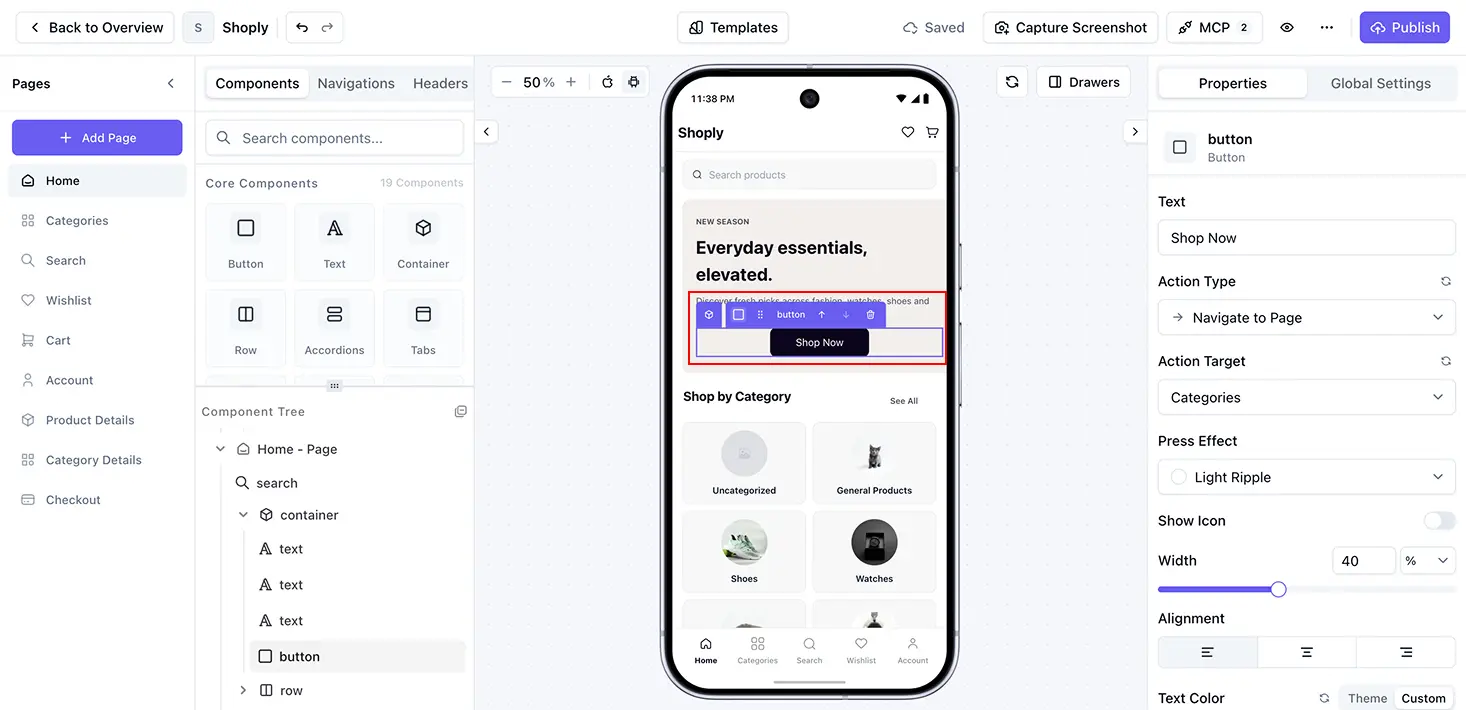
1. Select a component

Click any element on the canvas to select it – a button, an image, a block of text, a whole section.
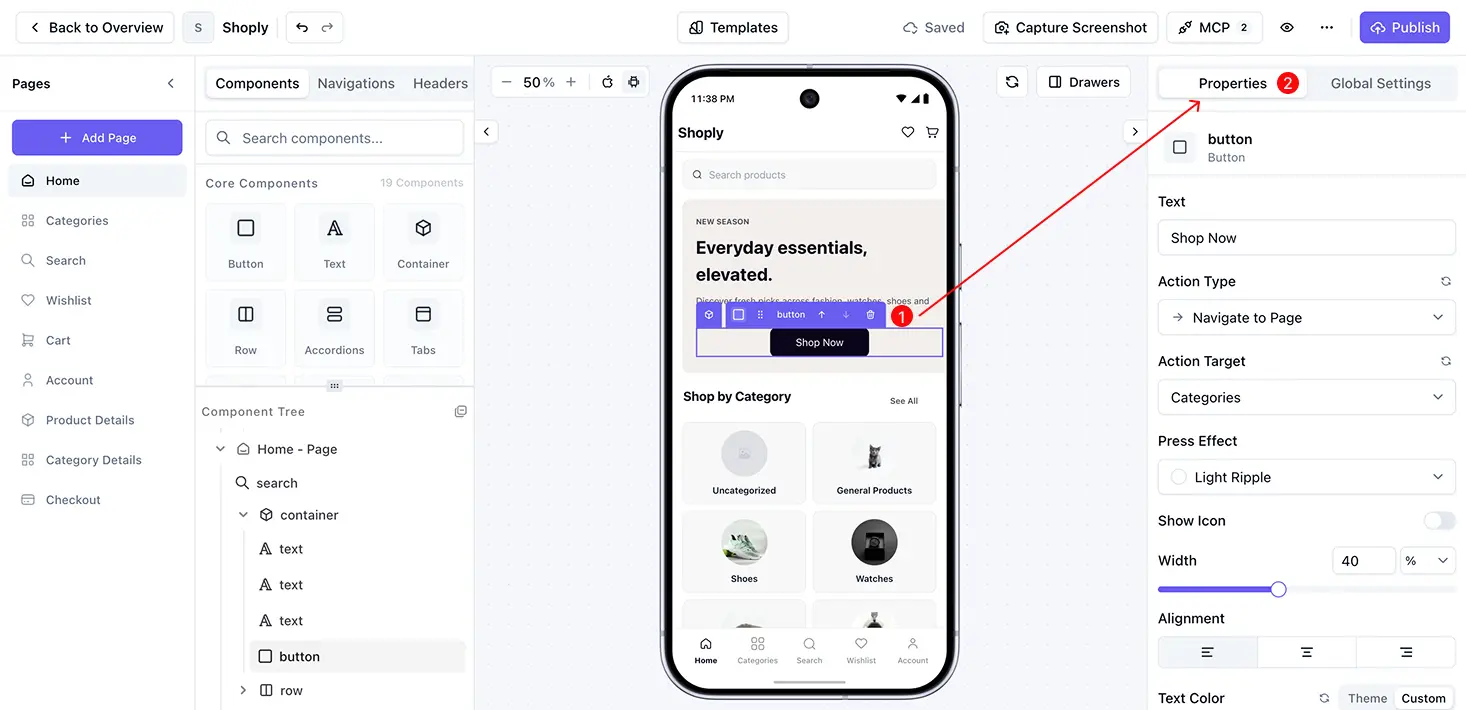
2. Adjust it in the properties panel

With something selected, its adjustable properties appear in the panel on the right – text, colors, sizing, spacing, and whatever else applies to that specific type of component.
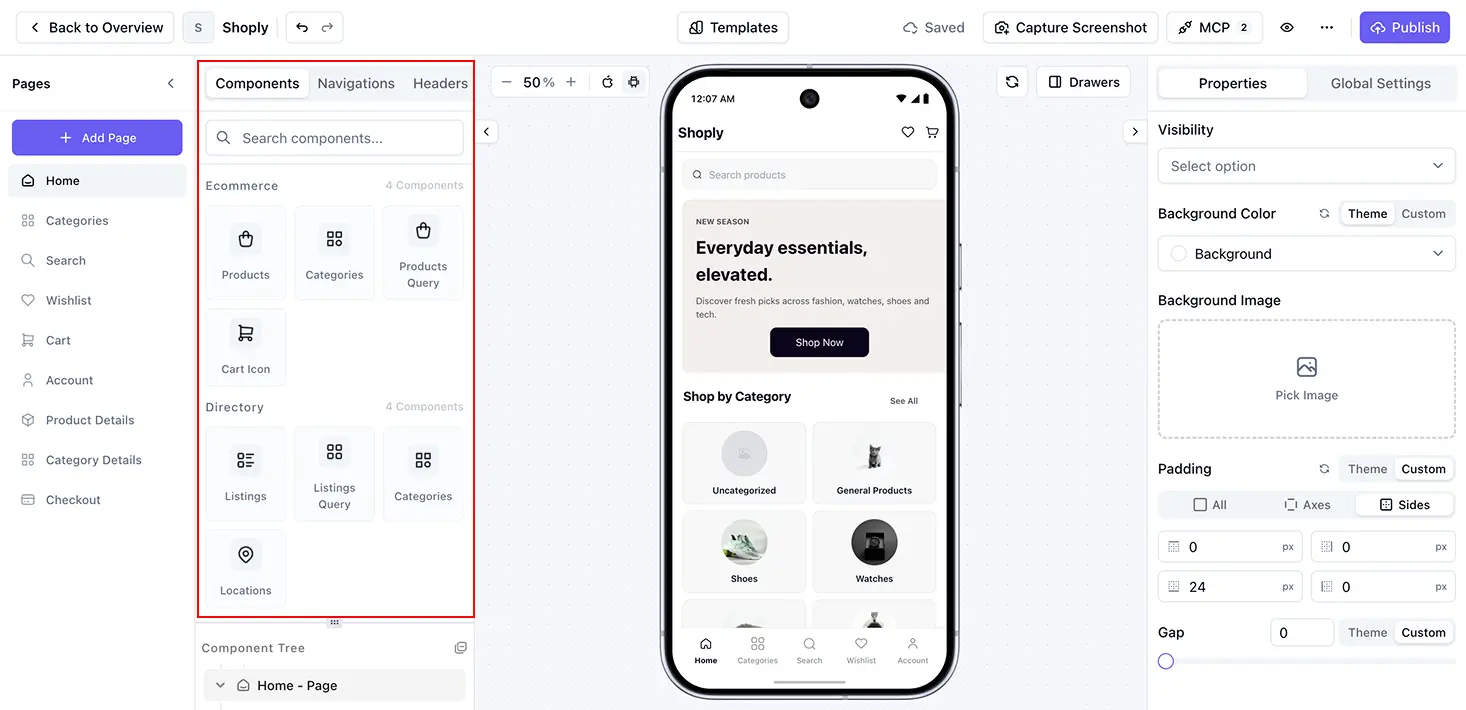
3. Add a new component

Open the component library in the left sidebar and drag (or click) a component onto your canvas wherever you want it.
4. Delete or reorder components

Use the component tree (the structural list of everything on your page, usually in the same left area) to drag components into a new order, or remove one you don’t need.

FAQ

Undo an AI change you don’t want
Manage your app’s pages
Was this page helpful?
On this page
Steps1. Select a component2. Adjust it in the properties panel3. Add a new component4. Delete or reorder componentsFAQCan I undo a manual change the same way as an AI one?+What if I can’t find a specific component to add?+