
Appnatively
Appnatively
Knowledge Base
Go to Studio
Knowledge Base
Go to Studio
Getting Started
Welcome to AppNativelyCreate your first appFinding your way around the Studio dashboard
Website Connection
Connect your website to AppNativelyInstall and update the required pluginChoose which plugins power your app“Website Not Connected” – what it means and how to clear itFix a failing or dropped connection
App Editor
Build your app with AI chatWrite prompts that get the screen you wantUndo an AI change you don’t wantEdit screens and components by handManage your app’s pagesDesign your headerDesign your bottom navigationAdd and edit drawersManage your themeHow your changes reach your usersSave vs. Publish – what each one doesWhen a new release is requiredWhen AI gets it wrong
Splash & App Icon
Set your app iconAdd Android Adaptive Icon layersDesign your splash screenRecommended image sizes
Publishing Setup
What you need before your first buildSet your app’s name, slug, and package IDAdd Android credentials and your keystoreAdd iOS certificates and provisioningConnect Google PlayConnect the App StoreSet up Firebase Configuration
Build & Deploy
Connect GitHub before you buildBuild your app – and submit it to the storeFix a failed build
Push Notifications
Create and send a push campaignTrack campaign performanceNotifications aren’t arriving
Integrations
Connect a third-party service

Push Notifications

Once your app is out in the world, this is how you bring people back to it. A campaign reaches everyone who’s installed your app – either as a standard notification on their lock screen, or as a styled message shown inside the app itself. One thing to know before you start: sending is immediate. There’s no scheduling, no saving a draft to finish later, and no way to recall a campaign once it’s gone out.
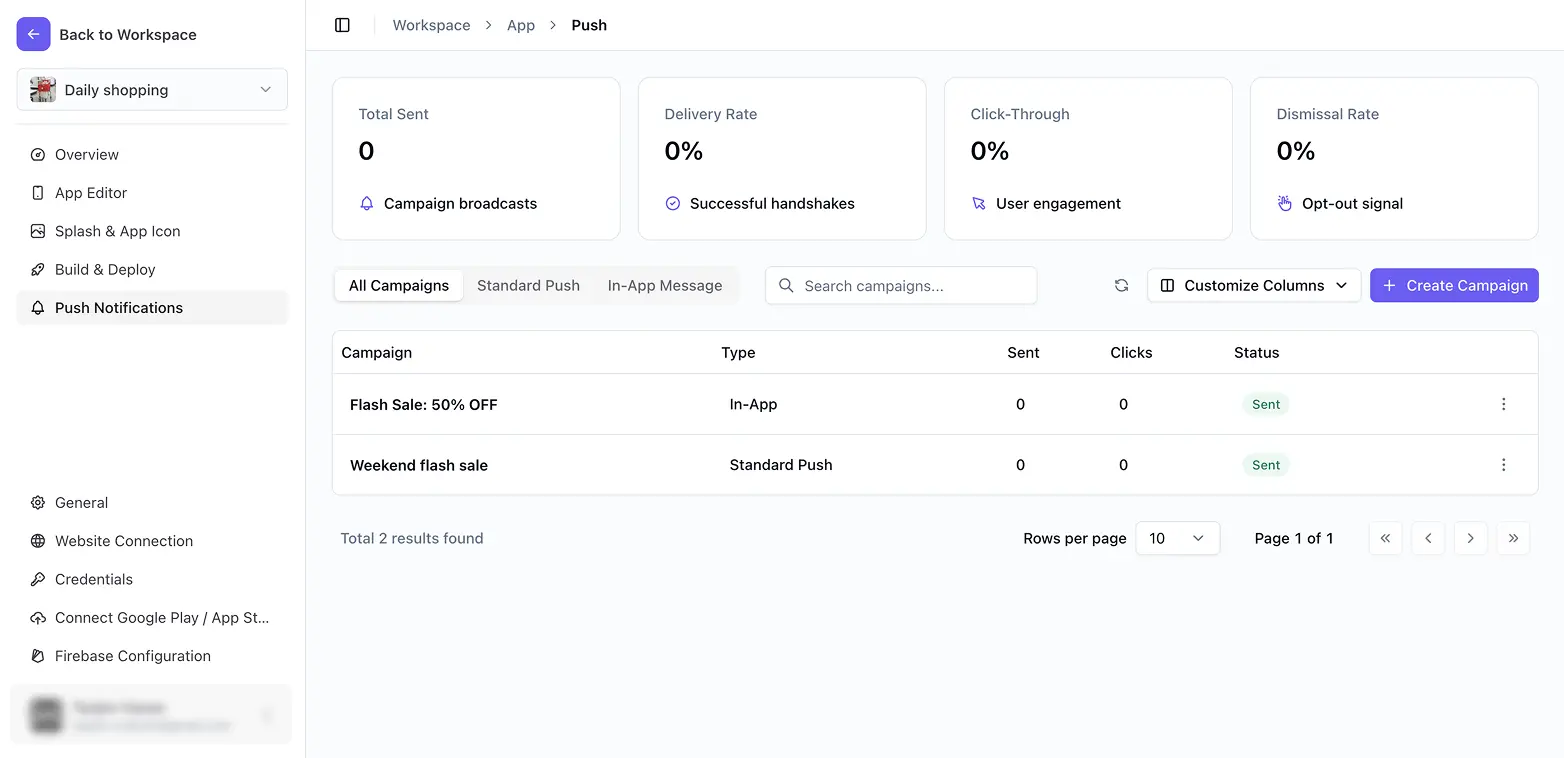
What you can do in Push Notifications

Create and send a push campaign covers both campaign types and everything each one needs – title, message, an optional image, and an optional deep link that opens a specific place in your app when tapped. After a campaign goes out, Track campaign performance explains the four numbers you’ll see

  • Total Sent, Delivery Rate, Click-Through Rate, and Dismissal Rate – and how to read the per-campaign table underneath them.

The third article is the one to reach for when a campaign shows as sent but doesn’t seem to have reached anyone, working through the three usual causes in order.

Before you start

Your app needs a working Firebase connection – the Create Campaign button stays locked without one. See Set up Firebase Configuration.

FAQ

Fix a failed build
Create and send a push campaign
Was this page helpful?
On this page
What you can do in Push NotificationsBefore you startFAQWhy is the Create Campaign button locked?+Can I schedule a campaign for later, or save it as a draft?+What’s the difference between Standard Push and In-App Message?+