
Appnatively
Appnatively
Knowledge Base
Go to Studio
Knowledge Base
Go to Studio
Getting Started
Welcome to AppNativelyCreate your first appFinding your way around the Studio dashboard
Website Connection
Connect your website to AppNativelyInstall and update the required pluginChoose which plugins power your app“Website Not Connected” – what it means and how to clear itFix a failing or dropped connection
App Editor
Build your app with AI chatWrite prompts that get the screen you wantUndo an AI change you don’t wantEdit screens and components by handManage your app’s pagesDesign your headerDesign your bottom navigationAdd and edit drawersManage your themeHow your changes reach your usersSave vs. Publish – what each one doesWhen a new release is requiredWhen AI gets it wrong
Splash & App Icon
Set your app iconAdd Android Adaptive Icon layersDesign your splash screenRecommended image sizes
Publishing Setup
What you need before your first buildSet your app’s name, slug, and package IDAdd Android credentials and your keystoreAdd iOS certificates and provisioningConnect Google PlayConnect the App StoreSet up Firebase Configuration
Build & Deploy
Connect GitHub before you buildBuild your app – and submit it to the storeFix a failed build
Push Notifications
Create and send a push campaignTrack campaign performanceNotifications aren’t arriving
Integrations
Connect a third-party service

Splash & App Icon

Your app makes its first impression before anyone opens it – the icon sitting on someone’s home screen, and the screen they see for a moment while it loads. Both show up before a user sees anything you built in the App Editor. It’s a short category, but a high-visibility one, and your app icon is also one of the things checked before your first build, so it’s worth doing early rather than at the end.
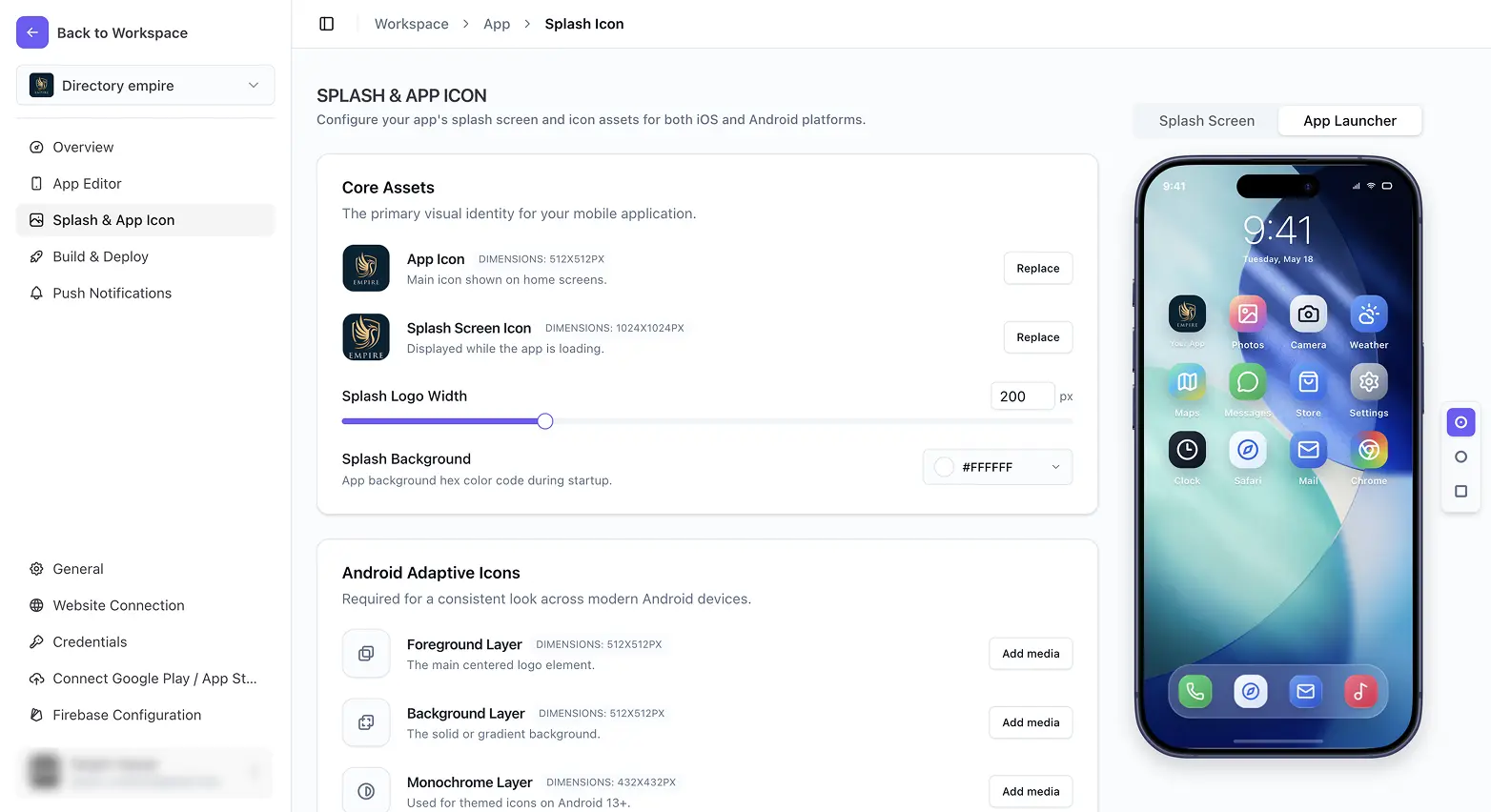
What you can do in Splash & App Icon

Set your app icon is the main one – a single square image, previewed exactly as it’ll appear on a home screen. Android goes a step further with adaptive icons, where separate foreground, background, and monochrome layers let modern launchers reshape and theme your icon to match the user’s device. Then there’s the splash screen: an icon, a size, and a background color, so your app opens with your branding instead of a blank white flash.

Every control on these pages saves automatically as you change it – there’s no Save button to hunt for. If you’d rather prepare all your images first, Recommended image sizes lists every size in one place.

FAQ

When AI gets it wrong
Set your app icon
Was this page helpful?
On this page
What you can do in Splash & App IconFAQDo I need to click Save anywhere in here?+Why does my icon look different in the preview than the file I uploaded?+What sizes should my images be?+